Trademark Squatting Explained
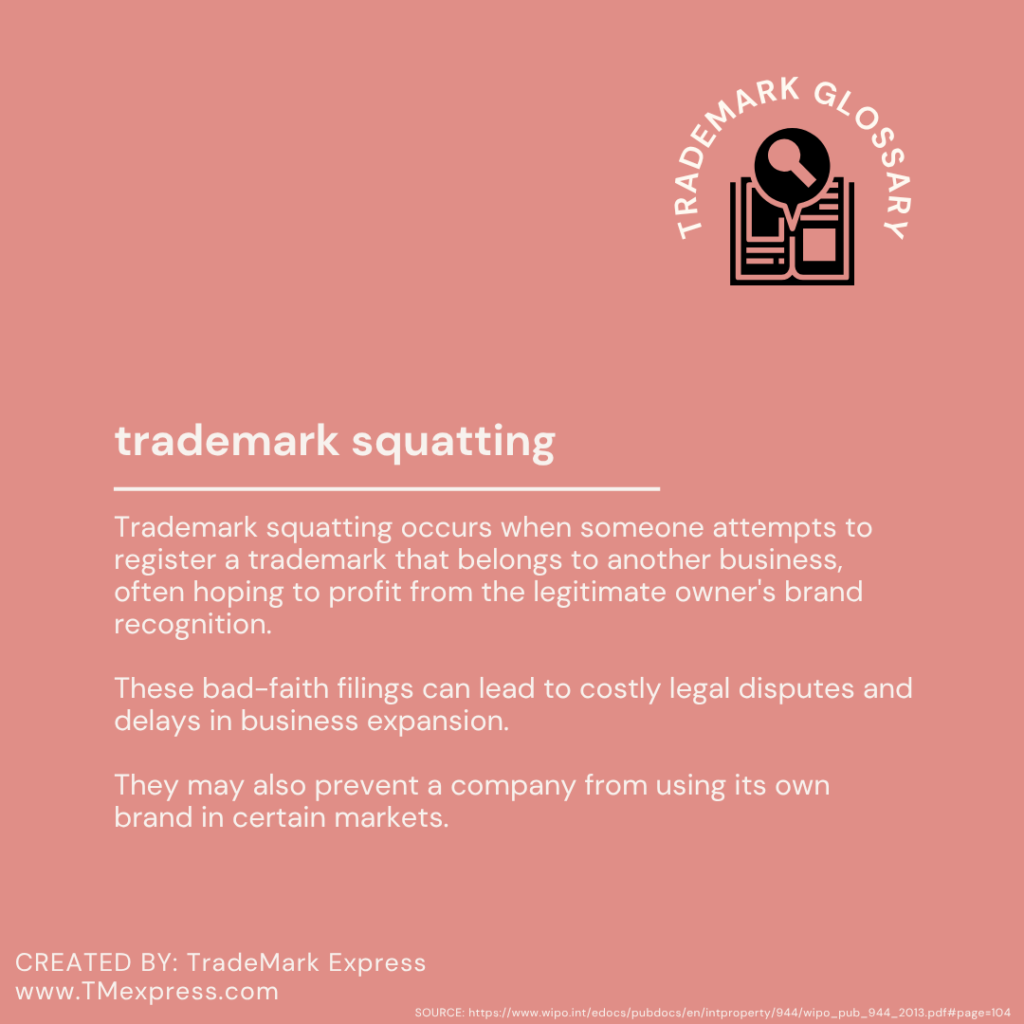
Trademark squatting occurs when someone registers or attempts to register a trademark that belongs to another business, often hoping to profit from the legitimate owner’s brand recognition.
These bad-faith filings can create costly legal disputes, delay business expansion, and even prevent a company from using its own brand in certain markets.
For startups and established businesses alike, a comprehensive trademark search and early filing can help reduce the risk of these problems.
How Does Trademark Squatting Work?
IMAGINE THIS → a small U.S. company called BrightNest that develops a popular line of smart home products. Its products gain a loyal following, and the company begins exploring opportunities to expand into international markets.
Before BrightNest enters one particular country, an individual notices the company’s growing popularity and registers the BRIGHTNEST trademark there for smart home products.
The individual has no connection to the original business but recognizes an opportunity to profit from its success. When BrightNest attempts to enter that market, it discovers someone else already owns the local trademark registration.
The individual then demands a substantial payment to transfer the trademark or threatens legal action if BrightNest uses its own brand name.
This is a simplified example of trademark squatting. Although the original business may have established rights in its home country, those rights do not automatically provide trademark protection everywhere in the world.
A Real-World Example of Trademark Squatting
Trademark squatting isn’t just a theoretical concern. In 2012, the Trademark Trial and Appeal Board considered a case involving an applicant who attempted to register L’ORÉAL PARIS for aloe vera drinks.
The applicant, Robert Marcon, had a history of filing trademark applications for well-known brands covering unrelated products, including HEINEKEN, JACK DANIEL’S, BAYER, and BUDWEISER.
A comprehensive trademark search can help businesses identify existing applications and registrations that may create conflicts before investing in a name. Early filing may also help establish important trademark priority rights.
What Does a Comprehensive Trademark Search Include?
A basic trademark search that checks only exact matches in the USPTO database can miss important potential conflicts. A comprehensive trademark search examines multiple sources to identify existing applications, registrations, and marketplace use.
At TradeMark Express, our research includes:

- Federal Trademarks: Searching the USPTO federal trademark database for both pending trademark applications and existing federal registrations. This includes identical and similar marks that may be used with the same or related goods and services.
- State Trademark Registrations: Checking state trademark registration records to identify businesses that may have secured trademark rights at the state level.
- Common Law Usage: Researching how names and marks are being used in the marketplace, even when they have never been federally registered, i.e., common law usage. This can include business websites, online listings, products, services, and other commercial references.
Research also considers similar spellings, pronunciations, meanings, related goods and services, and other factors that could create a potential conflict.
Importantly, a trademark does not have to be federally registered to create problems for another business. Earlier common law use may establish enforceable rights, even without a federal registration.
Why Filing Early Matters
In the United States, trademark rights can arise through actual use of a name or logo in commerce. However, you don’t necessarily have to wait until your business launches or your product hits the market to pursue federal trademark protection.
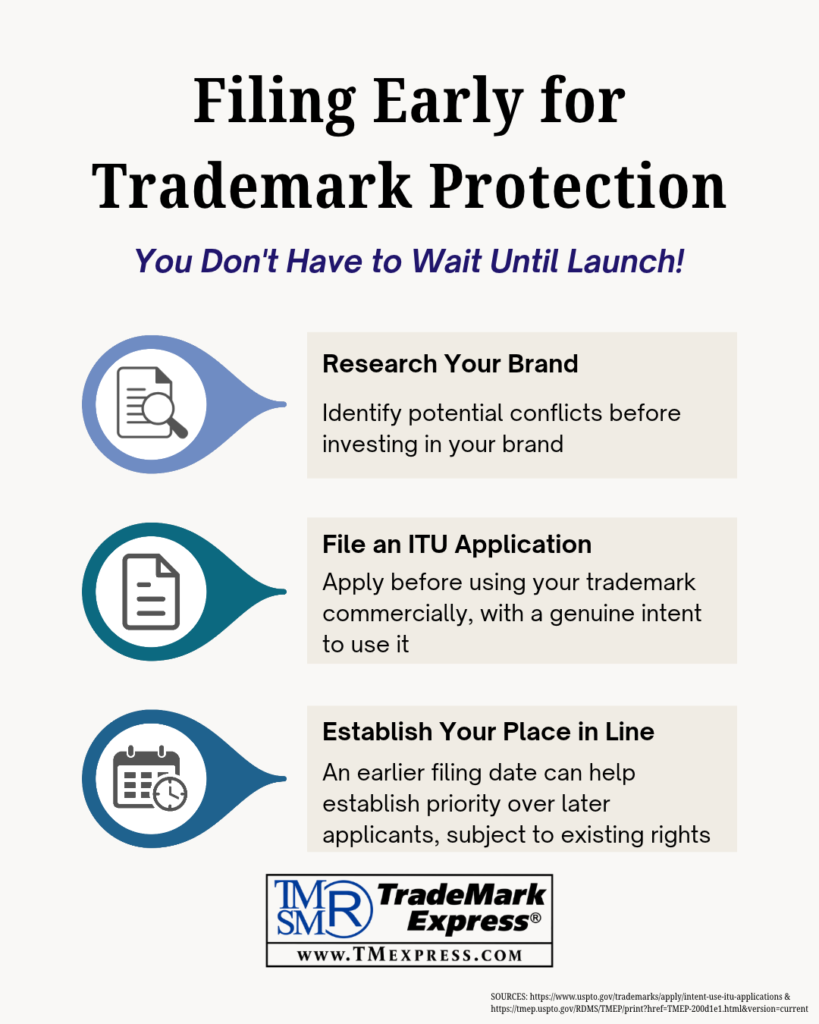
An Intent-to-Use (ITU) trademark application allows you to apply for a trademark before you begin using it commercially, provided you have a genuine intention to use the mark. This can be especially helpful for startups, businesses developing new products, or companies preparing to launch a new brand.
Protect Your Brand Before Someone Else Claims It
Trademark squatting is a reminder that choosing a business name is only the beginning. Comprehensive research and timely trademark protection can help identify potential conflicts before you invest heavily in building a brand.
At TradeMark Express, we’ve conducted more than 500,000 trademark searches since 1992. Our comprehensive research goes beyond basic name matching to help identify potential conflicts before you move forward with an application.
Your brand deserves more than a basic trademark search.