Three Trademark Conflict Examples You Can Spot at Thanksgiving Dinner
Trademark conflict examples are easy to find at a Thanksgiving dinner, and each one shows why a trademark clearance search needs to look well beyond exact matches.
A trademark is a name, logo, or slogan that tells customers who a product or service comes from, and the U.S. Patent and Trademark Office (USPTO) is the federal agency that reviews trademark applications. When it reviews a new mark, the USPTO asks whether consumers would be likely to confuse it with an existing one.
Your Thanksgiving table happens to be a surprisingly good way to see how that works.
What Do Trademark Conflict Examples Reveal About Similar Names?
A thorough search looks for names that are similar in sound, appearance, or meaning, because the question is whether consumers could be confused, not whether the spelling is identical.
Imagine This: Your host asks everyone to bring a side dish, and two guests both sign up for green bean casserole. One labels theirs “Green Bean Casserole.” The other labels theirs “String Bean Bake.” The names don’t match, yet nobody at the table would think they’re different dishes.
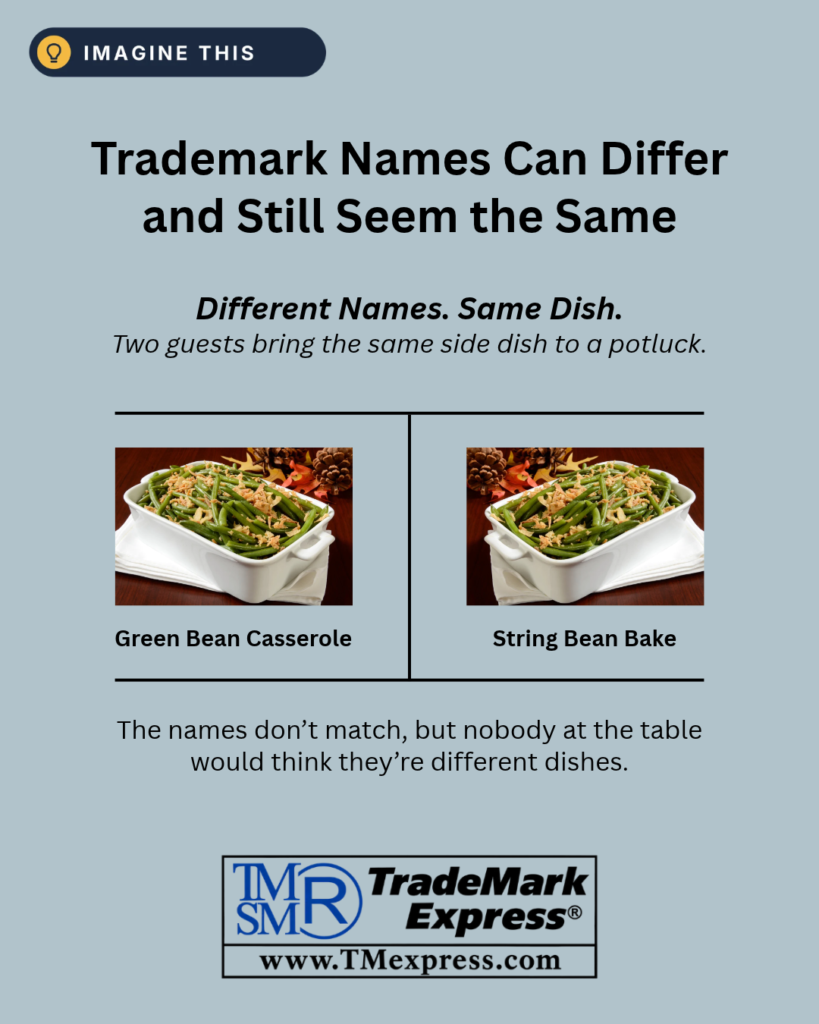
A search for identical names alone would clear both. A confusingly similar name can still raise a conflict, which is why a trademark availability search should check variations in spelling, pronunciation, and meaning.
What Are Related Goods and Services in a Trademark Search?
Related goods and services are products or services consumers would expect to come from the same source, even when they aren’t identical. Pumpkin pie and whipped cream are different products, but they’re served together, so a shared name could lead shoppers to assume one company makes both.
Imagine This: A small bakery sells pecan pies under the name Hearth & Maple. A new coffee roaster plans to launch as Hearth & Maple Coffee. Pies and coffee are different categories, but they’re often sold and enjoyed together, so a USPTO examiner or the bakery’s owner could see a connection.
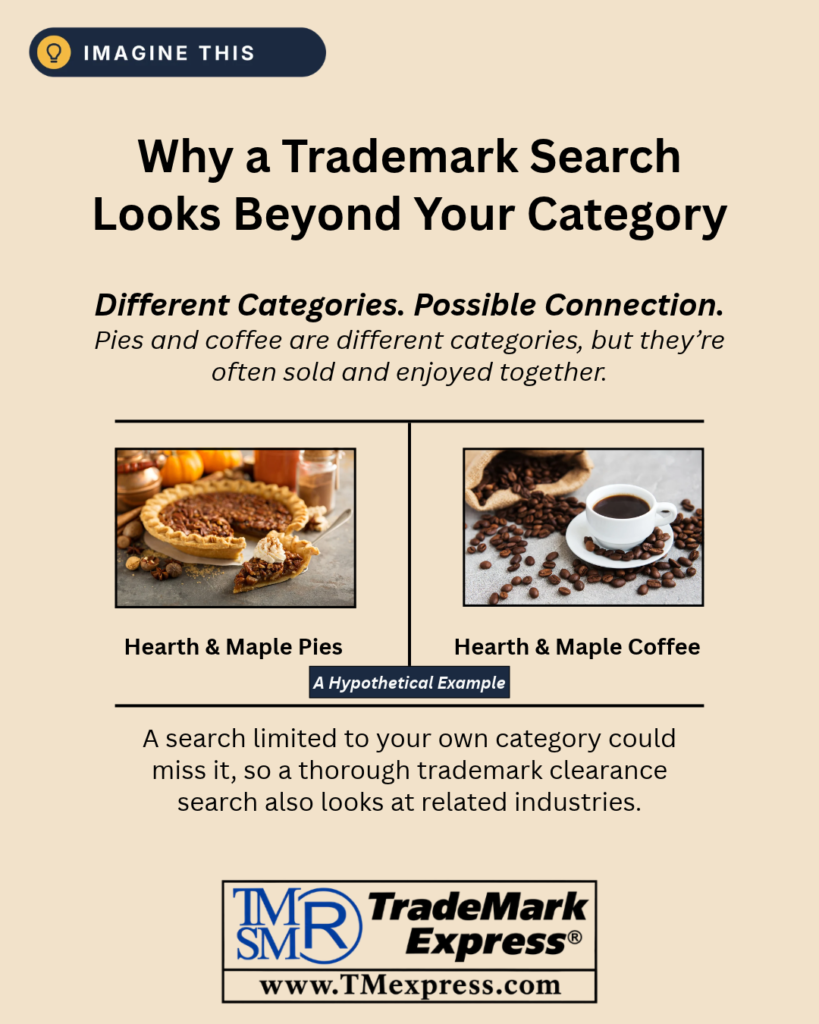
A search limited to your own category would miss it, which is why a trademark clearance search should look at related industries too.
What Is Common Law Trademark Use, and Why Does It Matter?
Common law trademark rights come from actually using a name in commerce, even without a registration, and they are tied to geography. A business using a name in a specific region may have protectable rights in that area.
Imagine This: For ten years, Dot’s Prairie Crust Pies has sold pecan pies at a farmers market in one town. Dot never registered the name. A newcomer in a neighboring county decides to launch a frozen pie line called Prairie Crust. A search of USPTO records alone wouldn’t show Dot, yet she may have rights in her area.
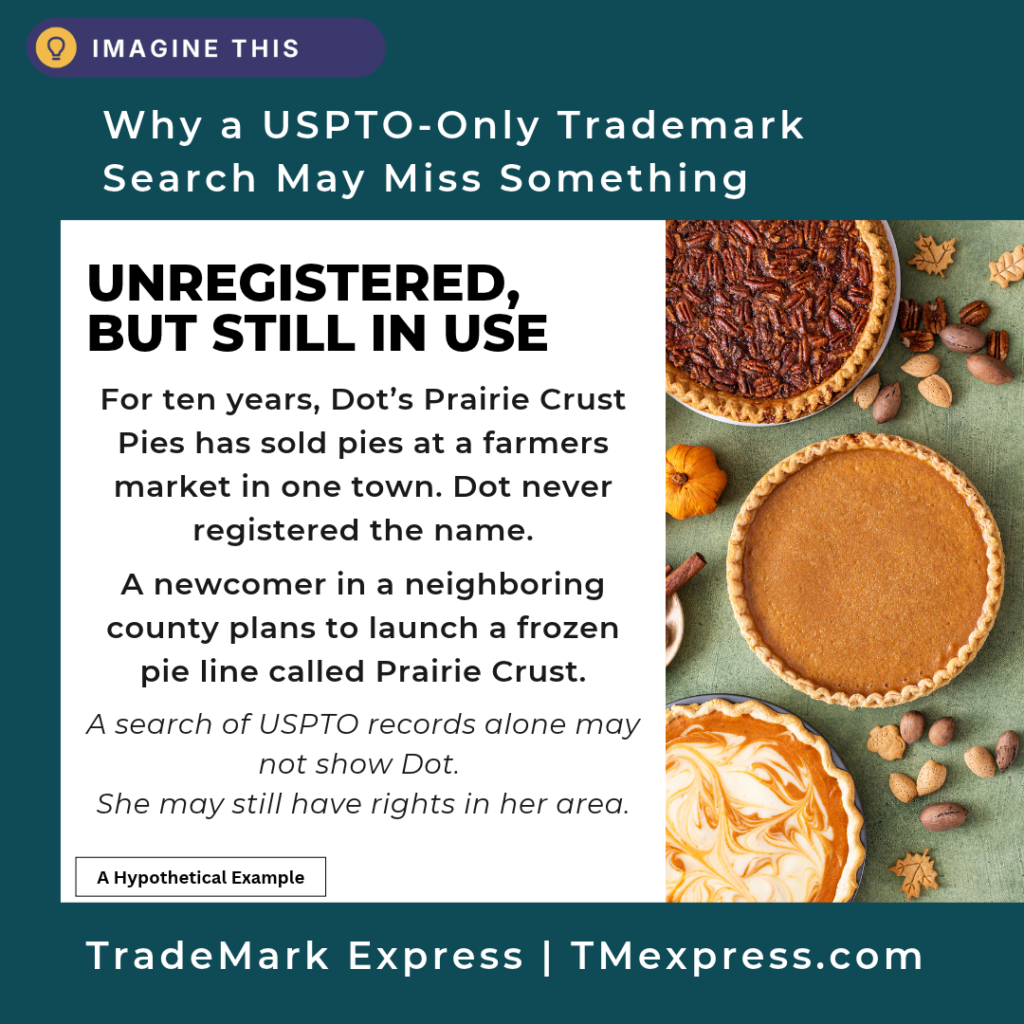
A trademark and common law search looks for businesses like hers in the marketplace. State trademark registrations are another place conflicts can hide.
What Should a Full Trademark Search Cover?
If you’re deciding who should handle your research, ask whether the search covers all of these:
- Federal trademark records, including both pending applications and registered trademarks in the USPTO database
- State trademark registrations
- Common law use by businesses that never registered
- Similar marks in sound, appearance, or meaning
- Related goods and services beyond your own category
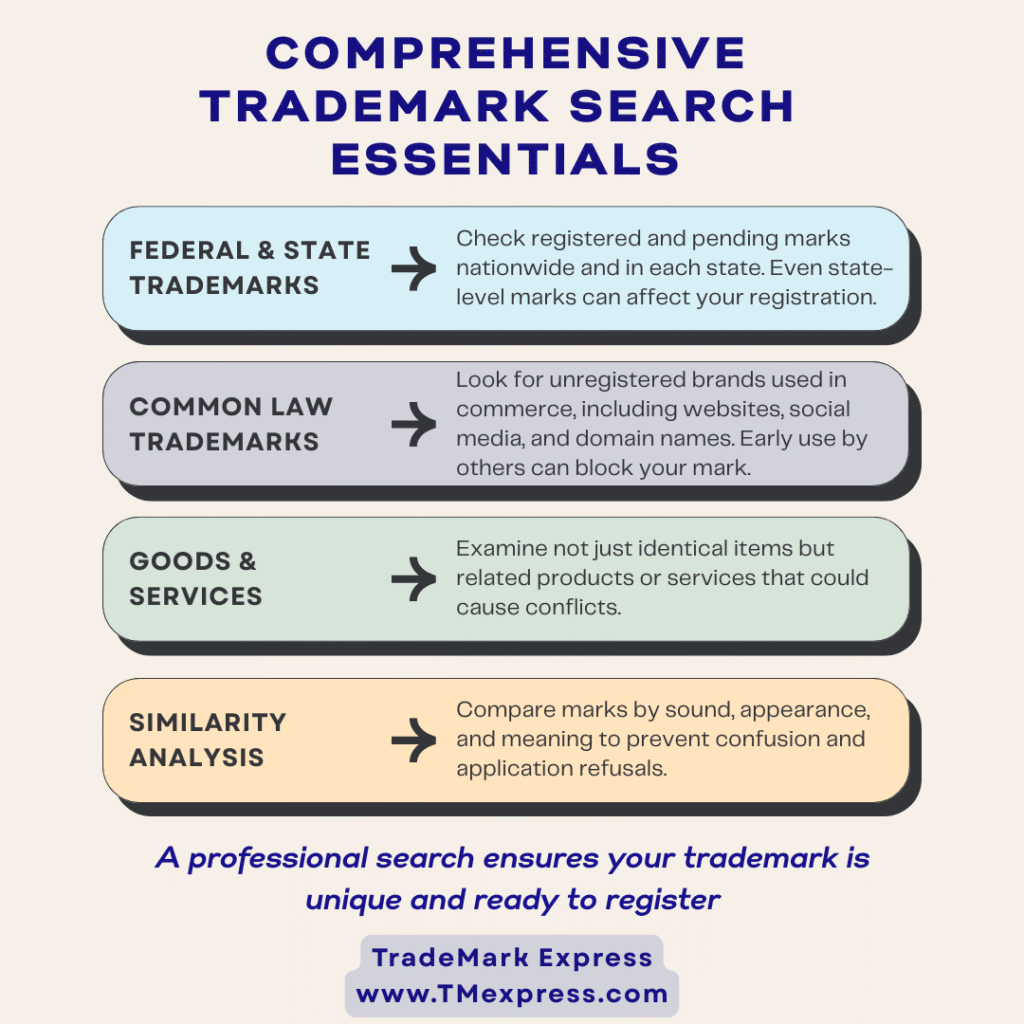
Searching for your exact name alone is like checking one dish on a full table. The conflict may be sitting right next to it.
Gaps in coverage can surface after you’ve printed packaging, built a website, or launched, when changing course costs far more than checking first.
Frequently Asked Questions
When should I run a trademark clearance search?
Run one before you commit to a name, and ideally before you order signage or packaging, launch a website, or file an application. Searching early leaves time to adjust if conflicts turn up.
Is the free USPTO database enough?
The USPTO database covers federal applications and registrations only. It doesn’t show state registrations or unregistered common law use, and finding similar marks takes more than typing in your exact name.
Can a business in a different industry still cause a conflict?
It can. Conflicts depend on whether consumers would expect the goods or services to come from the same source, so a search should look beyond your own category.
Can I use a Thanksgiving-themed name?
Many holiday-inspired names are filed with the USPTO. Common holiday words are widely used, so a distinctive name tends to stand out more. For examples, see our post on trademarking a Thanksgiving brand.
Choosing a name for next season, or for the next twenty years? Contact TradeMark Express for comprehensive trademark research and application preparation assistance. We search federal, state, and common law sources, and you can review the results with a trademark attorney from our referral network. Contact us today.