
Two Trademarks Don't Have to Be Identical to Conflict
One of the most common misconceptions about trademarks is that conflicts only happen when two marks are exactly the same. If someone else has “SunBright” registered and you want to use “SunBright,” sure — that’s an obvious problem. But trademark law casts a wider net than that.
The actual standard the USPTO uses when reviewing a trademark application isn’t identity. It’s likelihood of confusion. And under that standard, a mark doesn’t have to be a carbon copy of yours to block your registration or create legal exposure. It just has to be confusingly similar — similar enough that consumers might mistake one brand for the other.
That similarity can show up in three key ways: sound, appearance, and meaning. (There’s also the concept of overall commercial impression — how a mark lands with consumers as a whole — which we’ll cover in a separate post.)
Sound Similarity in Trademarks
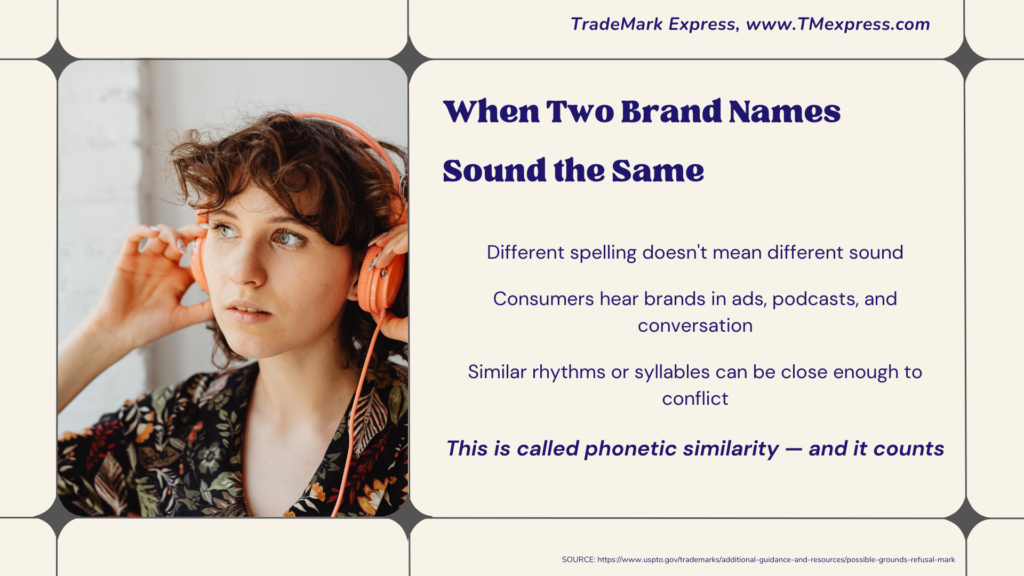
Two marks can sound nearly identical when spoken aloud, even if they look different on paper. This is called phonetic similarity, and it matters because people encounter brands in conversation, in ads, and in audio content — not just in writing.
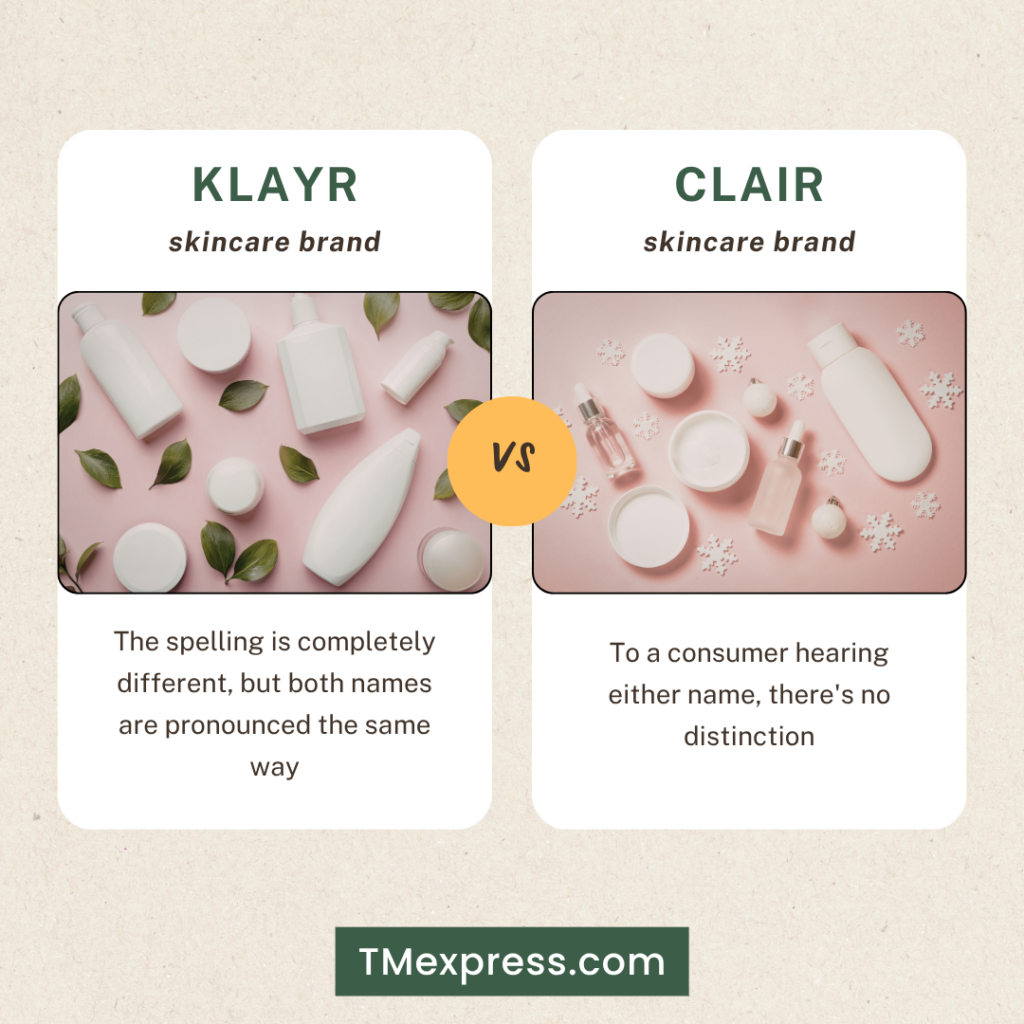
Example 1: You want to register Klayr for a skincare line. There’s already a registered mark, Clair, for skincare products. The spelling is completely different, but both names are pronounced the same way. To a consumer hearing either name, there’s no distinction.
Example 2: You’ve developed a project management app called Flowtek. A search turns up Flotek, already registered for business productivity software. The two names aren’t identical, but they’re close enough in sound that someone hearing either one in a conversation or podcast ad would likely picture the same brand.
Similar-sounding marks don’t have to be homophones to raise a flag. Marks with similar rhythms, syllable patterns, or dominant sounds can also be considered too close for comfort.
Appearance Similarity in Trademarks
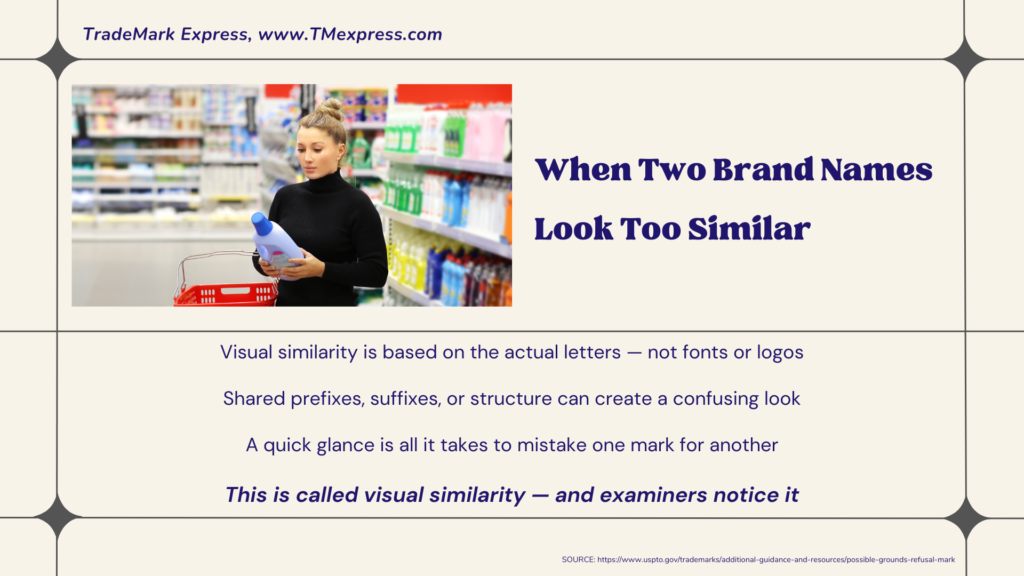
Visual similarity looks at how marks appear in their standard character form — the actual letters or words, independent of any stylized font or logo. If two marks look alike when written out, that’s a concern regardless of how different their visual branding might be.
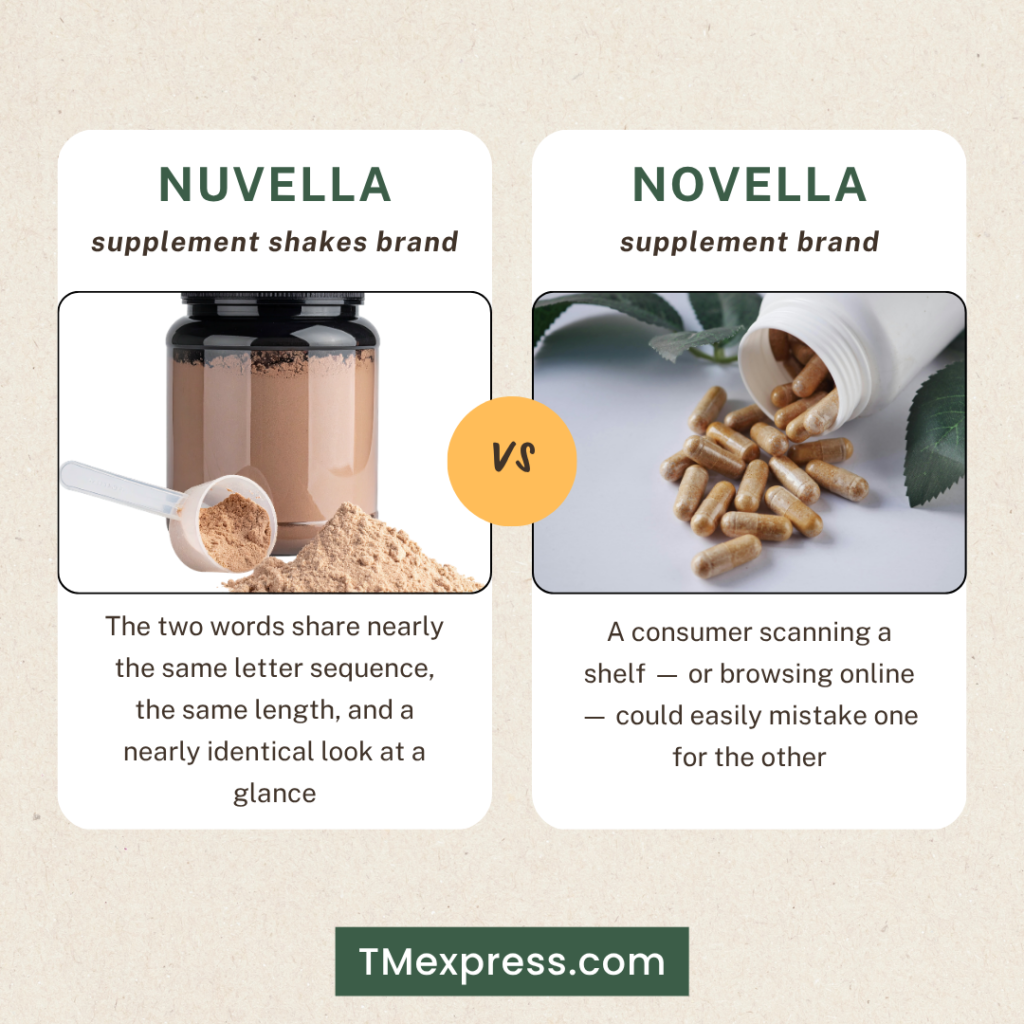
Example 1: You want to register Nuvella for a protein supplement shake brand. A search turns up Novella, already registered for protein dietary supplements. The two words share nearly the same letter sequence, the same length, and a nearly identical look at a glance. A consumer scanning a shelf — or browsing online — could easily mistake one for the other.
Example 2: You’re launching a financial planning SaaS called Wealthrise. There’s an existing registration for Wealthwise for a financial planning app. Swap out three letters, keep the same structure and length, and the marks look strikingly similar on a screen or in print — especially to someone scrolling quickly past an ad.
Examiners look at the overall impression a mark creates visually, not just a letter-by-letter breakdown. Marks that share a distinctive prefix, suffix, or structure can look confusingly similar even when they aren’t identical.
Meaning Similarity in Trademarks
Two marks can have entirely different spellings and pronunciations but still conflict if they convey the same or closely related concept. This is called connotative or semantic similarity, and it’s one of the more surprising ways a conflict can arise.
Example 1: You want to trademark Solar Vital for solar energy install services. There’s already a registration for Sun Vitality in the same space. The words look different and sound different — but both communicate the same core idea: the energy and vitality associated with the sun. In the same product category, that shared concept is exactly the kind of similarity that can raise a conflict.
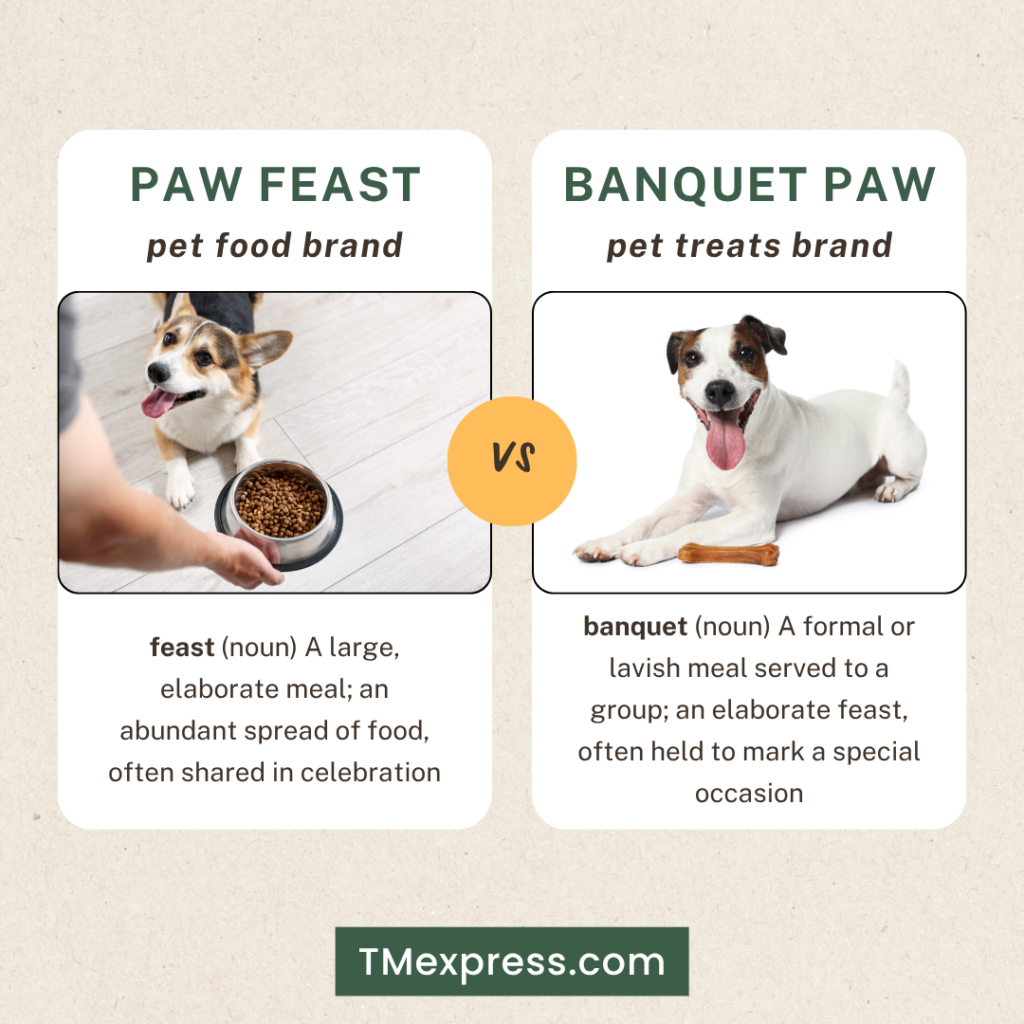
Example 2: You’re building a pet food brand called Paw Feast. A search surfaces Banquet Paw, already registered for pet treats. The names look and sound completely different, and the words are even in reverse order — but both conjure the same image of an abundant meal for pets. In the same category, that overlapping meaning is enough to warrant a closer look.
Examiners don’t just read marks literally. They consider what a mark suggests, implies, or calls to mind — and if two marks point consumers toward the same concept, they may be considered confusingly similar.
Why This Matters Before You File a Trademark
This is why running a quick Google search or a basic USPTO lookup isn’t enough to clear a trademark. A search that only catches identical matches will miss all of the above — and those missed marks are exactly what can get an application refused or, worse, create serious problems after you’ve already built a brand around the name.
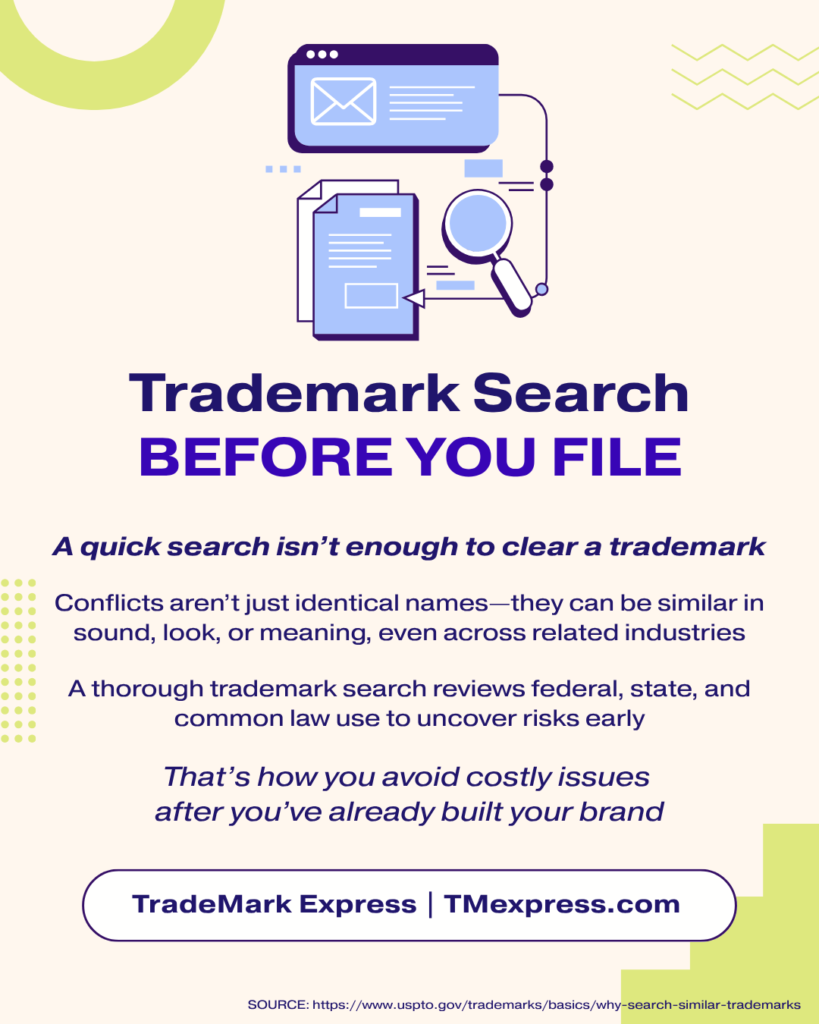
A thorough trademark availability search looks at federal trademark records, state trademark registrations, and common law usage — marks that may never have been registered but are in active commercial use and may have protectable rights in the geographic areas where they’re used. It also accounts for phonetic variations, visual similarities, and conceptual overlap across not just your exact category, but related goods and services as well.
That kind of coverage isn’t just best practice. It’s the difference between building on a solid foundation and discovering a conflict after the damage is done.
Ready to Clear Your Trademark the Right Way?
TradeMark Express provides comprehensive trademark searches designed to catch the conflicts that basic searches miss — similar-sounding names, visually comparable marks, and conceptually related brands across federal, state, and common law sources. If you’re preparing to file, start with a search you can actually rely on. Contact TradeMark Express today to get started.