Does Every Product Name Need Its Own Trademark?
No, you don’t need to trademark every product name, but some are worth protecting now and others later. Federal trademark registration is optional, and most businesses get the best return by registering the names that matter most to their brand and clearing the rest with a search before launch. The right approach depends on how important each name is, how long you plan to use it, and how crowded your market is.
Is Trademark Registration Required for Every Product Name?
Trademark registration is voluntary.
You can use a product name without registering a trademark, and in the U.S., using a name in commerce can create what are known as common law trademark rights. These rights come from actual use, and they are generally limited to the geographic area where the name is used and known. That makes them narrower and harder to prove than the rights that come with a federal registration with the USPTO (the United States Patent and Trademark Office).
Because each name is a separate mark, a registration for your business name does not automatically cover your product names. Each one would need its own application, and each application has its own filing fees for every class of goods or services it includes. Costs add up quickly, which is why many owners prioritize.
Which Product Names Are Worth Trademarking?
Not all product names carry the same weight. These questions can help you sort them:
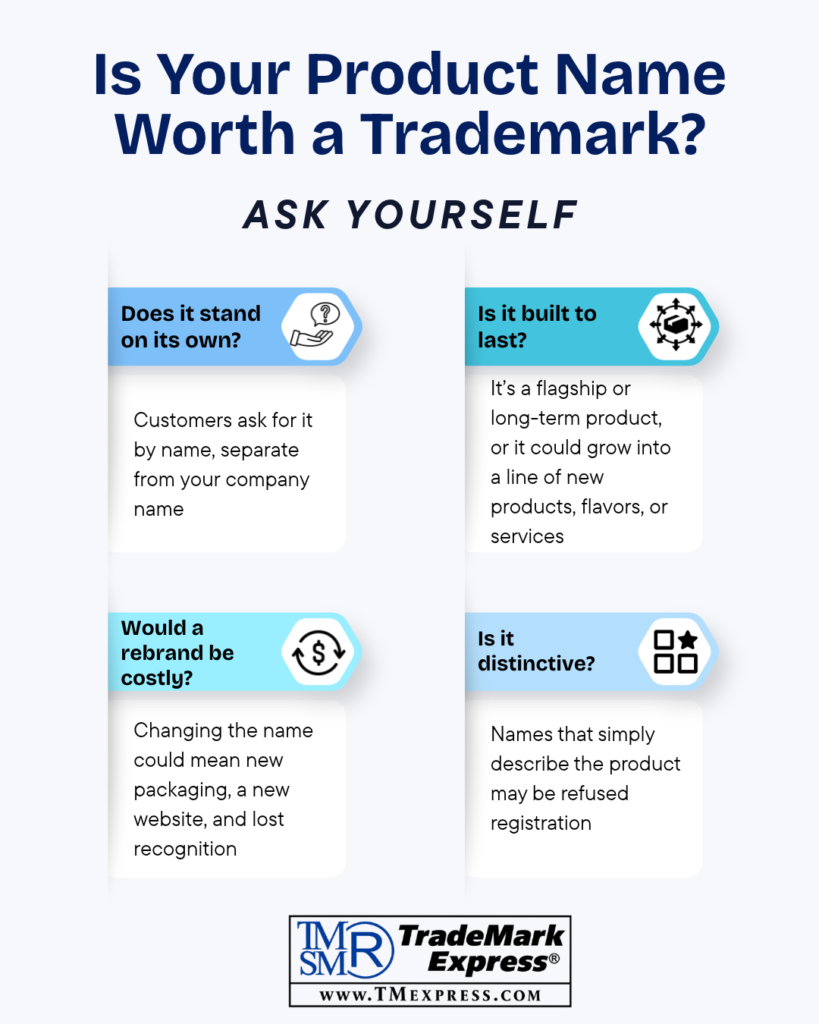
- Will the name stand on its own? A name customers ask for specifically, separate from your company name, is a stronger candidate.
- Is it a flagship or long-term product? Names you expect to use for years deserve more attention than a seasonal item.
- Could it grow into a line? Names that may expand into new products, flavors, or services are worth protecting early.
- Would a rebrand be costly? If changing the name later would mean new packaging, a new website, and lost recognition, registration may be worth it.
- Is the name distinctive? Names that simply describe the product can be refused registration, so a descriptive name might not be eligible at all.
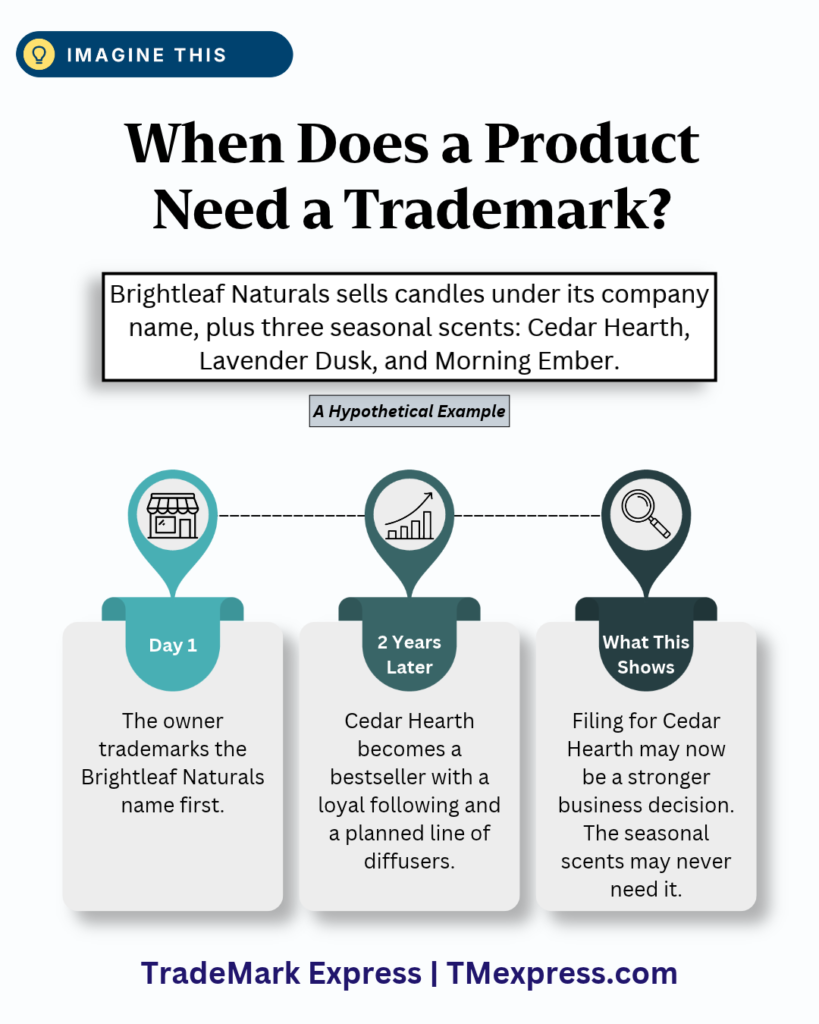
Imagine This → Brightleaf Naturals sells candles under its company name, plus three seasonal scents called Cedar Hearth, Lavender Dusk, and Morning Ember.
The owner registers the Brightleaf Naturals name first. Two years later, Cedar Hearth becomes a bestseller with its own loyal following and a planned line of diffusers. At that point, filing for Cedar Hearth may now be a stronger business decision than it was on day one, while the seasonal scents might never need it.
Do You Still Need a Search for Product Names You Won't Register?
Yes, and this is the part many owners miss.
Skipping registration doesn’t remove the risk of using a name that belongs to someone else. A product name can still conflict with another business’s rights, which can mean forced rebranding, wasted inventory, or a dispute. A trademark clearance search for each name helps you spot those problems before you print labels or launch ads.
A practical approach is to search every name and register selectively. Searching costs far less than a rebrand, and the results show whether a name is available.
What a Comprehensive Trademark Search Should Cover
If you hire someone to run a trademark availability search, here’s what to look for.
A thorough trademark clearance search should cover:
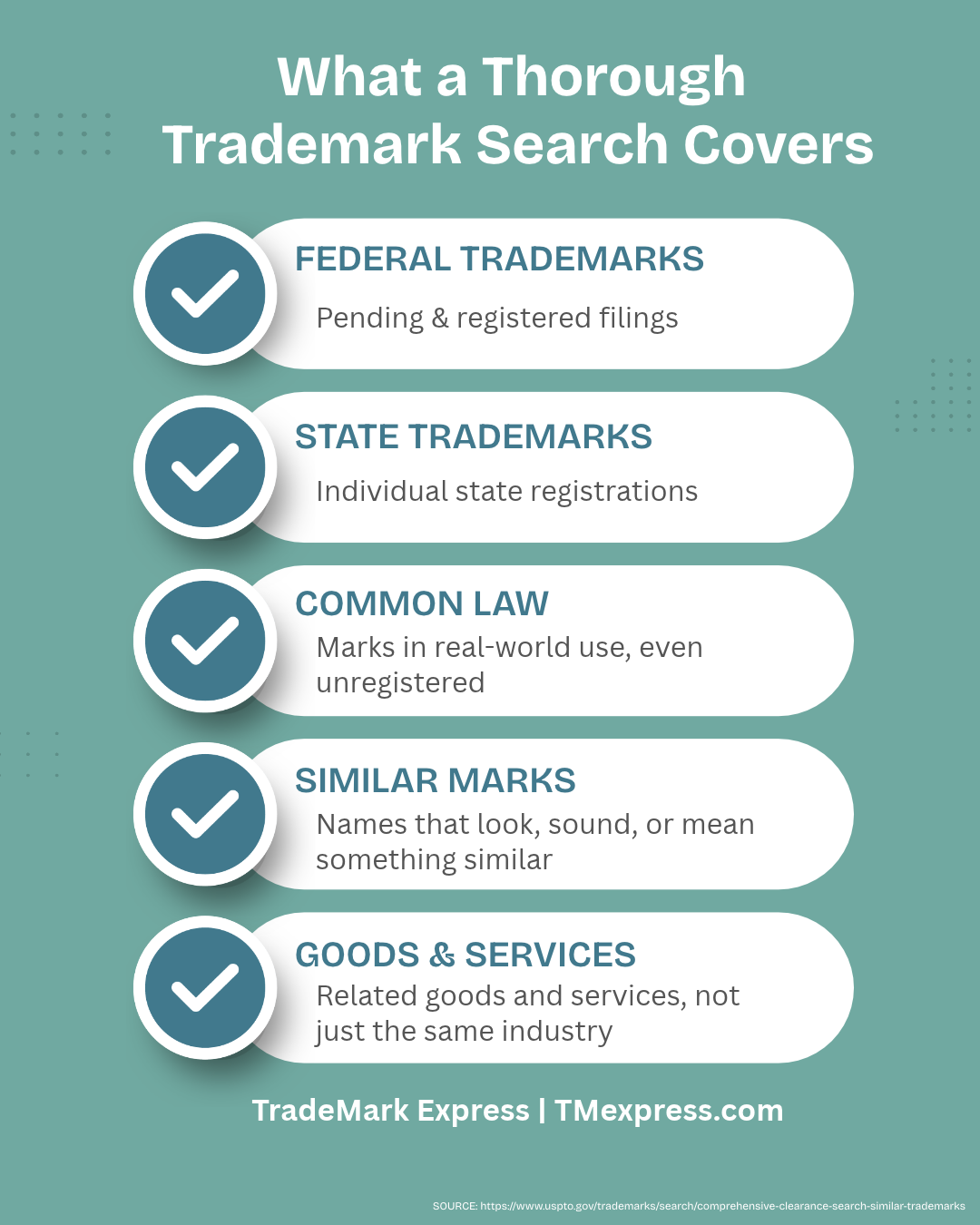
- Federal records. Both pending and registered marks in the USPTO database.
- State trademark registrations. Marks registered with individual states may never appear in federal records.
- Common law usage. A trademark and common law search looks for businesses using a name without any registration, since rights from use can still exist in a region.
- Similar marks in sound, appearance, or meaning. The USPTO looks at whether marks are likely to confuse consumers, not whether they match exactly. A full trademark search that only checks for identical names will miss problems. For example, “Sedar Hearth” or “Harth Cdar” may be confusingly similar to Cedar Hearth.
- Similar or related goods and services. Conflicts aren’t limited to your exact industry. If consumers would reasonably expect two products to come from the same source, a conflict may exist, so a search needs to look beyond your own category.
Be cautious with low-cost options that check only for exact matches or only the federal database. A comprehensive trademark search is designed to catch the less obvious conflicts, which are the ones that tend to cause trouble later.
Frequently Asked Questions
Can I use a product name without trademarking it?
Yes. Registration isn’t required to use a name. However, using an unregistered name still carries the risk of conflicting with someone else’s existing rights, so a search before you launch is a smart safeguard.
Does my business name trademark cover my product names?
Generally, no. A registration covers the specific mark and the goods or services listed in the application. Product names are usually treated as separate marks, so each would need its own application if you decide to register it.
How do I decide which product names to trademark?
Start with names that are central to your brand, expected to last, or likely to grow into a product line. Names with a high cost of changing later are also good candidates. A trademark attorney can help you weigh these factors for your situation.
Find Out Where Your Product Names Stand
Not sure which of your product names are available, or which deserve a registration? TradeMark Express provides comprehensive trademark research covering federal, state, and common law records, and helps you prepare your application using USPTO tools and guidelines. Contact TradeMark Express to get started.