
Is Your Trademark Home Address Public? What the USPTO Shows
Not entirely. When you file a trademark application, the USPTO makes your mailing address public, but it keeps your domicile address (the address where you actually live or operate) out of public view when you enter it in the correct field. The trademark home address that can end up online is any address you list as your mailing address or enter outside the domicile field, so it pays to decide which is which before you file.
What Information Does a Trademark Application Make Public?
Trademark applications are public records, and the USPTO (the U.S. Patent and Trademark Office, the federal agency that reviews trademark applications) says required information such as your name, email address, and mailing address becomes viewable.
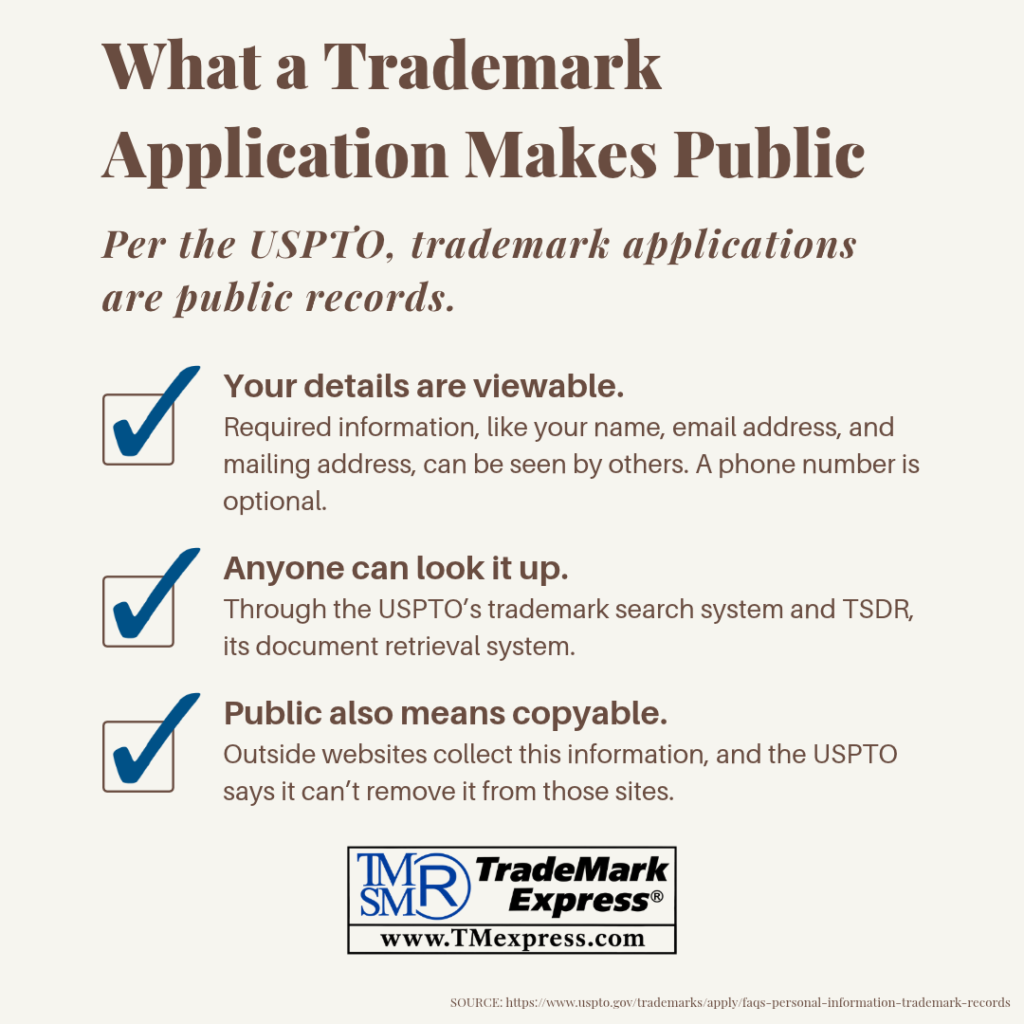
Anyone can look it up through the USPTO’s trademark search system and its document retrieval system, TSDR. Telephone numbers are optional.
Public also means copyable. The USPTO notes that outside websites collect this information, and the agency cannot remove it from those sites.
What Is the Difference Between a Domicile Address and a Mailing Address?
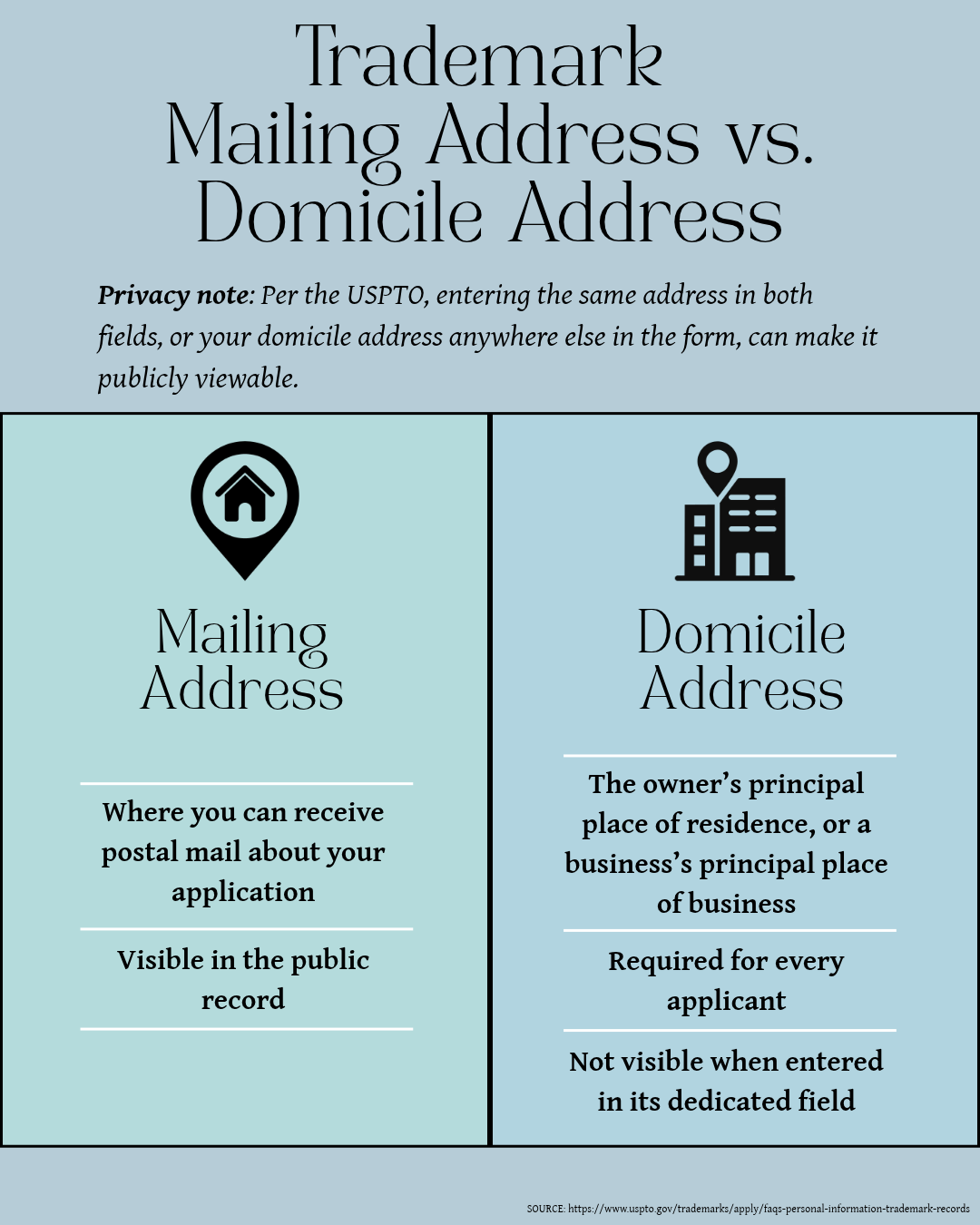
A mailing address is where you can receive postal mail about your application. A domicile address is the owner’s principal place of residence or, for a business, its principal place of business. The USPTO requires one for every applicant.
Here is the part that matters for privacy. According to the USPTO, the mailing address is visible in the public record, while the domicile address entered in its dedicated field is not. However, if you type the same address into both fields, the address becomes publicly viewable. Entering your domicile address anywhere else in a form has the same effect.
Example: Maria runs a candle company from her apartment. If she lists her apartment as both her mailing address and her domicile address, anyone searching her trademark can see where she lives. If she has a separate business mailing address where she can reliably receive mail, she can use it as the mailing address and enter her apartment only in the domicile field.
How Can You Keep Your Trademark Home Address Private?
These general points come from USPTO guidance, not advice about your specific situation.
- Decide before you file. Choose which address will be public and which will go only in the domicile field.
- Use a different mailing address if it fits your situation. USPTO forms allow one, but it must be accurate for you.
- Keep your home address out of everything else. Documents you submit become part of the public record.
- Consider a dedicated email address. All email addresses in a filing become part of the public record, and the USPTO suggests creating one just for your application.
Timing matters, too. Once information is in the record, removal generally requires a petition to the USPTO Director, which is granted only in extraordinary circumstances, and the fee is not refunded.
Why Public Trademark Records Matter for Your Search
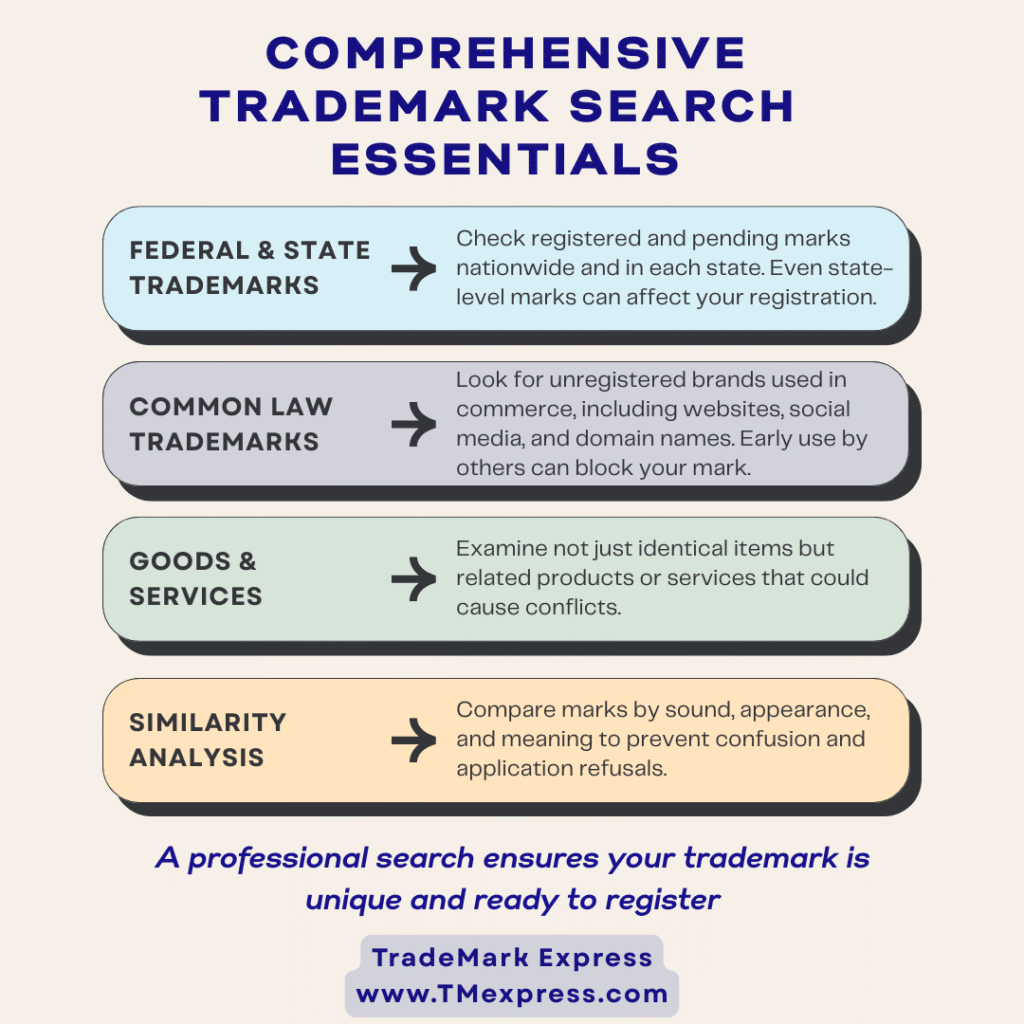
The same public records that display your mailing address are one of the places a trademark clearance search looks. A thorough search looks at pending and registered federal marks, state trademark registrations, and common law use, meaning rights that can arise from actually using a mark in a particular area, even without registration. It also looks for marks that are confusingly similar in sound, appearance, or meaning, plus related goods and services, since conflicts are not limited to your exact industry.
Because filing creates a lasting public record, it makes sense to confirm your name is available before you submit anything. If you are comparing research providers, ask what their search actually covers.
Frequently Asked Questions
Can anyone see my home address on a trademark?
Only if it appears in a public field. The USPTO says the domicile address is not publicly viewable when entered in the domicile field and a different mailing address is provided. USPTO employees can still see it, and the agency has reported past incidents where hidden domicile addresses were inadvertently exposed through some data systems.
Can I use a P.O. box as my domicile address?
USPTO examination guidance calls for a domicile address that is an actual physical location, so P.O. boxes and similar addresses are generally not accepted for that field. The USPTO makes exceptions for U.S. government entities and federally recognized tribes. Check current USPTO requirements before filing.
Is my email address public on a trademark application?
Yes. The USPTO states that all email addresses in a filing become part of the public record, and you must provide an owner email address even if an attorney provides a correspondence email. Many applicants create a separate email address for this purpose.
Can I remove my address after filing?
Possibly, but not easily. Removal generally requires a petition to the USPTO Director showing extraordinary circumstances, and a petition may be denied. It is simpler to decide which addresses go where before you file.
Check Availability and Prepare Your Application With Confidence
A name conflict is much easier to address before you file than after. TradeMark Express provides comprehensive trademark and common law research and helps you prepare your application using USPTO tools and guidelines, so you can file knowing your search is thorough. Contact us to get started.