
The Four Trademark Filing Basis Options Explained
A trademark filing basis is the reason you give the U.S. Patent and Trademark Office (USPTO) for why you are entitled to apply to register your mark. There are four trademark filing basis options: use in commerce, intent to use, foreign registration, and foreign application. Every application must include at least one.
What Is a Trademark Filing Basis?
Your filing basis tells the USPTO whether your mark is already in use, planned for launch, or tied to a foreign filing. Each option has its own requirements, and the statements you make are verified, meaning signed under a declaration acknowledging that willful false statements can jeopardize your application or resulting registration.
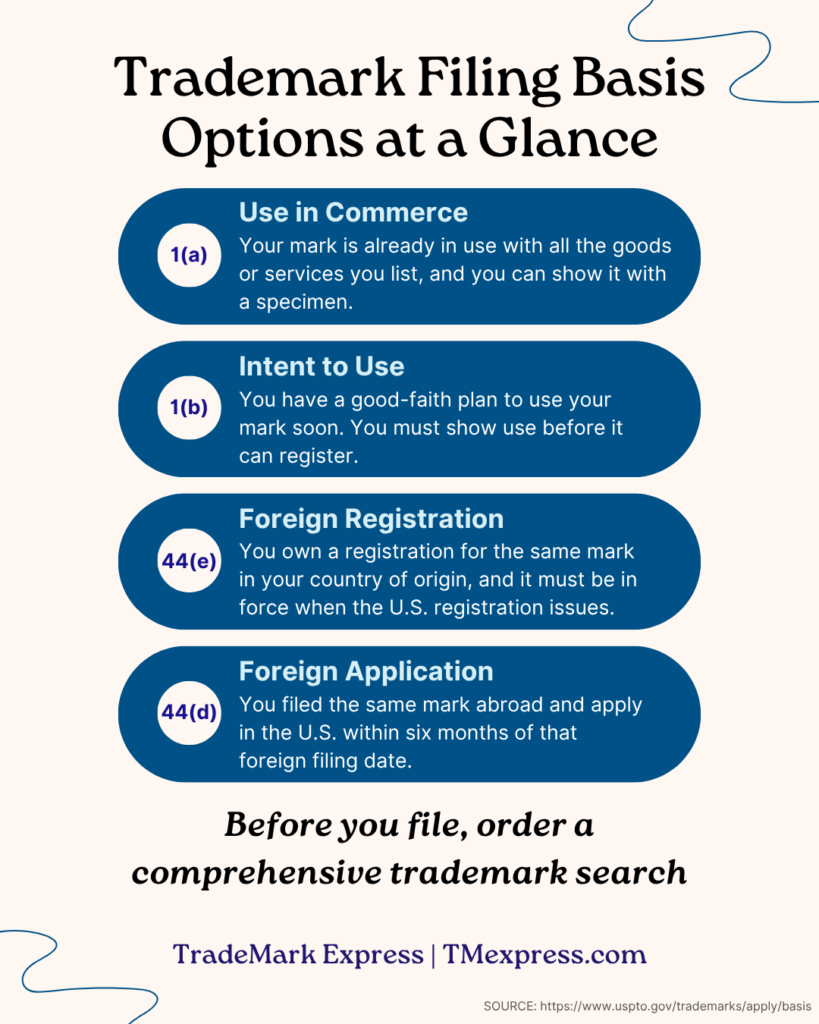
The Four Trademark Filing Basis Options
Use in Commerce (Section 1(a))
The Use in Commerce basis applies when you are already using the mark with all the goods or services listed in your application. You provide the dates of first use, a verified statement, and a specimen for each class.
A specimen is a real-world example of how the mark appears with your goods or services. For goods, the mark typically appears on the product, its packaging, or a display such as a web page, and the goods are actually sold or shipped. For services, the mark is used when selling, advertising, or performing the services, and the services are actually being rendered.
Intent to Use (Section 1(b))
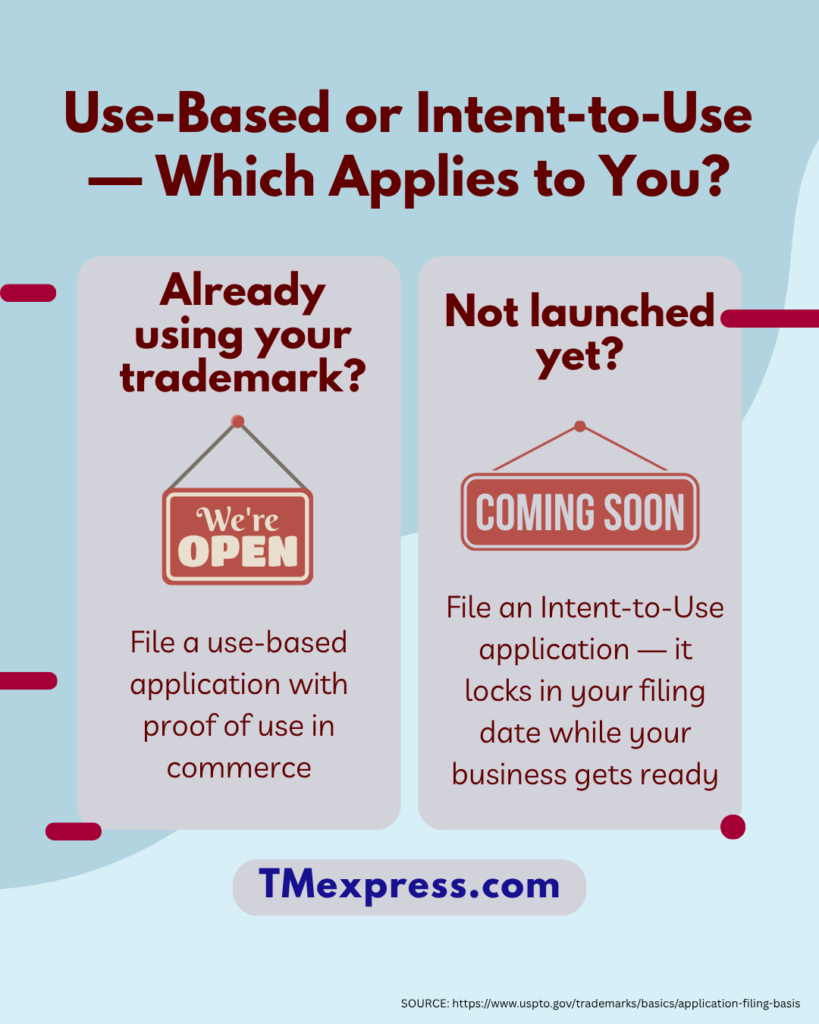
The Intent to Use basis fits a mark you have not launched yet but genuinely plan to use. You declare a bona fide intention to use the mark, which means a good-faith plan rather than a placeholder. It is not a basis for registration, so the mark will not register until you show it is in use in commerce.
When an intent-to-use application clears examination and publication, the USPTO issues a Notice of Allowance. That notice starts the clock. You have six months from its issue date to file a Statement of Use, which is your proof that the mark is now in use, or to request an extension. You can request up to five six-month extensions, but the Statement of Use must be filed within 36 months of the Notice of Allowance date. Missing a deadline results in abandonment of the application.
Foreign Registration (Section 44(e))
This basis is for applicants who own a registration for the same mark in their country of origin. You submit a copy of that registration, and your U.S. goods and services cannot go beyond what the foreign registration covers. The foreign registration must also be in force when the U.S. registration would issue. The USPTO requires applicants based outside the U.S. to be represented by a U.S.-licensed attorney.
Foreign Application (Section 44(d))
Also called a foreign priority basis, this option applies when you own an earlier foreign application for the same mark and the same goods or services, and you file in the U.S. within six months of the foreign filing date. It lets your U.S. application carry the foreign filing date. It does not serve as a registration basis on its own, so you would still need to establish use in commerce or a foreign registration.
A fifth route, Section 66(a), applies when an international registration is extended to the U.S. through the Madrid system. It is not selected on a U.S. application, and it cannot be combined with the four above.
Can You Claim More Than One Filing Basis?
Yes, as long as you meet the requirements for each one. The USPTO does not allow use in commerce and intent to use for identical goods or services in the same application. Different bases can apply to different classes, or to different items within one class.
For example, imagine a bakery named Sugarbell currently selling cupcakes (Trademark Class 30) under its brand could claim use in commerce for the Sugarbell cupcake line and then intent to use for a frozen cupcake batter (also Class 30) line it plans to add next year. Each basis must be listed separately, followed by the goods or services it covers.
Why Trademark Research Matters Before You Choose a Filing Basis
No filing basis shields an application from conflicts with existing marks. The USPTO reviews applications for likelihood of confusion, which looks at whether marks are similar enough that consumers might assume the goods or services come from the same source.
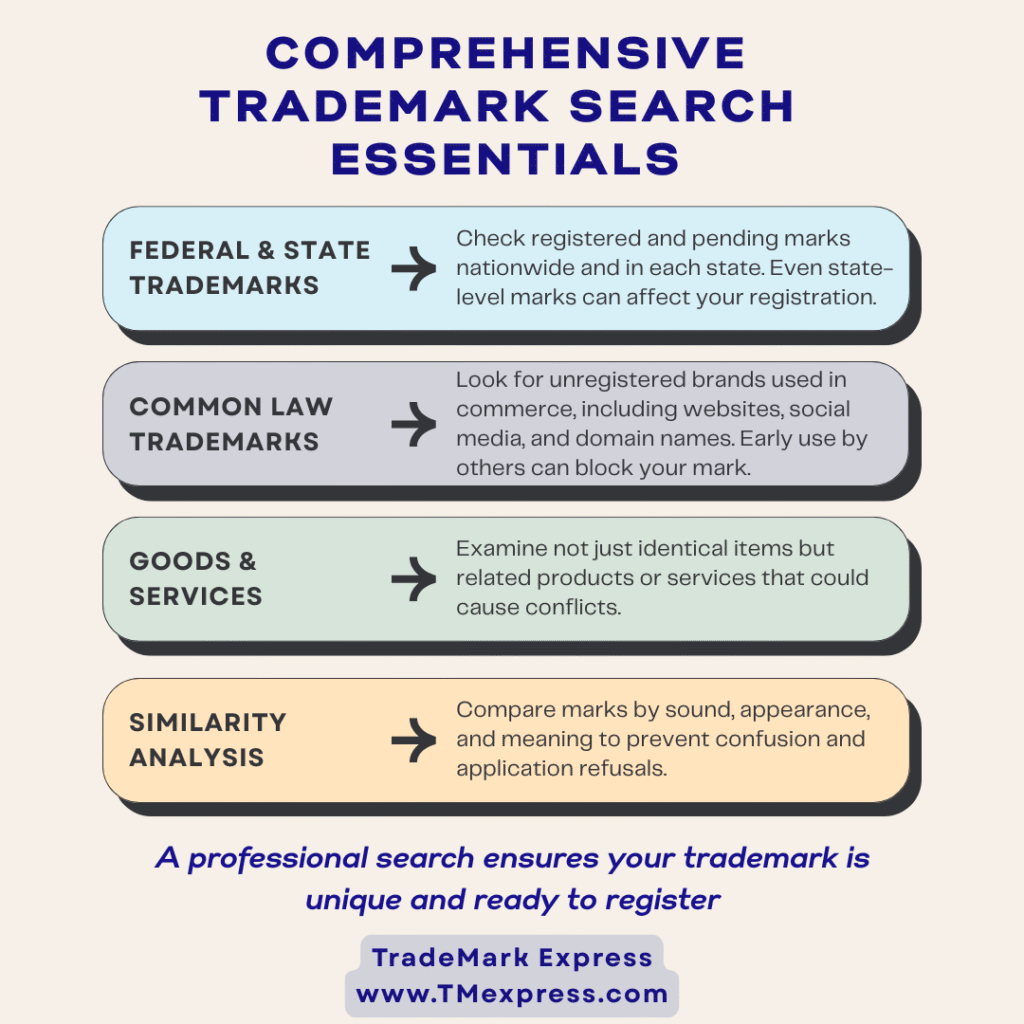
A comprehensive trademark search should therefore cover:
- Federal trademark records, both pending and registered
- State trademark registrations
- Common law usage, since rights can arise from actual use of a mark even without registration, and those rights are tied to the geographic area of use
- Marks that are similar in sound, appearance, or meaning, not just identical matches
- Related goods and services beyond your own category
When comparing trademark clearance search providers, ask whether the search reaches beyond exact matches and federal records.
Trademark Filing Basis FAQs
How do I know which trademark filing basis applies to me?
Start by asking yourself a few questions: Are you already using the mark with every item you plan to list? Do you plan to use it soon? Do you own a foreign registration, or a foreign application filed within the last six months, for the same mark?
Can I file before I start using my mark?
Yes, an intent-to-use basis exists for that purpose. You must declare a good-faith intention to use the mark, and you must later show use before the mark can register.
Can I change my filing basis after I apply?
In some cases, yes. The USPTO allows applicants to clarify, substitute, or add a basis, provided the requirements for the new basis are met.
Get Started with Trademark Research & Application Help
Choosing a filing basis is easier when you know your mark is clear to pursue. Contact TradeMark Express for a full trademark search and help preparing your application using USPTO tools and guidelines.