Who Should Own a Trademark?
How Does the USPTO Define a Trademark Owner?
A mark’s owner is the party that uses it or, when a related company uses it, the party that controls the nature and quality of the goods or services.
For a use-based application, the applicant must be the owner of the mark on the filing date. For an intent-to-use application, the applicant must be entitled to use the mark and have a genuine intention to use it.
Common Types of Trademark Owners Compared
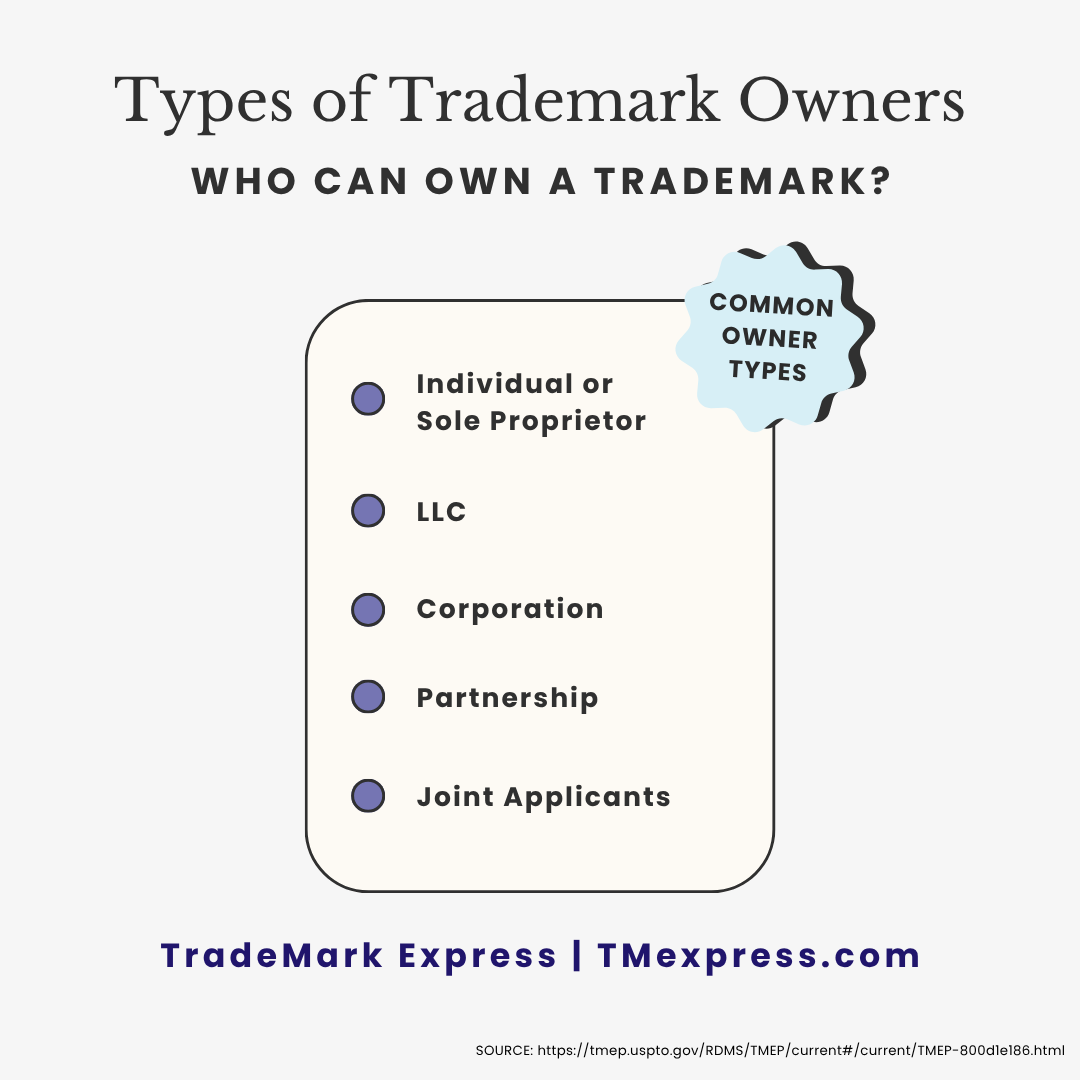
Trademark applications ask for the applicant’s entity type.
Owner type | What it means | Worth knowing |
Individual or sole proprietor | A person who owns and runs a business personally, without a separate legal entity | An individual can state the business name they operate under, but the applicant is still the person. |
LLC | A limited liability company formed under the laws of a state or foreign country | The application lists the state or country of organization. “Limited liability corporation” is not a recognized entity type, so the USPTO may ask which one applies. |
Corporation | A legal entity incorporated under state law or the law of a foreign country, including nonprofit corporations | The application lists the state or country of incorporation. |
Partnership | Two or more people carrying on a business together | Domestic partnerships list their general partners or active members. |
Joint applicants | Two or more people or entities who own the mark together | Not a legal entity type in itself. Each applicant is named, with citizenship or state of organization. |
Other entities | Trusts, estates, associations, limited liability partnerships, governmental bodies, and others | For example, a trust’s trustees are named as the applicant. |
To see how a trademark differs from an LLC, read our guide to trademark vs. LLC.
Who Should Own a Trademark?
Questions That Help Identify the Owner
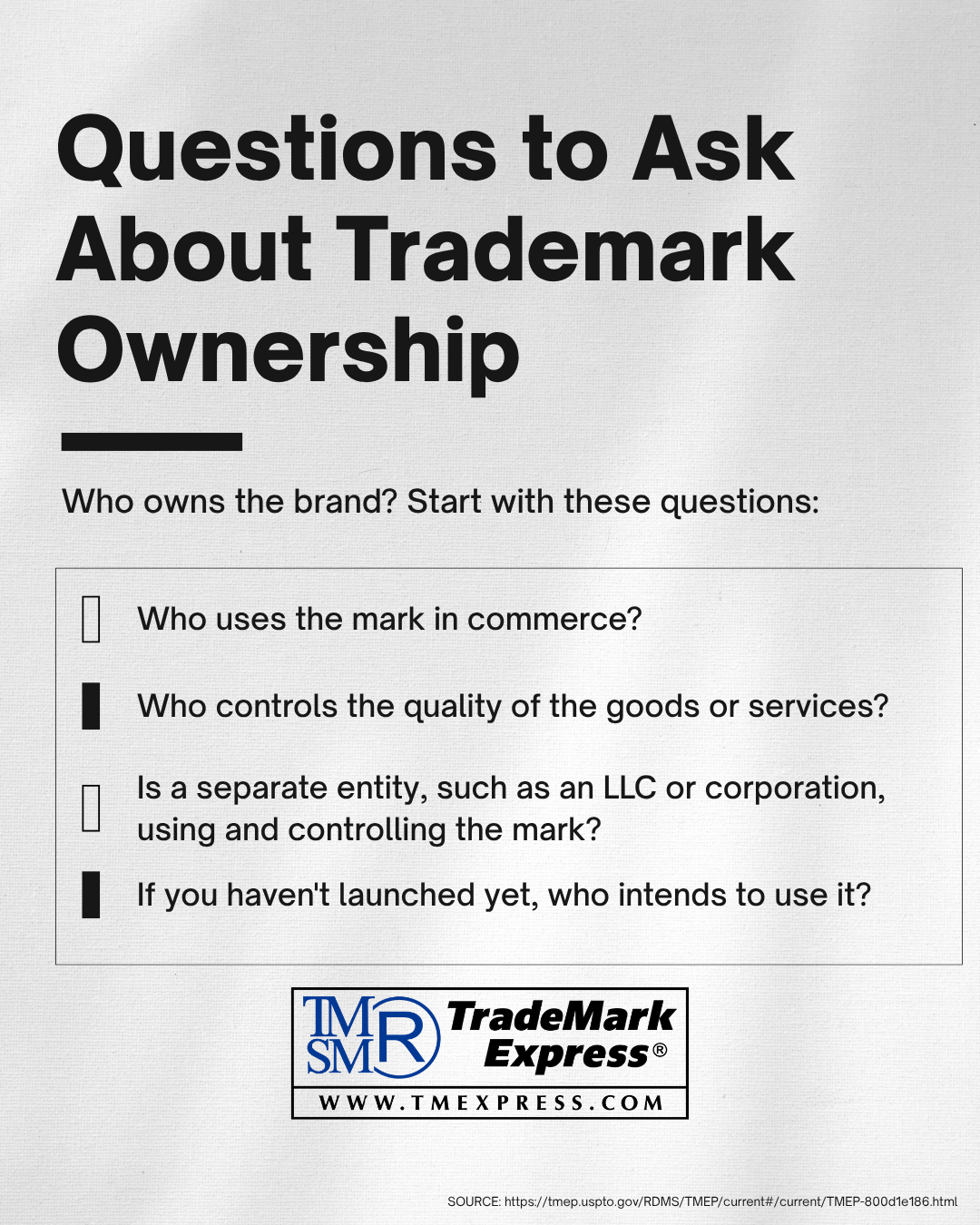
• Who uses the mark in commerce, and who controls the nature and quality of the goods or services?
• Is a separate legal entity, such as an LLC or corporation, the one using and controlling the mark?
• Does anyone else use the mark under a license or similar arrangement?
• For a brand that has not launched, who has a genuine intention to use the mark?
• A solo business owner: With no separate entity, the individual may be the owner.
• An LLC or corporation: When the company sells the goods or services and controls their quality, it is often the one using the mark.
• Co-founders: The owner could be the company they form, a partnership, or the individuals together as joint applicants.
Because the USPTO expects the applicant to be the owner when the application is filed, it is worth reviewing how the owner is identified before you submit. See also our post on trademark application mistakes to avoid. A business or trademark attorney can help with ownership questions.
Why a Comprehensive Trademark Search Comes First
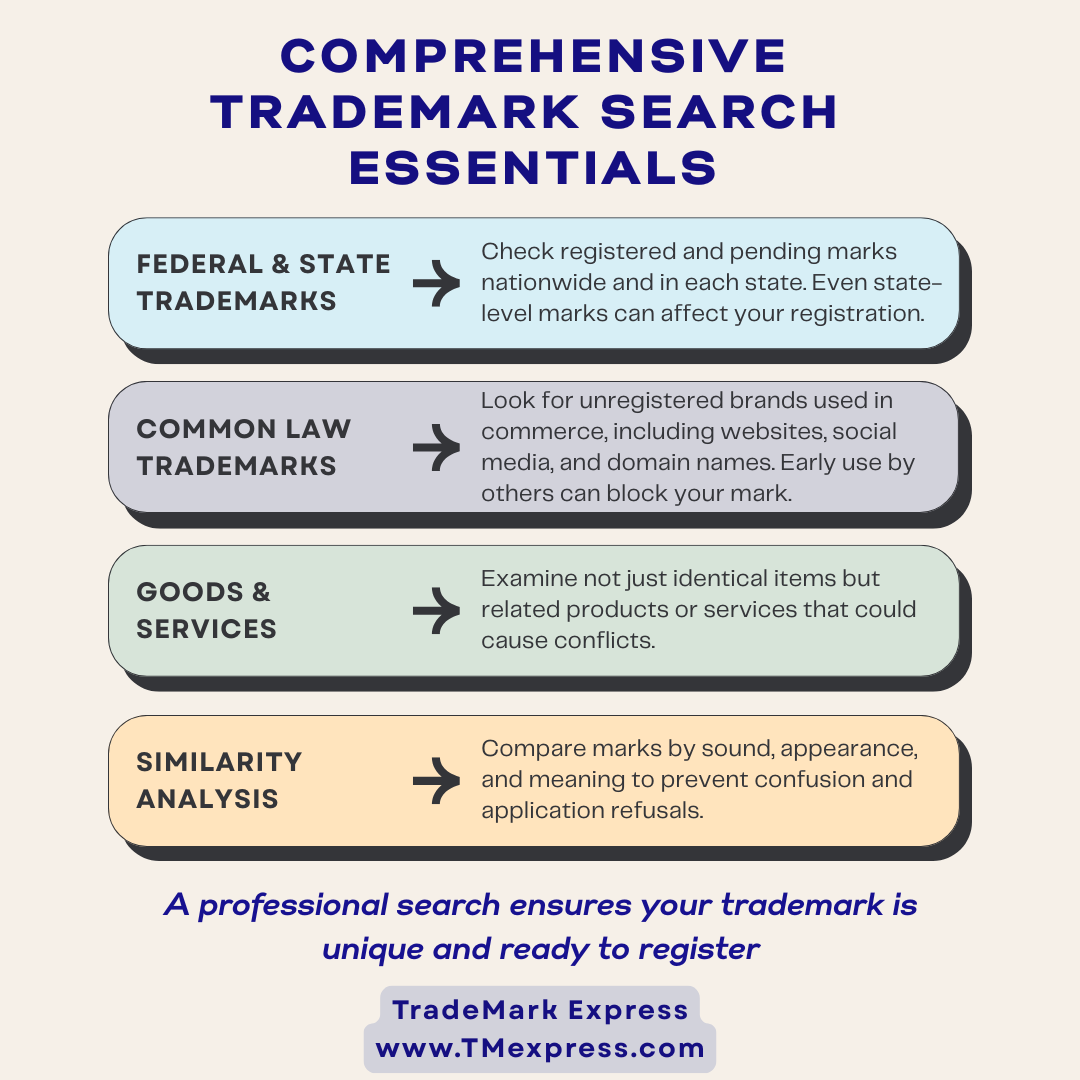
A comprehensive trademark search should cover federal records (pending and registered marks at the USPTO), state trademark registrations, and common law use. Common law rights can arise from actually using a mark in commerce, even without registration, and are tied to the geographic areas of use.
A thorough trademark clearance search also looks for marks similar in sound, appearance, or meaning, because the USPTO’s standard is likelihood of confusion, not identical matches. It should cover related goods and services too, since conflicts can reach beyond your industry.
Frequently Asked Questions
Can a DBA be the trademark applicant?
Not by itself. A DBA is a trade name, not a legal entity, so the applicant is the person or entity using it.
Does forming an LLC automatically give the LLC my trademark?
Not by itself. Forming an LLC creates a legal entity, but trademark rights come from using the mark or from a properly filed application.
Can I file as an individual and transfer the trademark to my company later?
An assignment can transfer ownership of a mark. However, the USPTO may treat an application as void if the named applicant did not own the mark when it was filed, and the TMEP says an assignment cannot cure that. A trademark attorney can discuss your situation.
Get Your Trademark Search & Application Details Right
Before you file, TradeMark Express can run a comprehensive trademark search and help you prepare your application using USPTO tools and guidelines. If your results raise questions, you can take them to a trademark attorney through our referral network. Contact TradeMark Express to get started.