
Petition to Cancel Trademark Registrations Explained
A petition to cancel a trademark is a formal request asking the Trademark Trial and Appeal Board (TTAB), part of the U.S. Patent and Trademark Office (USPTO), to cancel an existing federal trademark registration. It is the tool used to challenge a mark that has already registered, rather than one still moving through the review process.
Petition to Cancel vs. Trademark Opposition
The main difference is timing. An opposition challenges a pending application before it registers, while a petition to cancel challenges a mark after the registration has been issued.
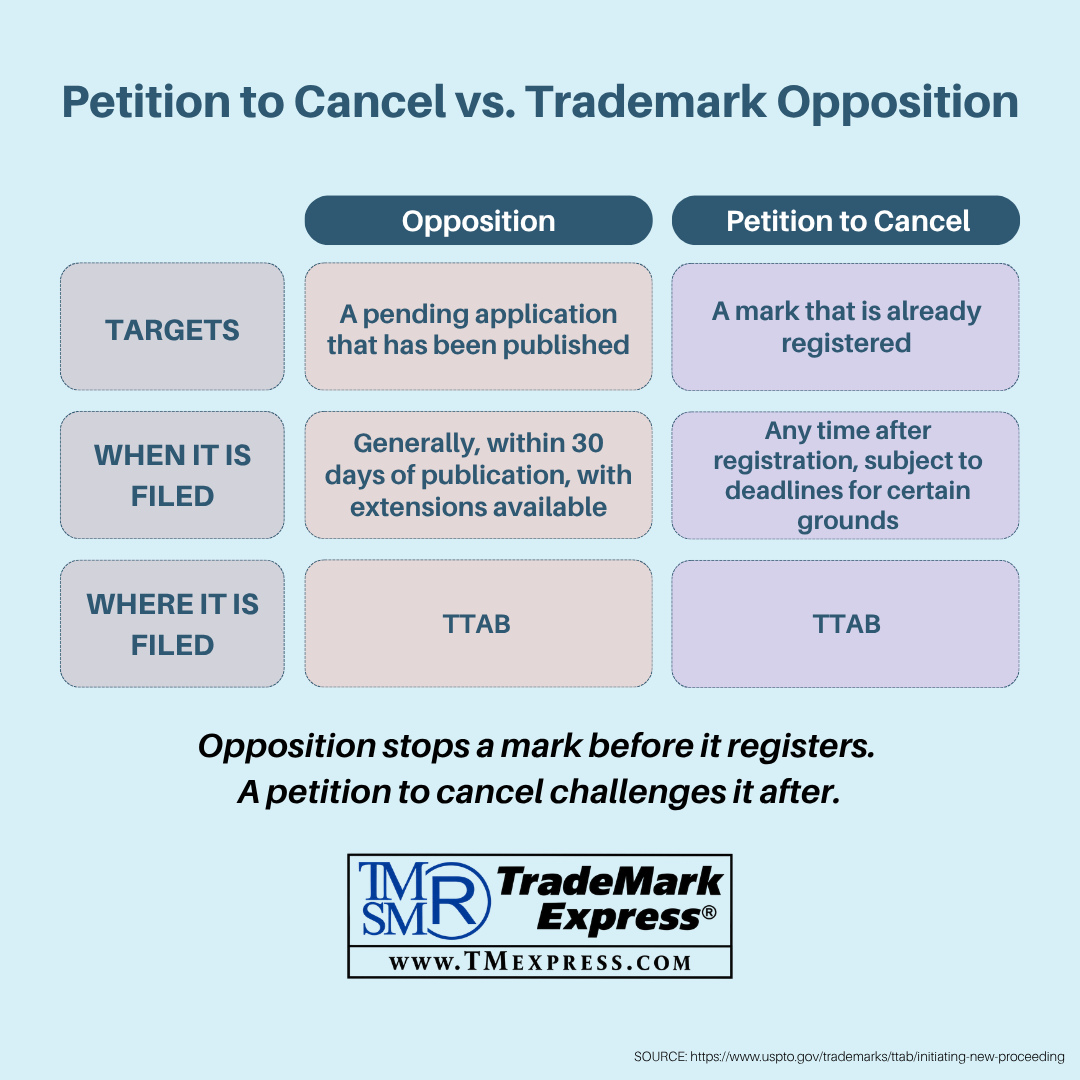
OPPOSITION | PETITION TO CANCEL | |
Targets | A pending application that has been published | A mark that is already registered |
When it is filed | Generally, within 30 days of publication, with extensions available | Any time after registration, subject to deadlines for certain grounds |
Where it is filed | TTAB | TTAB |
If you want the full picture of the pre-registration option, see our post on what a trademark opposition is.
Who Can File a Petition to Cancel Trademark Registrations?
Any person or business that believes it would be damaged by a registration may file one.
That might be a competitor, the owner of an earlier mark, or an applicant whose own application was blocked by the registration. The petition is filed electronically with the TTAB, must state the grounds for cancellation, and requires a USPTO fee.
What Are the Grounds for Canceling a Trademark?
The available grounds depend on how long the mark has been registered. Within the first five years, a petitioner may raise any reason that could have prevented registration in the first place, such as a likelihood of confusion (the USPTO’s test for whether consumers would likely be confused about who is behind a product or service) or mere descriptiveness.
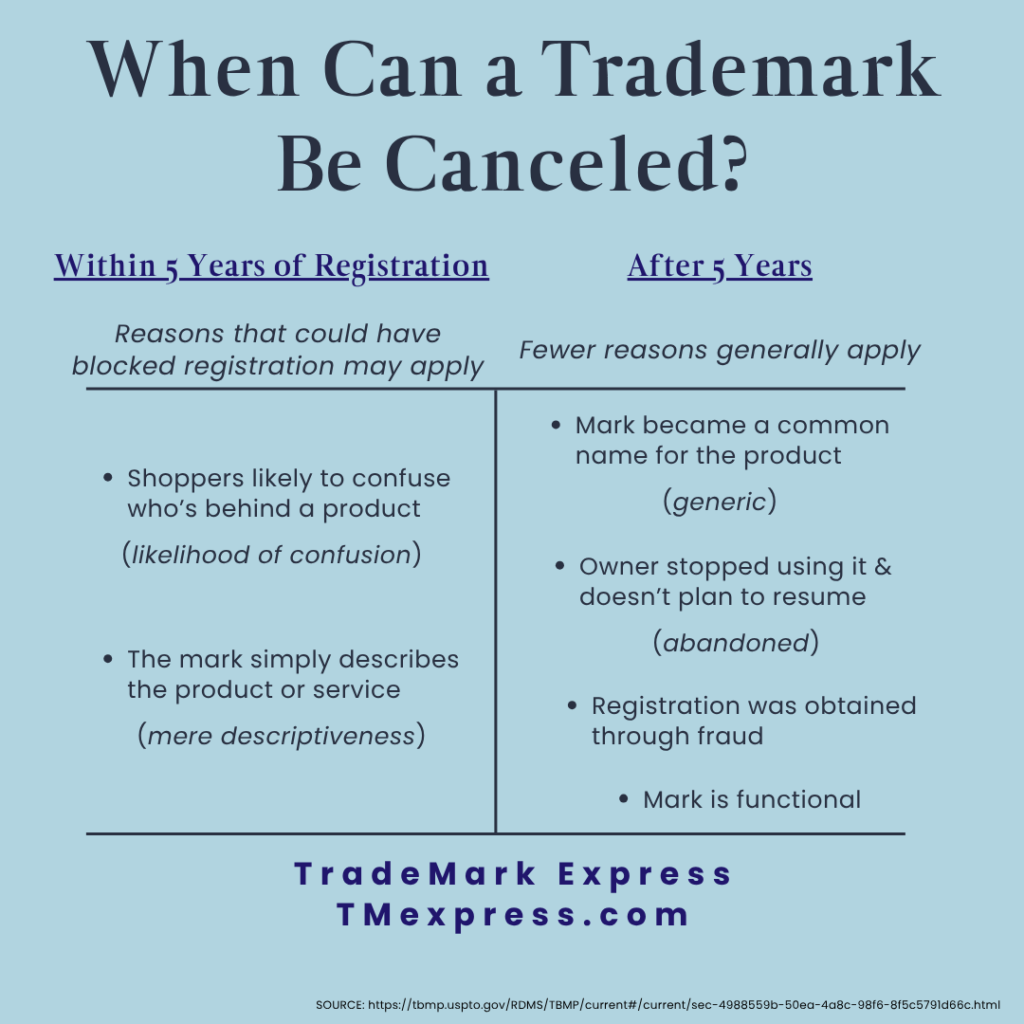
After five years, the grounds narrow. They generally include reasons such as:
- The mark has become a generic term
- The mark has been abandoned, meaning it is no longer in use and the owner does not intend to resume
- The registration was obtained through fraud
- The mark is functional
What Happens After a Petition to Cancel Is Filed?
The registration owner is notified and given a set period, typically 40 days, to respond.
If no response is filed, the TTAB may enter a default judgment and cancel the registration. If the owner responds, the case moves through discovery, evidence, and written arguments, which resembles a streamlined court case and can take a year or longer. Check out the TBMP section about the Board Proceedings.
The TTAB decides only whether the registration should remain on the federal register. It does not award damages or order anyone to stop using a name.
Why a Comprehensive Trademark Search Comes First
Cancellation proceedings are one more reason to understand the trademark landscape before you file. A registered mark can sometimes be challenged, but the outcome is never certain, and an existing registration can stand in the way of your own application in the meantime. A comprehensive trademark search helps you spot conflicts before you invest in a brand.
If you are deciding who should handle your trademark clearance search, look for coverage of all of the following:
- Federal trademark records: both pending and registered marks in the USPTO database
- State trademark registrations: which may not appear in federal records
- Common law usage: rights that arise from actually using a mark, even without registration, and that are tied to the geographic area where the mark is used
- Similar marks: those that look, sound, or mean something alike, since the USPTO’s standard is confusing similarity rather than identical matches
- Related goods and services: conflicts are not limited to your exact industry if consumers would view the offerings as related
A search that checks only for identical names can miss the very conflicts that cause problems later.
Petition to Cancel Trademark FAQs
Can I file a petition to cancel a trademark myself?
Technically you can, but we strongly recommend hiring a trademark attorney. A petition to cancel is a formal proceeding with court-style rules, strict deadlines, and consequences that can last for years.
How much does a petition to cancel cost?
As of this post, the USPTO charges $600 per class of goods or services for a TTAB petition for cancellation, and attorney fees are separate. Check the USPTO fee schedule to confirm the current amount.
Can I use a petition to cancel against a mark that has not registered yet?
No. A petition to cancel applies only to registered marks. A pending application that has been published for opposition may instead be challenged through an opposition.
What happens if a trademark registration is canceled?
The registration is removed from the federal register, and the owner loses the benefits that come with it. Depending on the facts, the owner may still have common law rights based on actual use.
Start With a Trademark Search
Whether you are choosing a new brand name or concerned about an existing registration, a thorough trademark search gives you clearer information to work with. Contact TradeMark Express for comprehensive trademark research and application preparation assistance.