
Trademark Infringement Explained
Trademark infringement is the use of a trademark, or one that is confusingly similar, on goods or services in a way that is likely to confuse consumers about who is behind them. Whether infringement has actually occurred is decided by a court, so this post explains the general concept rather than any specific situation.
A trademark is a word, name, logo, or other identifier that tells customers where a product or service comes from. Infringement is about protecting that signal.
What Does Trademark Infringement Mean?
Trademark infringement means another party’s use of a mark may lead customers to believe their goods or services come from, or are connected to, someone else. It does not require an exact copy. A similar name, logo, or slogan can be enough if consumers could reasonably mix them up.
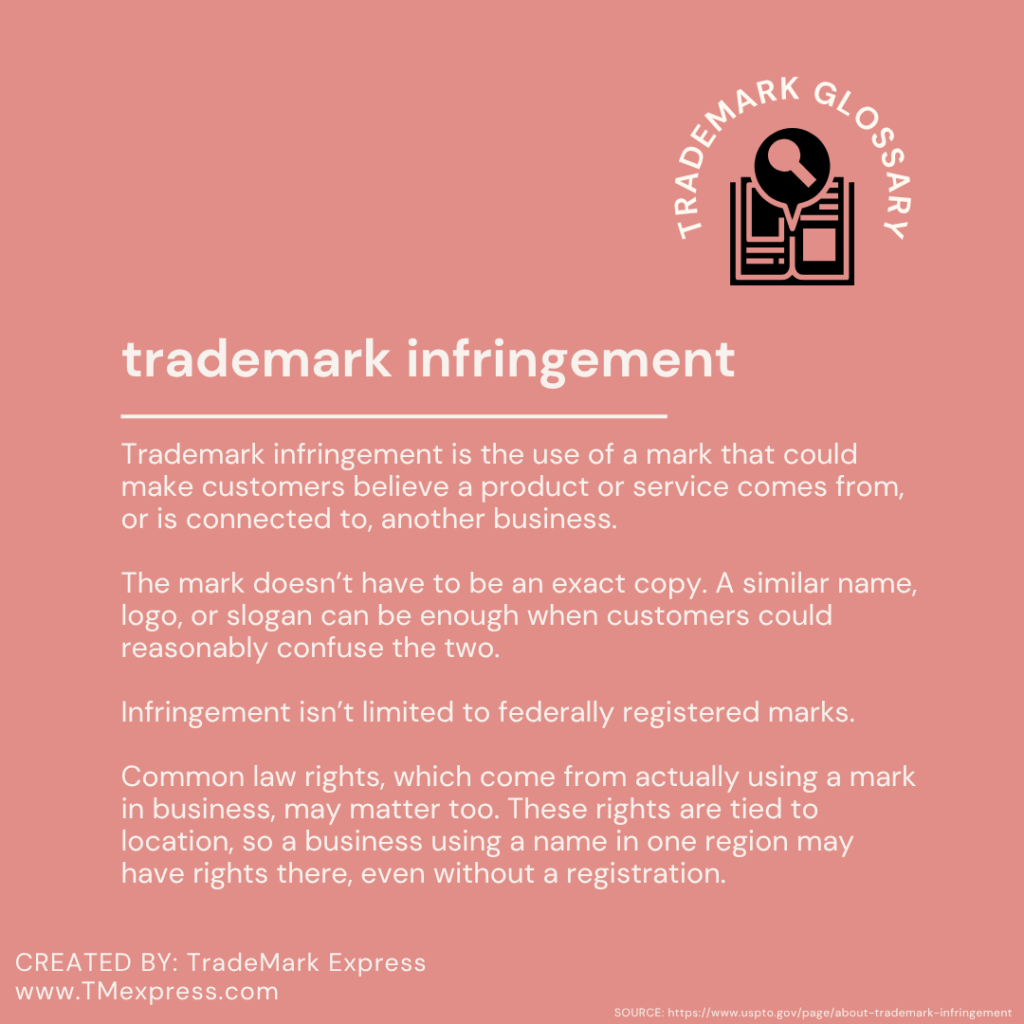
Infringement is not limited to federally registered marks. Common law rights, which arise from actually using a mark in commerce, can also matter. These rights are geographically based, so a business using a name in a particular region may have protectable rights there even without a registration.
How Does the Confusion Test Work?
The confusion test, known as likelihood of confusion, asks whether an ordinary consumer is likely to be confused about the source of goods or services. The United States Patent and Trademark Office (USPTO) applies this same standard when it reviews applications. Courts weigh several factors, and the exact list varies by jurisdiction.

Common considerations include:
- Similarity of the marks. Marks are compared for sound, appearance, meaning, and overall commercial impression, which is the general feeling a mark leaves with consumers.
- Relatedness of the goods or services. Products or services do not need to be identical. If consumers would expect them to come from the same source, they may be considered related.
- Trade channels and customers. Selling through similar stores, websites, or to similar buyers can increase the chance of confusion.
- Strength of the earlier mark. Distinctive marks generally receive broader protection than descriptive ones.
- Evidence of actual confusion. Misdirected emails, calls, or orders can be relevant.
No single factor decides the outcome. They are weighed together.
Why a Comprehensive Trademark Search Matters
A comprehensive trademark search helps identify potential conflicts before you invest in branding, packaging, or an application.
If you are deciding who should perform your trademark clearance search, here is what thorough coverage looks like:
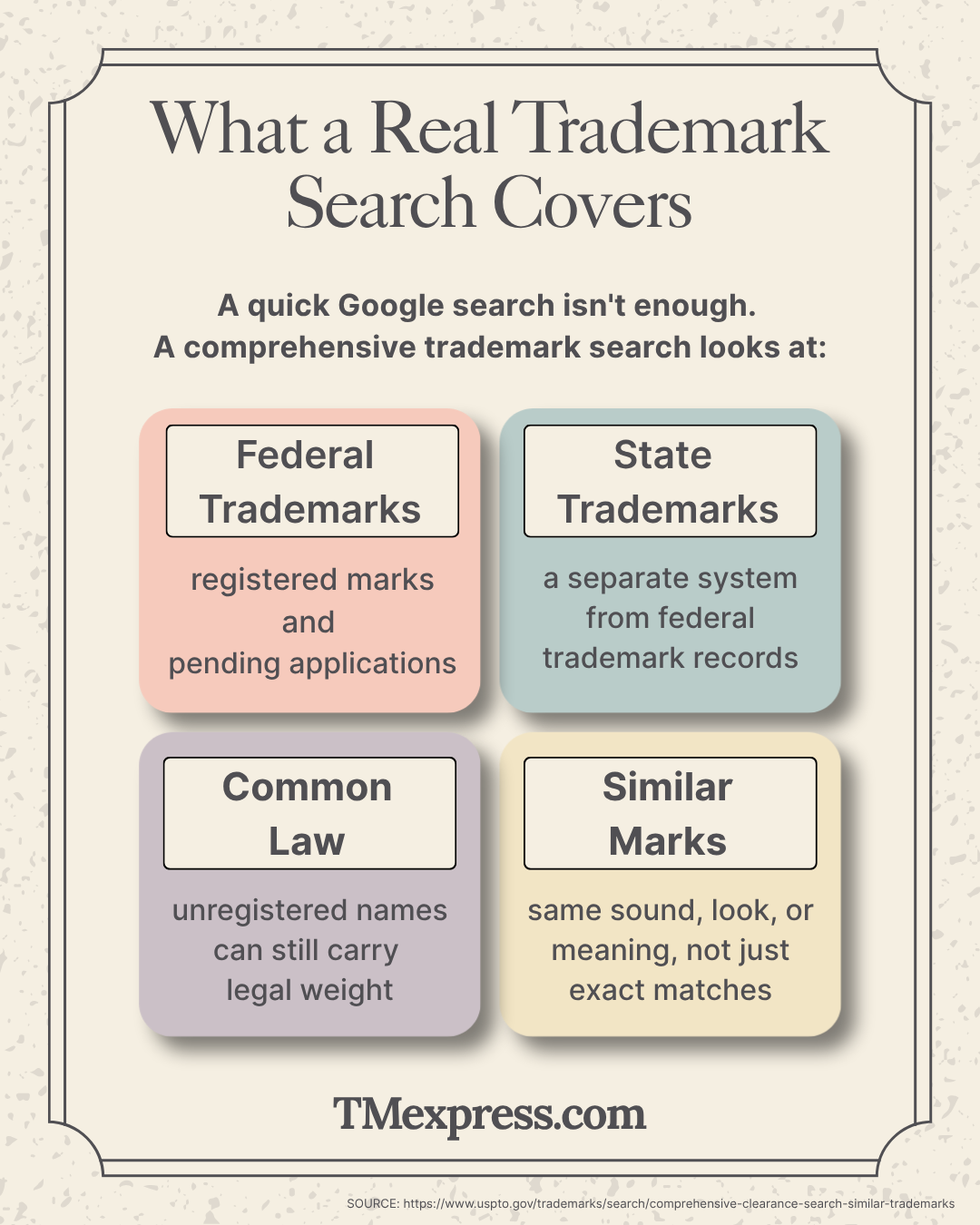
- Federal trademark records. Both pending applications and registered marks in the USPTO database.
- State trademark registrations. Marks registered with individual states do not appear in federal records.
- Common law usage. A trademark and common law search looks for unregistered marks in use, such as on business websites, social media, and directories.
- Similar marks in sound, appearance, or meaning. A search limited to identical matches will miss confusingly similar marks, which is the standard the USPTO actually applies.
- Similar or related goods and services. Conflicts are not limited to your exact industry, so a full trademark search should look beyond your own category.
Cutting corners on any of these areas can leave gaps that surface later, often after money has been spent on a name.
Trademark Infringement FAQs
Can I infringe a trademark by accident?
Intent is only one consideration. A business can use a name it believes is original and still face a conflict if it is likely to confuse consumers with an earlier mark. This is why searching first is so valuable.
Does a mark have to be registered to be protected?
No. Unregistered marks can have common law rights based on actual use. Those rights are generally tied to the geographic area where the mark is used.
Is using a similar name in a different industry safe?
Not necessarily. Related goods or services can still raise confusion concerns, so it helps to review marks beyond your own category.
What is the difference between infringement and a USPTO refusal?
Infringement is a dispute that courts may decide. A USPTO refusal for likelihood of confusion happens during application review when an examiner finds a conflicting earlier mark. The two processes rely on similar reasoning, but they are separate.
Check Before You Commit to a Name
Before you launch or file, a comprehensive trademark search can show what is already out there. Contact TradeMark Express to request trademark research and get help preparing your application.