
Understanding How Non-Use Can Lead to Trademark Abandonment
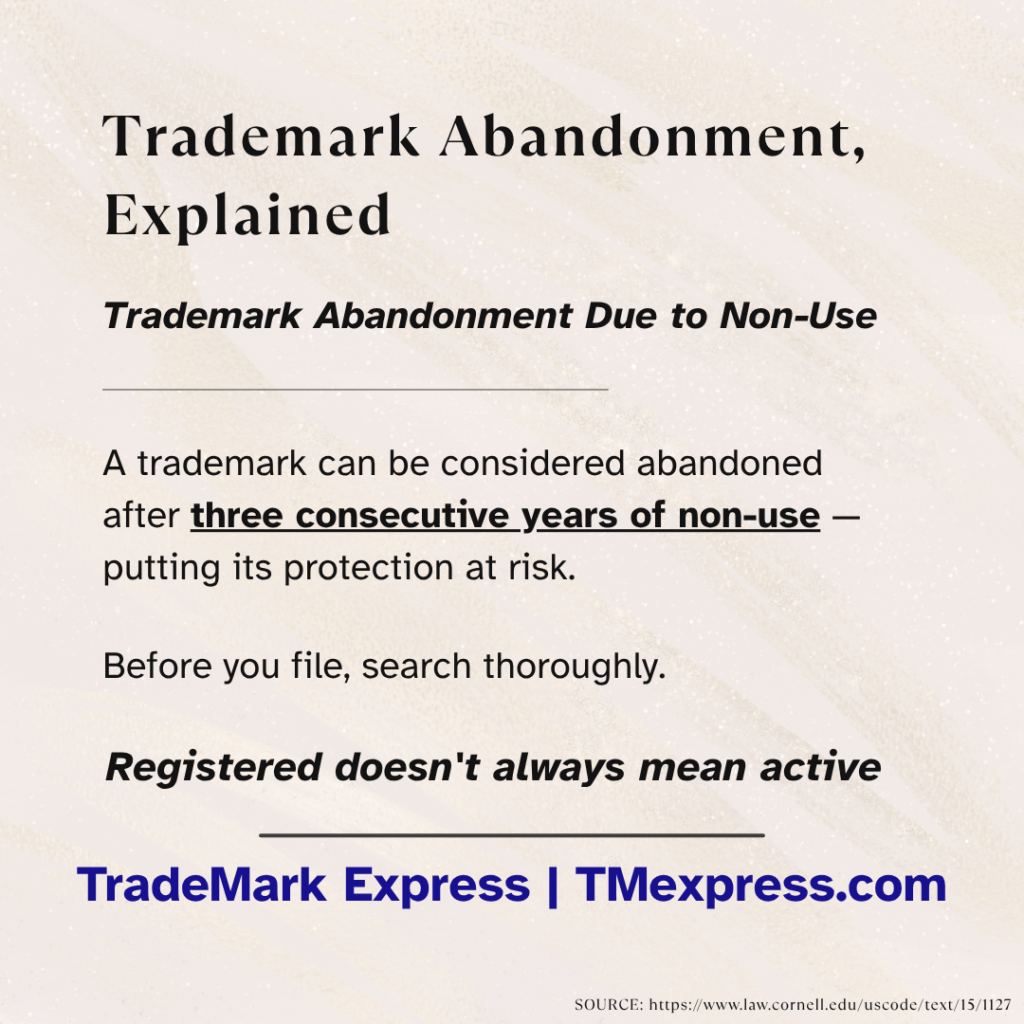
Trademark abandonment due to non-use happens when a trademark owner stops using a mark in commerce with no intention of resuming that use. Under Section 45 of the Lanham Act (15 U.S.C. § 1127), three consecutive years of non-use creates a rebuttable legal presumption of abandonment, meaning the mark can lose its protected status unless the owner can show continued use or a genuine intent to resume.
This matters more than most business owners realize. A mark that isn’t being actively used doesn’t just sit quietly in the background — it can become available for someone else to claim.
What Counts as "Non-Use" Under Trademark Law
Non-use generally means the owner has stopped selling goods or offering services under the mark, and there’s no clear plan to pick it back up. The three-year rule comes from the Lanham Act, which treats extended non-use as evidence that the owner has effectively walked away from the mark, even without a formal statement to that effect.
It’s worth noting that abandonment isn’t only about registered marks. Common law trademark rights, which arise simply from using a mark in commerce, can fade in the same way. If a business stops operating under a name in a particular region, any common law protection tied to that use can weaken or disappear along with it.
Why Abandonment Matters for Registered Trademarks
Federal registration comes with maintenance requirements designed to confirm a mark is still active.
Owners must periodically file documentation with the USPTO showing continued use, and marks that fail to meet these requirements are at risk of cancellation. A mark can also be challenged as abandoned by a third party through a formal cancellation proceeding, separate from the routine maintenance filings.
For business owners evaluating a new brand name, this creates an important research consideration: a mark showing up as “registered” in a database search isn’t necessarily still active in the real world.
Why This Matters for Trademark Research
This is exactly why a surface-level check of the USPTO database isn’t enough.
A comprehensive trademark search should look at more than just current registration status — it should consider actual use in the marketplace, since a registered mark that’s been abandoned in practice may no longer pose the conflict it appears to on paper.
At the same time, a thorough trademark clearance search still needs to account for:
- Federal trademark records — both pending and registered marks in the USPTO database
- State trademark registrations, which exist separately from federal protection
- Common law usage, since rights based on actual use in commerce can exist even without any registration, and are typically limited to the geographic area where the mark is used
- Marks that are similar in sound, appearance, or meaning — not just identical matches, since “confusingly similar” is the actual standard the USPTO applies
- Related goods and services, since conflicts aren’t limited to identical industries
Skipping any of these layers — including a realistic look at whether a mark is still genuinely in use — can lead to real problems down the road, from unexpected office actions to disputes with a business that turns out to have stronger rights than a database search suggested.
FAQ: Trademark Abandonment Due to Non-Use
How long can a trademark go unused before it’s considered abandoned?
Three consecutive years of non-use creates a legal presumption of abandonment under federal trademark law, though intent not to resume use can be shown sooner in some circumstances.
Does a trademark automatically expire if it’s abandoned?
Not automatically. Abandonment typically needs to be established, either through a formal USPTO maintenance failure or a cancellation proceeding, rather than happening on its own.
Can I use a mark that appears to be abandoned?
This is a common question during a trademark availability search, and it’s exactly the kind of issue worth discussing with a trademark attorney before moving forward, since the specifics of the prior use matter.
Does abandonment affect common law trademark rights too?
Yes. Common law rights are based on actual, ongoing use in commerce, so stopping use in a given area can weaken or eliminate the protection tied to that use.
Ready to Search Before You Commit to a Name?
Whether you’re clearing a brand-new name or trying to understand whether a similar mark is still active, a comprehensive trademark search can help you see the full picture — not just what’s registered, but what’s actually being used. TradeMark Express can help you get clarity before you file. Contact us to get started.