
Understanding Concurrent Use Trademark Registrations
A concurrent use trademark registration allows two or more unrelated businesses to hold federal registrations for the same or a confusingly similar mark, with each owner’s rights limited to a specific geographic territory.
How Concurrent Use Registration Works
To pursue a concurrent use registration, an applicant files a concurrent use application (or converts an existing application into one) and asks the Trademark Trial and Appeal Board (TTAB) to determine that the applicant and the other party can each register the mark for their own geographic area without confusing consumers.
This process is based on actual use in commerce, not on an intent to use the mark, since the whole point is to sort out rights between businesses that are already operating.
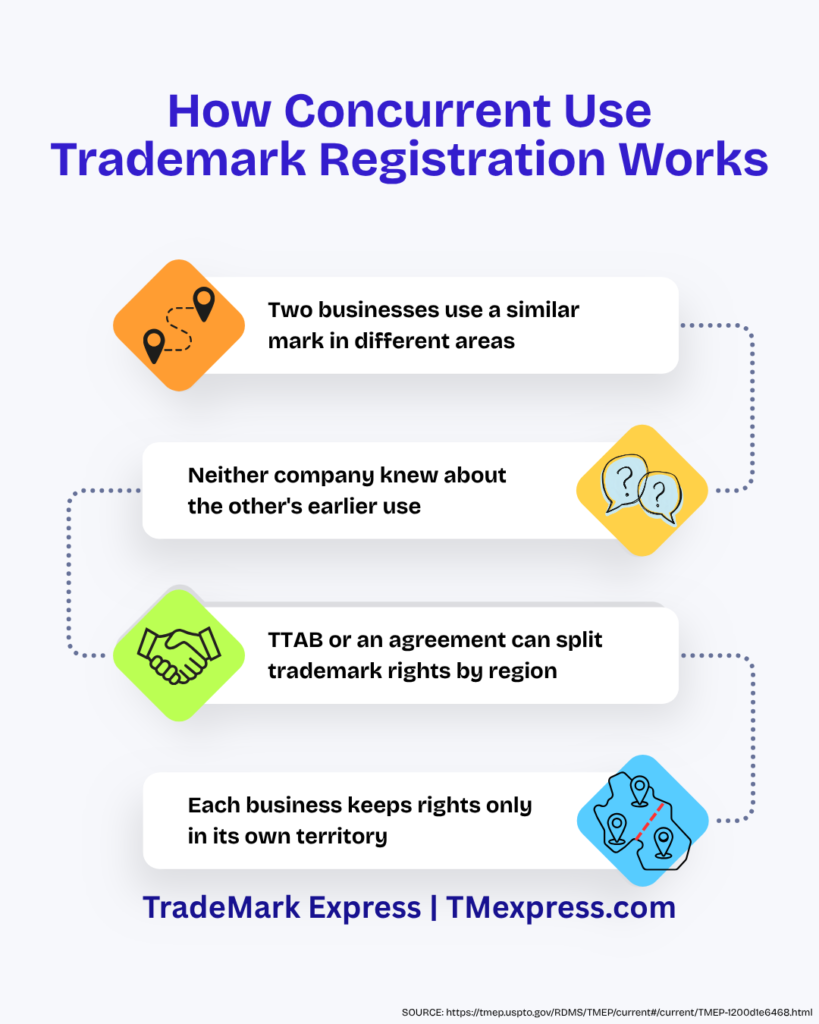
For example, say Amber Ridge Roasters has been selling coffee under that name in Colorado for six years, and Amber Ridge Coffee Co. has been operating independently under a nearly identical name in Vermont for four years.
Neither company knew the other existed until Amber Ridge Coffee Co. applied for federal registration and the comprehensive trademark search company turned up Amber Ridge Roasters’ earlier state filing. Rather than fight over who gets to use the name, the two companies could pursue a concurrent use registration — each keeping rights to “Amber Ridge” in their existing territory, with neither one blocking the other nationally.
Sometimes the parties resolve this by agreement, submitting a concurrent use agreement that defines each party’s territory. Other times, the TTAB has to decide the matter after both sides present evidence. Either way, the outcome is the same: two registrations for the same mark, each restricted to a defined area, rather than one registration covering the whole country.
Where Common Law Rights Come In
Concurrent use situations exist because trademark rights aren’t only created by federal registration. Common law rights arise simply from actually using a mark in commerce, and these rights are geographically based.

Consider Foothill Bicycle Supply, a shop that’s sold gear under that name in Boise for over a decade but never filed for federal or state registration. If a different company later files a federal application for “Foothill Bicycle Co.” and starts expanding toward the Pacific Northwest, a federal-only search wouldn’t have caught Foothill Bicycle Supply at all — there’s no registration to find.
But Foothill Bicycle Supply may still hold protectable common law rights in and around Boise simply because it’s been using the name there first, which is exactly the kind of overlap that can end up needing a geographic carve-out down the line.
Why This Makes Trademark Research So Important
Concurrent use disputes are a preventable headache in a lot of cases. A comprehensive trademark search should go well beyond checking if an identical mark is registered federally.
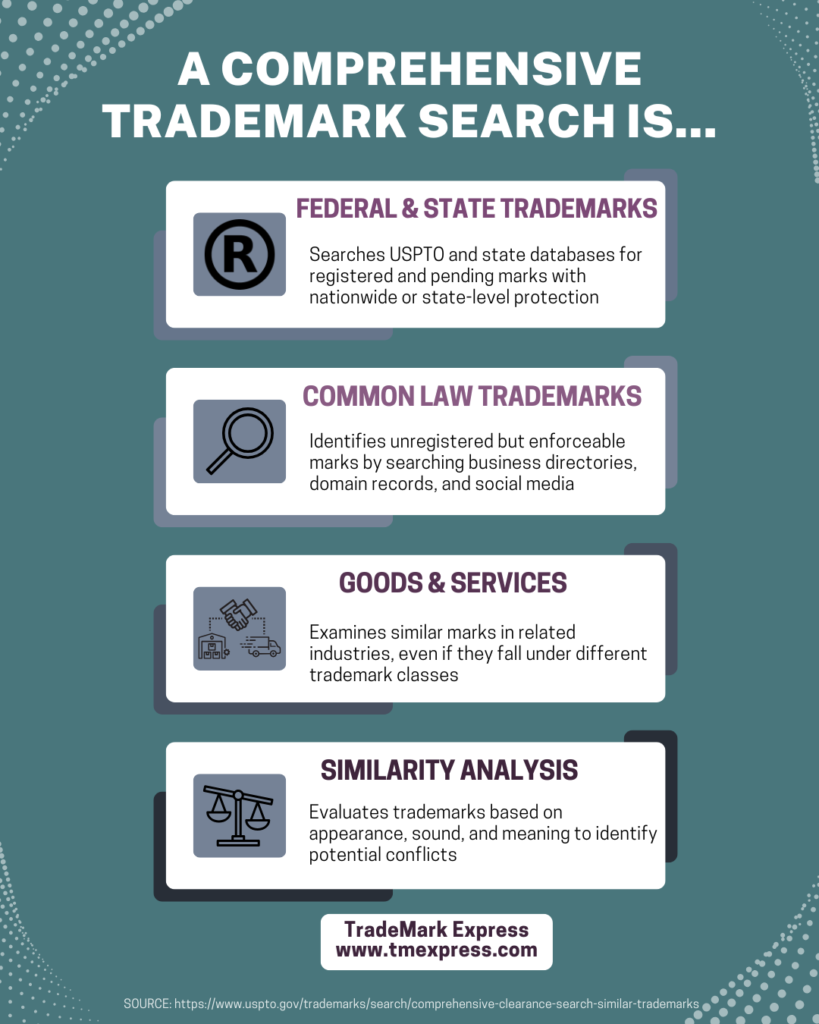
• Federal trademark records, including both pending and registered marks in the USPTO database
• State trademark registrations, which don’t always show up in a federal-only search
• Common law usage, meaning marks in active use that were never registered anywhere
• Marks that are similar in sound, appearance, or meaning, since the USPTO’s actual standard includes confusing similarity, not just identical matches
• Related goods and services, because a conflict can exist even outside your exact industry if consumers would reasonably assume a connection
Frequently Asked Questions
Can I apply for concurrent use registration if I haven’t started using my mark yet?
No. Concurrent use applications must be based on actual use in commerce. An intent-to-use application isn’t eligible for this process.
Does a concurrent use registration protect me across the whole country?
No. Your registration is limited to the geographic area recognized in the proceeding or agreement, not the entire United States.
What if I didn’t know someone else was already using a similar mark in another state?
That’s common, and it’s precisely why common law and state-level research matter. Regional rights can exist without any registration at all, so a federal-only search can miss them entirely.
How do businesses usually end up with a concurrent use registration?
Most often, they discover each other during the application process, then either negotiate a geographic agreement or let the TTAB decide the boundaries.
Start With a Thorough Search
A concurrent use registration exists to fix a problem that a full trademark availability search, done early, can often help you avoid. Before you build a brand around a name, TradeMark Express can help you look beyond the obvious federal database check, screening for state registrations, common law use, and marks that sound or look too close for comfort.
Reach out to get started with a comprehensive trademark search and see where your name actually stands.