
What Is the USPTO and What Does It Do?
The USPTO — short for the United States Patent and Trademark Office — is the federal agency responsible for registering trademarks and patents in the United States.
If you’re building a brand and want legal protection for your business name, logo, or slogan, the USPTO is where that protection comes from.
What the USPTO Does
The USPTO reviews and approves (or refuses) applications for two types of intellectual property:
- Trademarks — which protect brand identifiers like names, logos, and slogans
- Patents — which protect inventions and innovations
For small business owners, the trademark side is most relevant. When you register a trademark with the USPTO, you get a federally registered mark that gives you exclusive rights to use it nationwide in connection with your goods or services.
Where the USPTO Fits in the Trademark Process
When you file a trademark application, it goes to the USPTO for review. A USPTO examining attorney evaluates it against existing registrations and USPTO rules. If everything checks out, your mark gets published for opposition — a window where other trademark owners can challenge it — before moving toward registration.
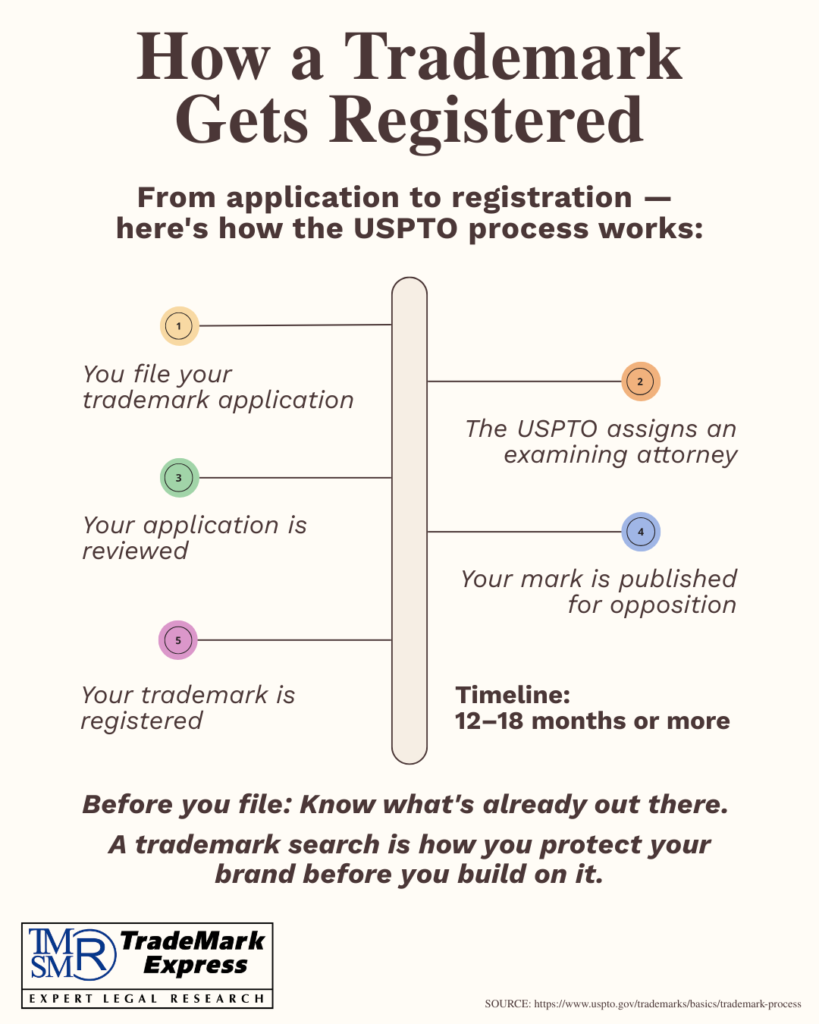
The USPTO doesn’t search for conflicts on your behalf before you file. That’s your responsibility. If your application conflicts with an existing registration, it will be refused — and you won’t get a refund of your filing fee.
This is why trademark research before filing matters so much.
USPTO Filing Fees
The USPTO charges $350 per class when you file a trademark application. Additional surcharges may apply — for example, if you write a custom description of your goods or services instead of using a pre-approved term from the USPTO’s ID Manual. Filing fees are non-refundable, even if your application is refused.
The USPTO's Trademark Search Tool
The USPTO’s website (uspto.gov) offers a range of free tools, including a public Trademark Search tool that lets you search existing trademark registrations. While the Trademark Search is a useful starting point, a USPTO search alone isn’t a comprehensive trademark clearance search.
It only searches federally registered marks and doesn’t account for state trademarks, common law rights, similar-sounding names, related goods/services, or design similarities.
Frequently Asked Questions
Do I have to use the USPTO to register a trademark? Yes, if you want federal trademark protection in the United States. The USPTO is the only federal agency that registers trademarks. State-level registrations exist but provide much more limited protection.
Is the USPTO website free to use? Yes. USPTO.gov is a free public resource. You can search existing trademarks, track your application status, and access filing tools at no cost.
Can I file a trademark application directly with the USPTO myself? Yes. U.S.-based applicants can file directly through the USPTO’s Trademark Center online system. However, applicants are responsible for ensuring their application meets all requirements — errors or conflicts can result in refusal with no refund.
What happens after I file with the USPTO? Your application enters a queue for review by a USPTO examining attorney. The process typically takes 12–18 months from filing to registration, sometimes longer.
Before You File, Search
Understanding the USPTO is step one. Knowing whether your trademark is available is step two — and it’s the step that determines whether filing makes sense in the first place.
A professional trademark search reviews not just the USPTO database but also common law sources, state registrations, and similar marks that could create a conflict. TradeMark Express offers comprehensive trademark searches so you can move forward with confidence.