How to Trademark a Yoga Studio
Your yoga studio name and logo are central to your brand identity. They appear on your signage, website, social media, and class schedules—but are they legally protected? Without a trademark, another studio could use a similar name or logo, creating confusion and putting your business at risk.
Trademarking your yoga studio helps secure your brand, supports expansion, and reduces the chance of costly disputes. In this guide, you’ll learn how to trademark a yoga studio step by step, understand state vs federal options, and discover why professional trademark research and application preparation matter for your business.
Why a Yoga Studio Trademark Matters
Protect your brand in a crowded market
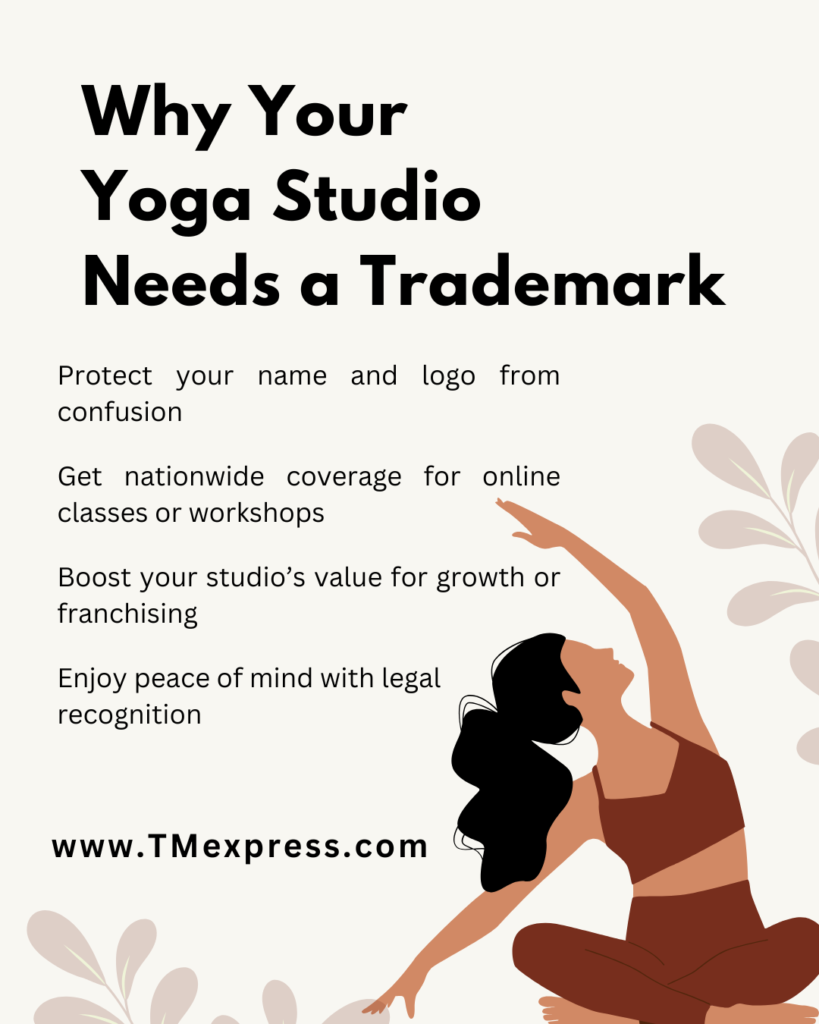
Yoga is a fast-growing industry with new studios, online classes, and wellness brands appearing every day. A registered trademark ensures your name and logo are legally recognized as yours, reducing the risk of confusion with other studios.
Federal registration provides nationwide protection, which is especially important if you offer online classes, workshops, or teacher training that reach beyond your local area.
Preserve financial and business value
Your studio name and logo are business assets. Trademark registration increases their value if you plan to sell, franchise, or license your brand. Without protection, rebranding later could be expensive, requiring new signage, marketing, and online updates.
Gain legal clarity and peace of mind
A trademark creates a public record of your claim to your brand. This can discourage others from using similar names and gives you stronger tools if conflicts arise. Even a small yoga studio benefits from knowing their brand is formally protected.
In short: a trademark safeguards your identity, reputation, and long-term growth.
State vs Federal Trademarks
Yoga studio owners often wonder whether to register locally or federally. Here’s how to decide:
- Scope: Protects your brand only within your state.
- Cost: Usually lower than federal registration.
- Use case: Ideal for studios serving primarily local clients, with no plans for online classes or merchandise.
- Scope: Nationwide protection.
- Use case: Important if you serve clients across state lines, territorial commerce, or between the US and foreign countries. This can include:
- Offering online classes or memberships accessible to students in other states.
- Teacher training programs or workshops attended by students from multiple states.
- Virtual workshops or retreats that attract participants across state lines.
- Benefit: Establishes legal priority and helps prevent others from using a confusingly similar name anywhere in the U.S.
Federal registration establishes legal priority and helps prevent others from using a confusingly similar name anywhere in the U.S. If your services reach clients outside your state, even digitally, your yoga studio may meet the federal requirement.
Summary: choose a state registration for local-only protection, or federal if you have (or plan to have) interstate commerce.
Step-by-Step: How to Trademark a Yoga Studio
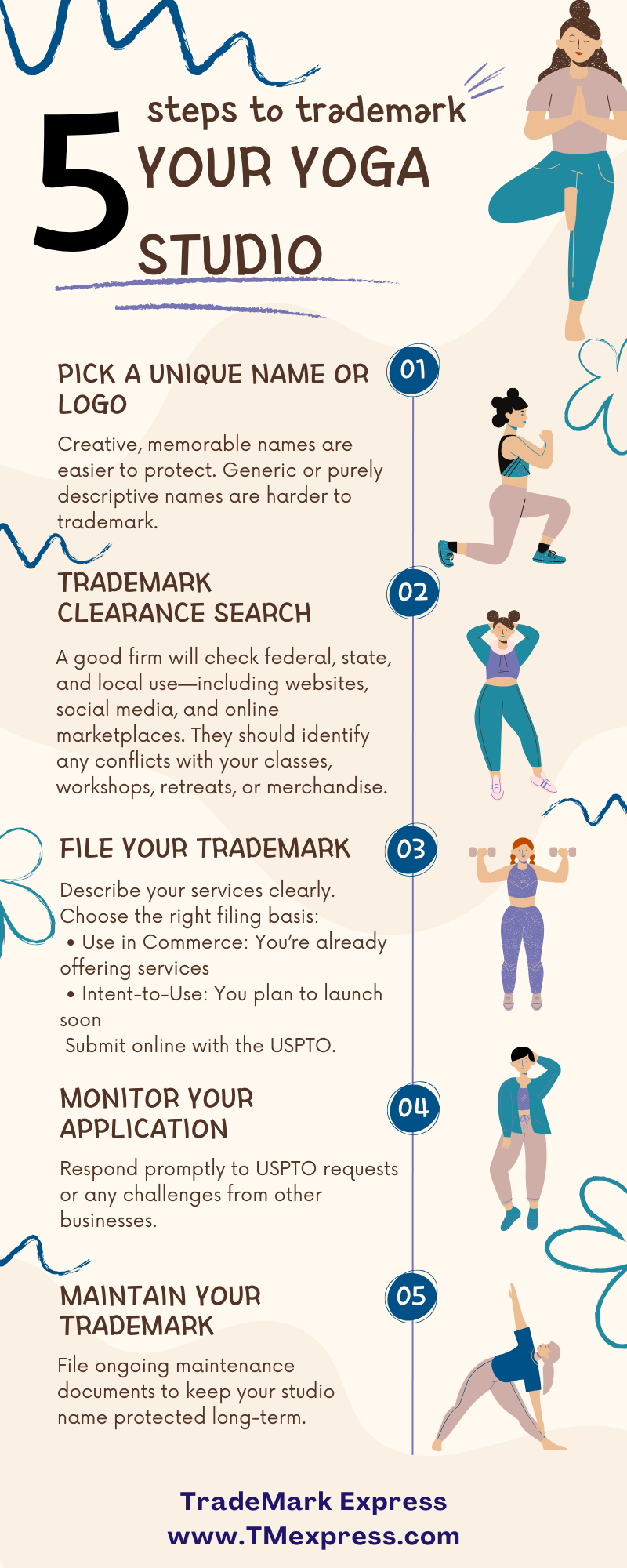
Step 1: Choose a strong name or logo
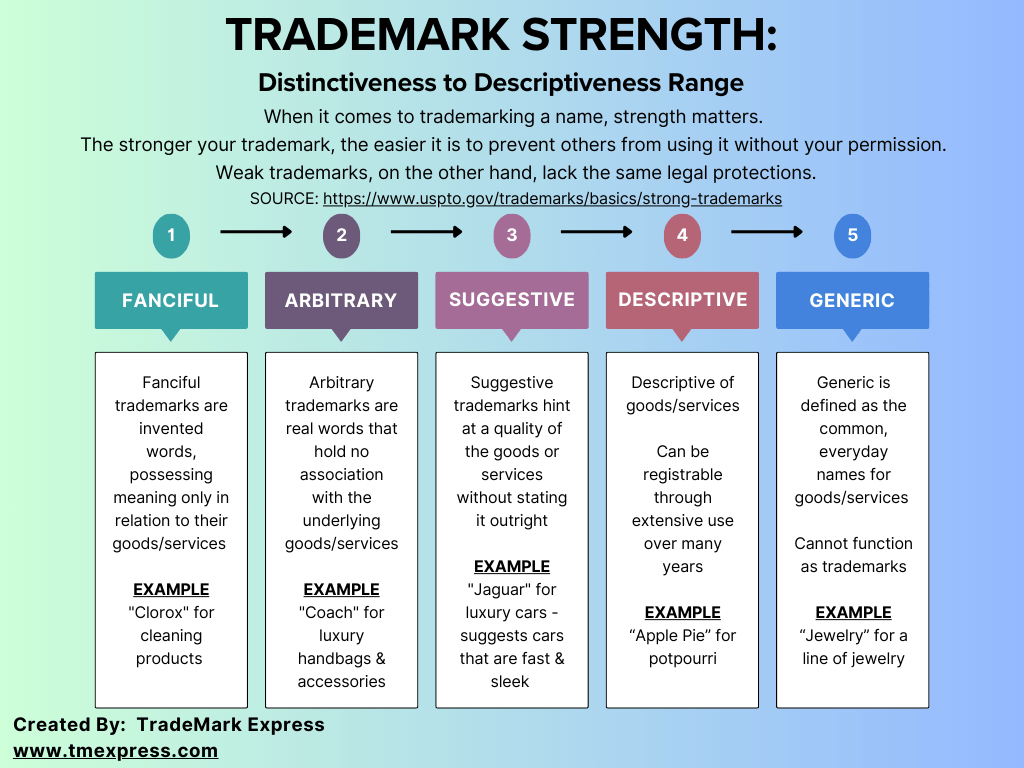
Distinctiveness matters
Not all names are equally protectable. Names fall along a distinctiveness continuum: generic → descriptive → suggestive → arbitrary/fanciful.
For example:
- Weak: Downtown Yoga Studio (describes the service and location)
- Strong: Blue Lotus Flow or Zentra Yoga (unique and brandable)
A distinctive name or logo is easier to register and enforce.
Practical tip for yoga studios
Many studios use common terms like “flow,” “wellness,” or “yoga.” Including a unique word or design element strengthens your trademark and makes your brand more memorable.
Step 2: Conduct comprehensive trademark research
Before filing, it’s critical to know if your name or logo is available. A professional trademark search looks at:
- Federal trademarks (USPTO database)
- State trademarks (state IP offices)
- Common law usage (unregistered names in local businesses, websites, social media, and marketplaces)
What to look for
- Similar sound, appearance, or meaning to existing marks
- Overlapping goods/services, including online classes, merchandise, or teacher training programs
- Correct NICE classification (yoga studios typically fall under Class 41 for educational and training services)
Even a local studio can face legal risk if another brand uses a confusingly similar name online. Professional research helps avoid costly disputes and ensures you file confidently.
TradeMark Express specializes in comprehensive searches that cover federal, state, and common law sources, so you know exactly what you’re up against.
Step 3: Prepare and file the trademark application
A correctly prepared application is essential for a smooth process:
- Describe goods/services accurately: Include classes for in-person classes, virtual classes, workshops, retreats, or merchandise.
- Choose the right filing basis: Choose Use in Commerce if your studio is operating, or Intent-to-Use (ITU) if you plan to launch soon.
- File with USPTO: Submit the application online, including owner information, description of services, and specimen/logo images. Current fees are listed on the USPTO website.
Professional application preparation reduces delays and increases the likelihood of registration.
Intent-to-Use vs Use in Commerce
- Use in Commerce: You already offer classes or sell products under the mark, including online or to out-of-state clients. Evidence may include a website, booking platform, or branded materials.
- Intent-to-Use (ITU): You plan to launch the brand soon. ITU reserves your application spot while you prepare to start offering services.
Knowing which basis applies ensures your filing aligns with your business operations.
Step 4: Monitor the trademark application
Once filed, your application is reviewed by a USPTO examining attorney.
Monitoring is important because:
- Office actions or requests for clarification may require a timely response.
- Third parties may oppose your application.
TradeMark Express monitoring services help you track deadlines and alert you to potential conflicts, keeping your application on track.
Step 5: Maintain your registered trademark
Even after registration, you must maintain your rights:
- Section 8 Declaration: 5–6 years after registration
- Section 15 Declaration (optional): after 5 years of continuous use
- Section 8 & 9 Renewal: every 10 years
Consistent use of your mark and ongoing monitoring help prevent infringement and preserve your brand’s value.
Industry-Specific Considerations for Yoga Studios
Yoga studios face specific trademark challenges:
- Common terminology: Words like “flow,” “asana,” or “wellness” may already be used in other marks. Unique branding is key.
- Online services: Offering virtual classes or memberships could qualify as interstate commerce, allowing federal protection.
- Merchandise and teacher training: These expand your trademark scope; plan your filing to cover them from the start.
- Local vs national presence: Even a local studio should consider federal registration if it attracts students from multiple states via in-person classes, digital offerings, streaming classes, and so forth.
Planning ahead ensures your trademark supports growth rather than limiting it.
Conclusion
A trademark for your yoga studio protects your name, logo, and brand identity. From choosing a distinctive name to conducting thorough research, filing the application, and maintaining registration, each step safeguards your studio’s future. Understanding state vs federal registration helps you choose the best option for your business.
With the right preparation, your brand can remain strong, protected, and ready for growth.
Protect Your Yoga Studio Brand
Order your yoga studio trademark today to secure your name and logo. TradeMark Express provides comprehensive trademark research, application preparation, and referrals to our trusted attorney network—so you can focus on teaching, growing, and expanding your studio with confidence.