Launching a dating app is exciting—but protecting your brand is just as important as building your user base. If you’re wondering how to trademark your dating app brand, the process involves choosing a strong name, conducting a thorough search, and filing correctly with the USPTO.
In this guide, you’ll learn exactly how to trademark your dating app step by step. We’ll break down complex concepts into plain language, explain what to expect, and help you make informed decisions before investing in your brand.
Why a Trademark Is Important for Dating Apps
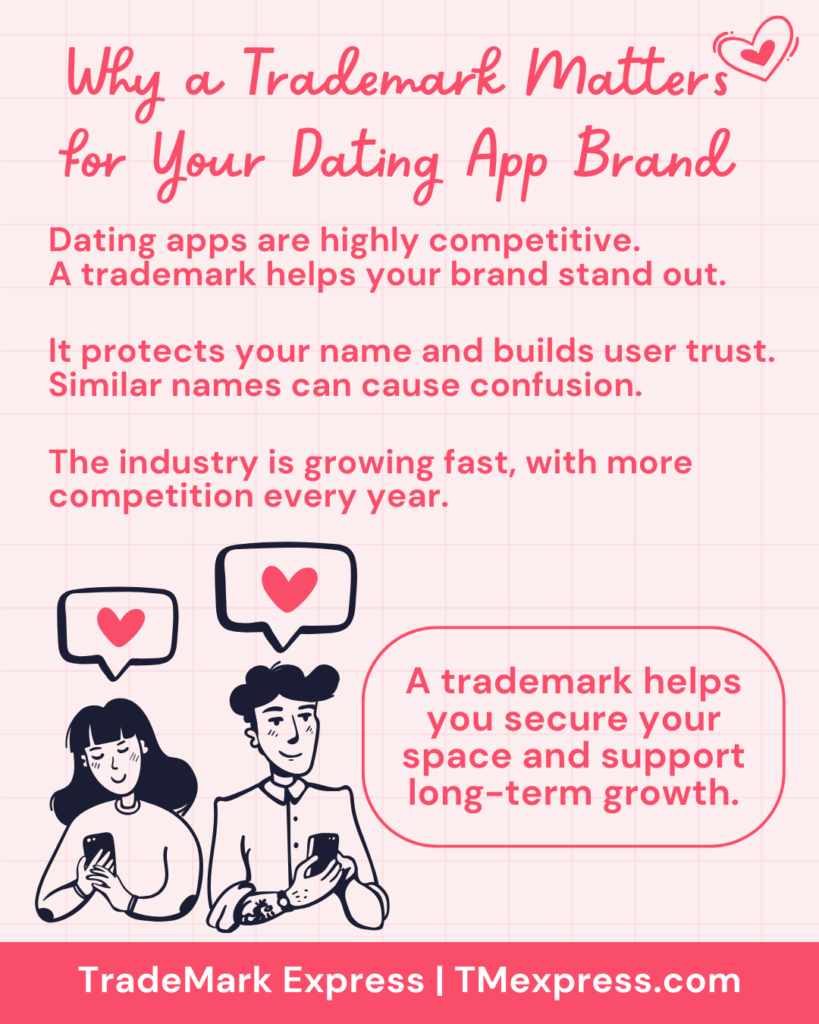
Dating apps operate in a crowded, fast-moving market. A strong trademark helps you stand out and avoid costly conflicts as you grow.
First, a trademark helps protect your brand identity. Dating apps rely heavily on name recognition and trust. Users are more likely to engage with platforms they recognize and feel safe using. Without protection, a similar name could confuse users or dilute your reputation.
Second, the dating app market is booming. According to Statista, online dating revenue is projected to exceed $3 billion annually, driven by increasing digital adoption.
As a result, more competitors are entering the space. A trademark helps you secure your place early and scale confidently.
Finally, trademarks can support partnerships, investor interest, and long-term growth. A protected brand signals professionalism and reduces risk for others working with you.
Step-by-Step Process to Trademark a Dating App
Choose a Strong Name
Your trademark journey starts with your name. Not all names are equally protectable, and this matters more than most founders realize.
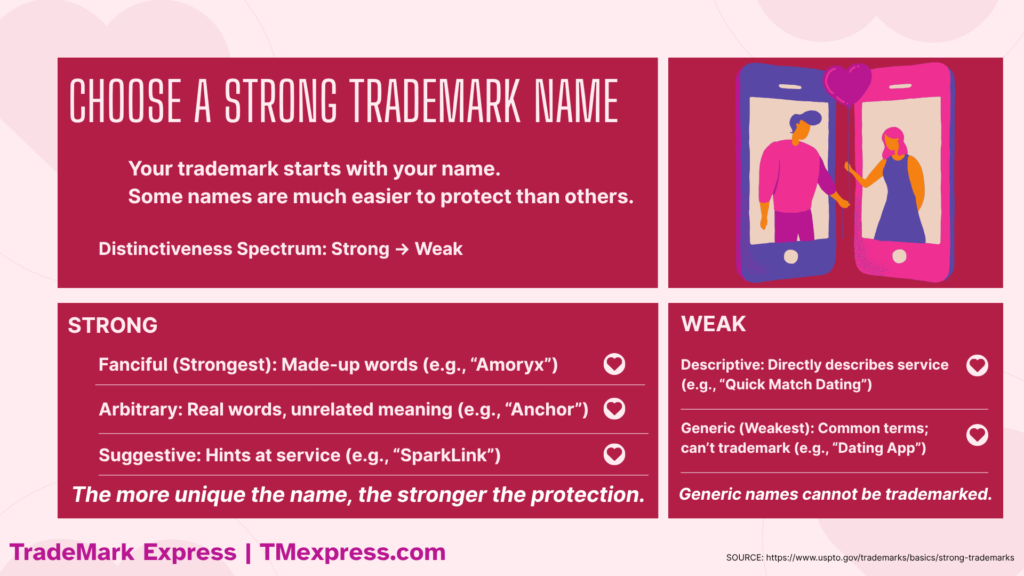
Understanding the Distinctiveness Spectrum
Trademarks fall along a spectrum from strong to weak:
The more unique your name, the easier it is to protect. Fanciful and arbitrary marks are typically the strongest, while descriptive terms often face challenges. Generic trademarks cannot be trademarked.
Why This Matters for Dating Apps
Dating apps often lean toward descriptive names, which can create problems. For example, a name like “Instant Match” may sound appealing, but it may be difficult to protect because it directly describes the service.
In contrast, a name like “Flirrta” or “Lureli” is more distinctive and easier to register. A strong name reduces risk and increases long-term brand value.
Consider the balance of market needs, branding considerations, and these trademark fundamentals when selecting a name that is both appealing and protectable.
Comprehensive Trademark Clearance Research
Before filing, acomprehensive trademark search is critical. This step helps identify potential conflicts that could block your application—or lead to rebranding later.
What a Full Search Includes
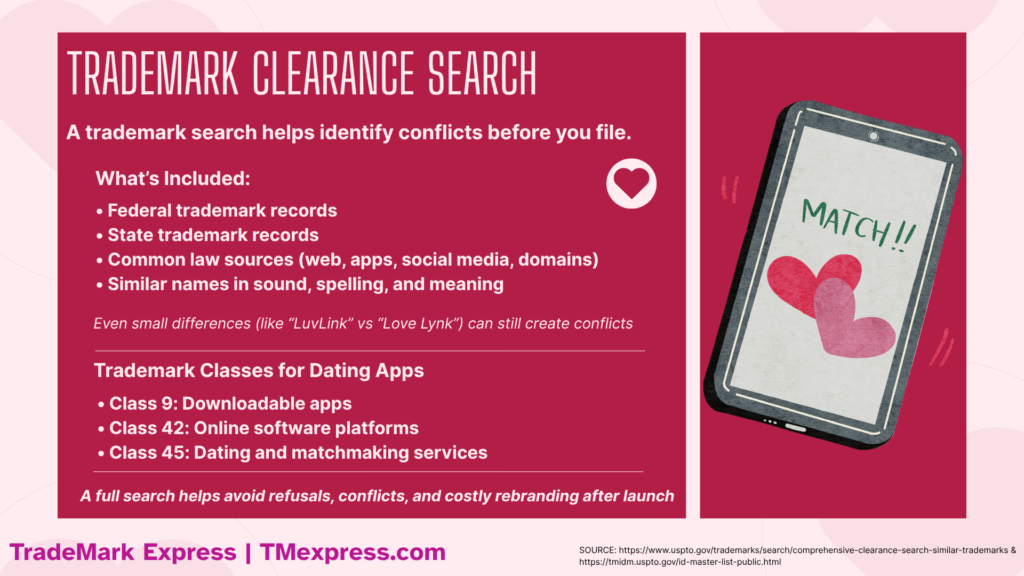
A proper trademark search goes beyond the USPTO database. It should include:
Classes 9 and 42 cover the technology itself, while Class 45 covers the actual service users engage with. This distinction matters because protection is tied to how your brand is used. For a dating app, filing in Class 9 helps protect the downloadable app users install, while Class 45 helps protect the matchmaking or dating services delivered through that app.
Why This Step Matters
This step is critical because it helps prevent avoidable setbacks that can disrupt or delay your brand launch. Without a comprehensive search, you may move forward with a name that is already in use or too similar to an existing trademark, which can result in a refusal or the need to rebrand after significant investment.
A proper trademark clearance search ensures you understand where potential conflicts may exist before you commit to filing, giving your brand a stronger foundation as you move into the application process.
Each detail matters. Errors in classification or descriptions can delay or impact your application.
Intent-to-Use vs Use in Commerce
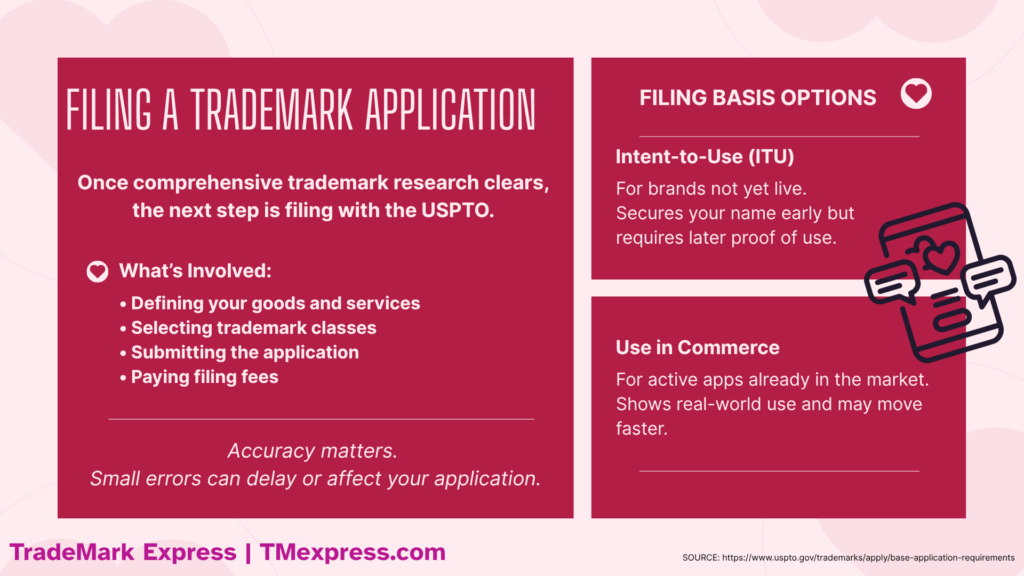
When filing, you’ll need to choose between two bases:
Intent-to-Use (ITU)
If your dating app is not yet live, you may still file based on an intent-to-use basis. This allows you to secure your brand name before your platform is officially launched, as long as you have a genuine plan to use the mark in commerce.
The main advantage of an ITU filing is that it helps you reserve your name early in a competitive space while you continue building your product. However, it also requires additional steps later, including proving actual use via submission of a specimen of use, along with additional required form(s) and fees, before the trademark can fully register, which can extend the overall timeline.
Use in Commerce
If your dating app is already live and actively available to users, you may be able to file based onuse in commerce. This means your brand is already being used in connection with real users engaging with your app or services, rather than being reserved for future use.
The key advantage of this filing basis is that it can streamline the overall application process since you are already demonstrating real-world use of the trademark. This often allows you to move forward without the additional proof-of-use steps required under an intent-to-use filing, helping establish your rights sooner as your app grows.
Monitoring the Trademark Application
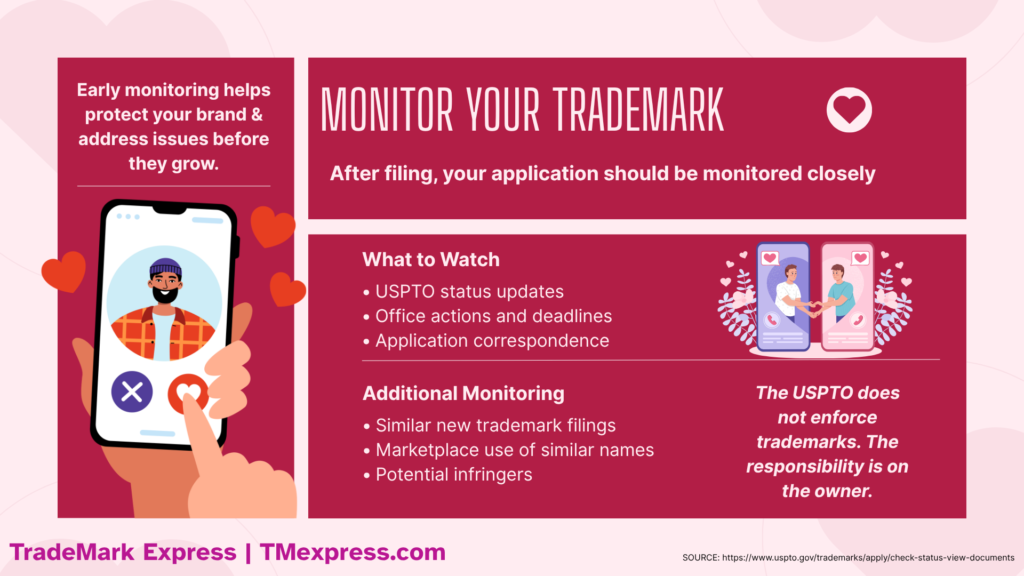
Once your application is filed, ongoing monitoring becomes an important part of the process. The USPTO will send updates throughout examination, but it is essential to stay alert to any status changes, deadlines, or correspondence so nothing is missed during review.
In addition to tracking USPTO alerts, many applicants also usemonitoring services to watch for potentially similar filings and marketplace activity. This includes new applications that may be confusingly similar as well as potential infringers using similar names in commerce.
It is also important to understand that the USPTO does not actively police or enforce trademarks. Responsibility for identifying and addressing potential infringement generally falls on the trademark owner. As a result, staying proactive with monitoring helps protect your brand and allows you to respond early if issues arise.
Maintaining a Registered Trademark
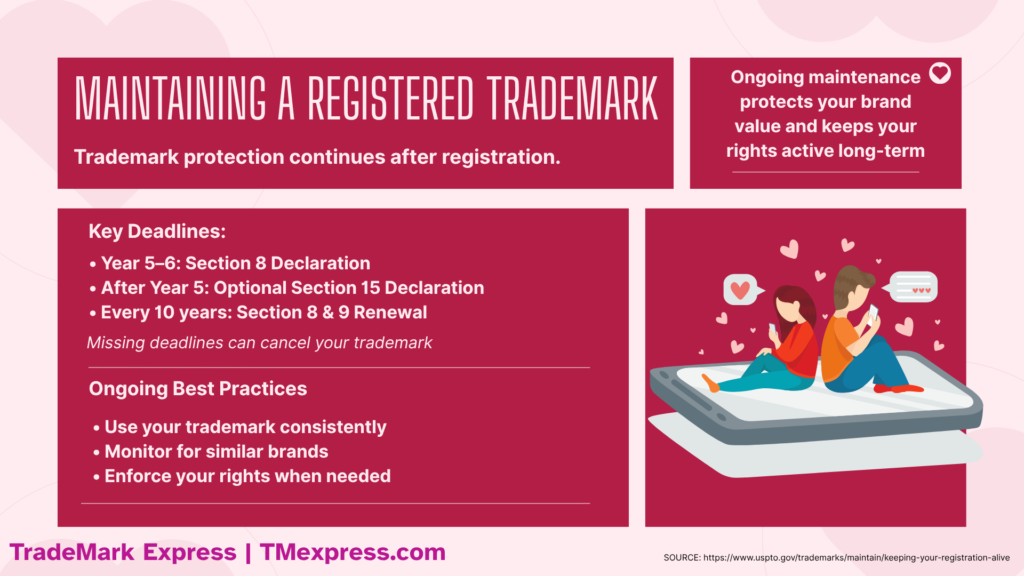
Trademark registration is not the end—it requires ongoing maintenance.
Missing your trademark deadlines can result in cancellation.
Ongoing Best Practices
Use your trademark consistently
Monitor for similar brands
Enforce your rights when needed
Maintaining your trademark ensures long-term protection and value.
Industry-Specific Considerations
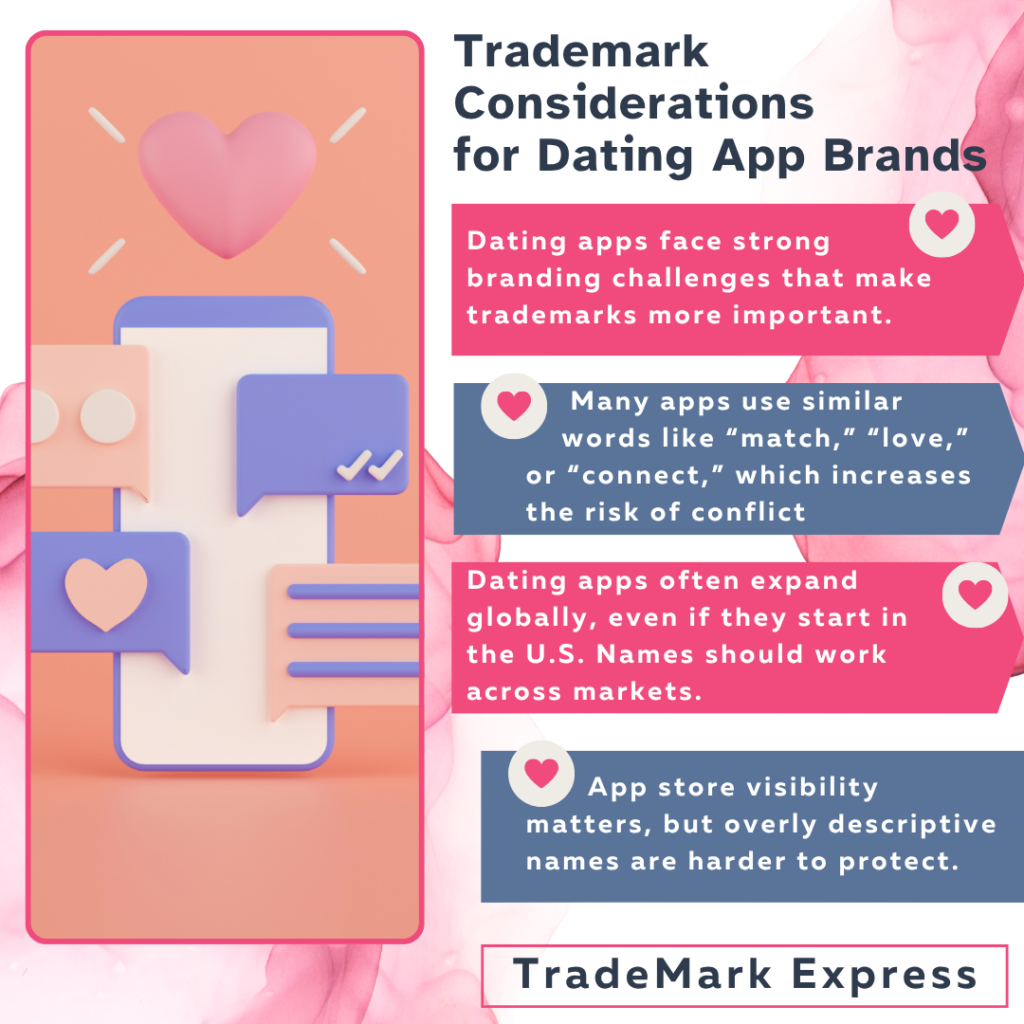
Dating apps face unique branding challenges that make trademark protection even more important.
High Competition and Similar Naming Trends
Many dating apps use similar themes like “match,” “love,” or “connect.” While these terms are appealing, they may increase the risk of conflicts.
Tip: Aim for a name that stands apart instead of blending in.
Global Reach
Dating apps often attract users from multiple countries. Even if you start in the U.S., your brand may quickly expand internationally.
Tip: Consider how your name translates and whether it may conflict in other regions.
App Store Visibility
Your app name plays a key role in discoverability. However, a name that is too descriptive may be harder to protect.
Tip: Balance creativity with clarity to support both branding and protection.
Final Thoughts and Next Steps
Trademarking your dating app is a strategic step that protects your brand and supports long-term growth. From choosing a strong name to conducting a comprehensive search and filing correctly, each step plays a role in reducing risk.
At TradeMark Express, we focus on comprehensive trademark research, application preparation, and connecting you with experienced trademark attorneys when needed.
DISCLAIMER: References to particular trademarks, service marks, products, services, companies, or organizations appearing on this page are for illustrative and educational purposes only and do not constitute or imply endorsement.
The information provided on this site is for general informational purposes only. All information on the Site is provided in good faith; however, we make no representation or warranty of any kind, express or implied, regarding the accuracy, validity, or completeness of any information on the Site. The Site cannot and does not contain legal advice. The legal information is provided for general informational and educational purposes only, and is not a substitute for legal advice. Consult a licensed attorney for legal advice.