
Trademark a Business Name in Two States — What You Need to Know
Yes — you can protect a business name in more than one state, but how you do it depends on the type of trademark protection you’re pursuing. State trademark registrations are filed individually, federal trademark registration covers all 50 states at once, and common law rights exist wherever you actually use the name in commerce.
Understanding the difference matters, because each option offers a different level of protection — and the right choice depends on where your business operates and where you plan to grow.
How State Trademark Registration Works
Each state runs its own trademark registration system through its Secretary of State office. If you want state-level protection in two specific states, you would need to file a separate application in each one.
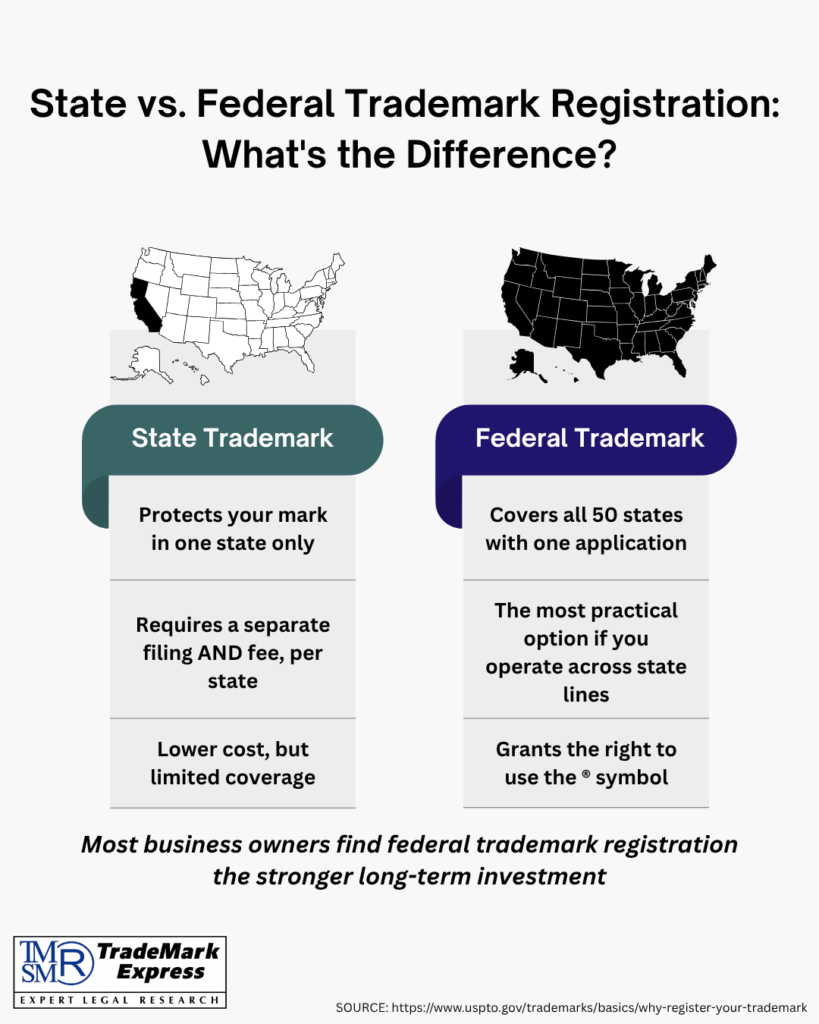
State trademarks are relatively inexpensive and quick to obtain, but the protection they provide is limited to the state where they’re registered. A registration in California, for example, does nothing to protect your name in New York — even if you’re actively doing business there.
For a business operating in just two neighboring states with no plans to expand further, dual state registration is a workable option. But it has real limitations, and most business owners find that federal registration is a better long-term investment.
Federal Trademark Registration Covers All 50 States
A federal trademark registration through the USPTO (United States Patent and Trademark Office) protects your mark nationwide. You file, pay a set of fees, and receive protection that applies in every state simultaneously.
This is the most practical solution for any business that operates — or plans to operate — across state lines. It’s also more legally powerful than state registration and gives you the right to use the ® symbol, which signals to competitors that your name is federally protected.
Federal registration also unlocks benefits that state registration simply can’t provide:
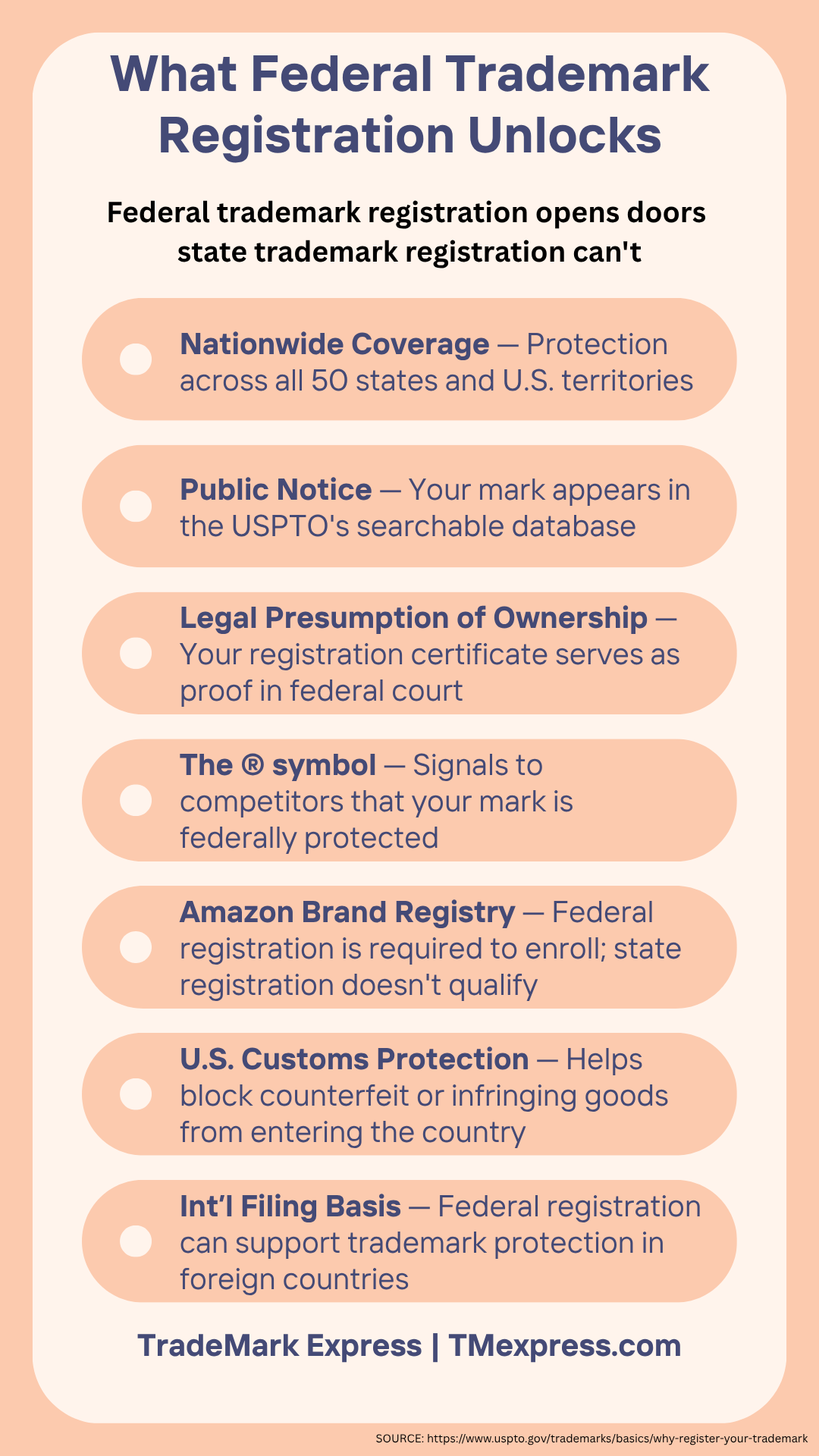
- Amazon Brand Registry — If you sell or plan to sell on Amazon, enrollment in the Brand Registry requires a federal trademark. Amazon only accepts pending or registered USPTO applications — state registrations do not qualify. Brand Registry gives sellers access to counterfeit protection tools, greater control over product listings, and brand-building features that aren’t available to unregistered sellers.
- U.S. Customs recordation — A federal registration can be recorded with U.S. Customs and Border Protection, which helps prevent counterfeit or infringing goods from entering the country — a benefit state registration doesn’t offer.
- Constructive notice — Federal registration puts the public on legal notice that you own the mark nationwide, which can strengthen your position if a conflict arises later.
Common Law Rights Add Another Layer
Even without any registration — state or federal — a business may have trademark rights simply by using a name in commerce. These are called common law trademark rights, and they arise automatically from actual use.
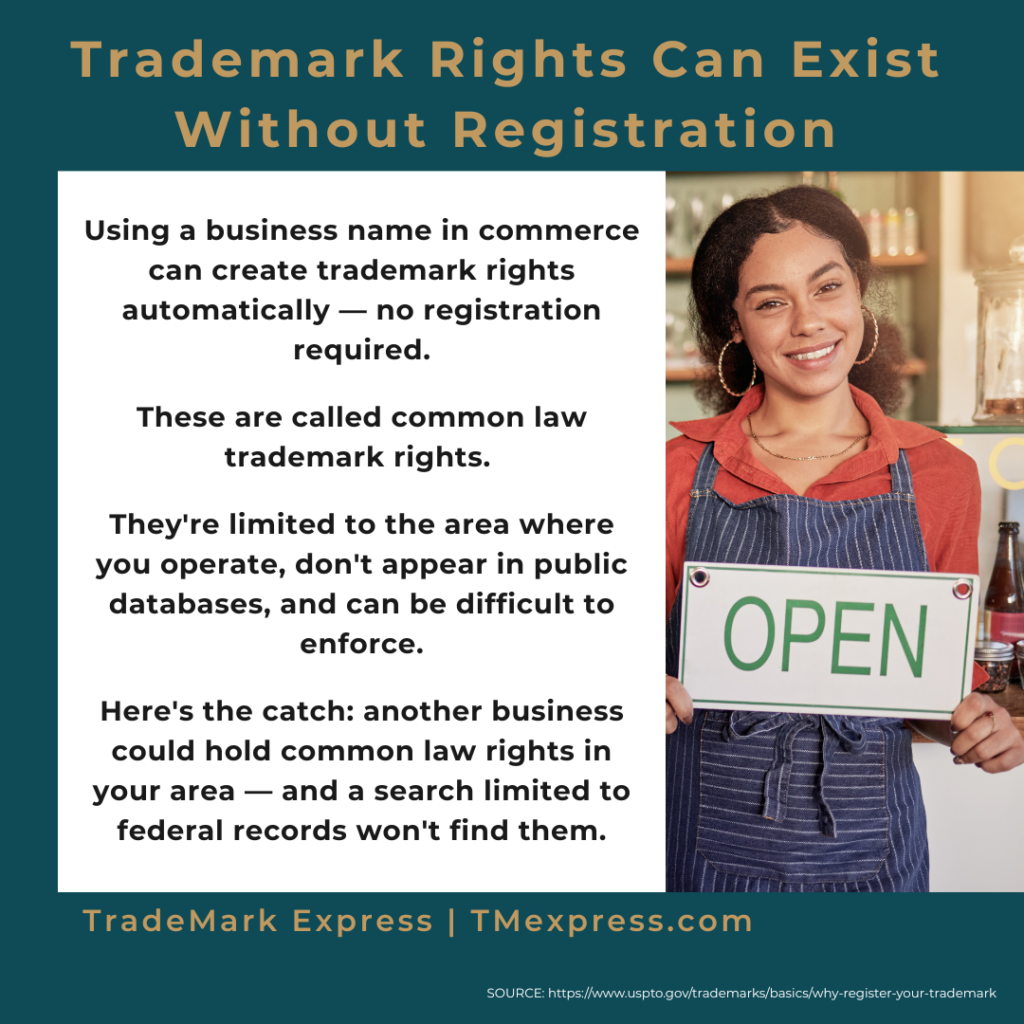
Common law rights are geographically based. If you’ve been operating under a name in two specific states, you may already have some level of common law protection in those areas. But these rights are harder to enforce, don’t appear in public trademark databases, and can be difficult to establish if a dispute arises.
This is also why a thorough trademark clearance search matters before you file anything. A business operating in another state under the same or a similar name — even without any registration — could have common law rights that affect your ability to use or register your mark. A search that only checks federal records will miss these.
Why a Comprehensive Trademark Search Comes First
Before filing in one state, two states, or federally, a comprehensive trademark search is the essential first step.
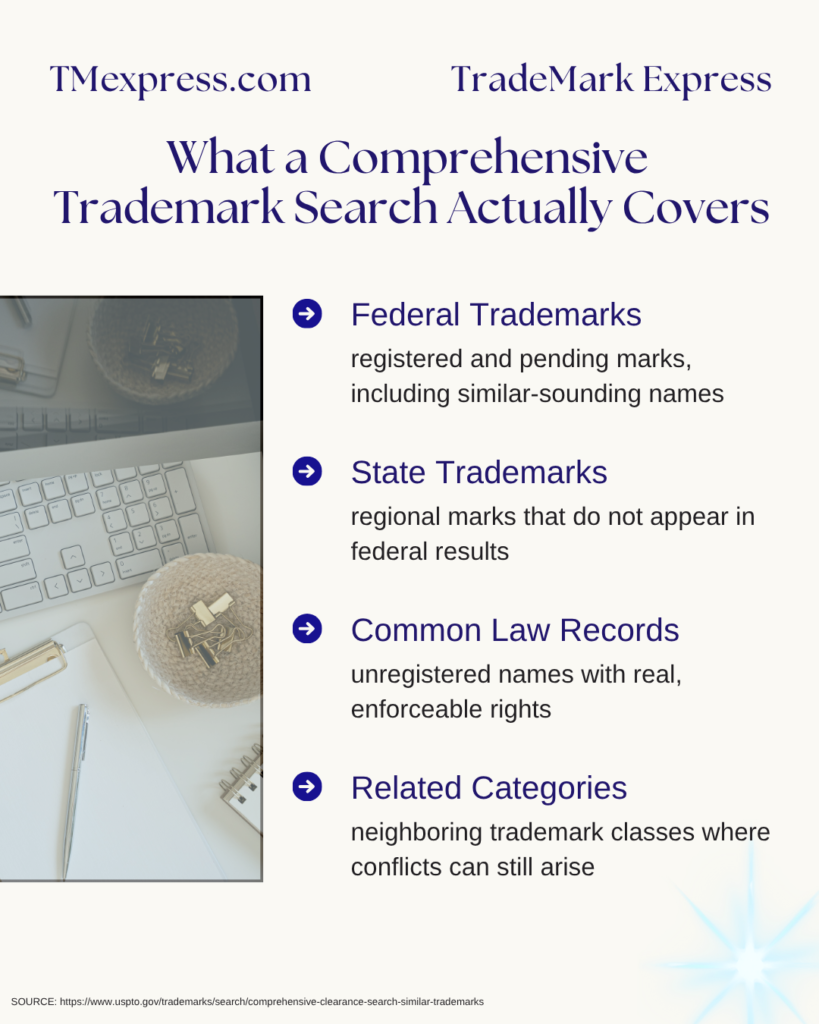
A full trademark and common law search covers:
- Federal trademark records — both registered and pending applications in the USPTO database
- State trademark registrations — across all 50 states, not just the ones you’re targeting
- Common law usage — business names in active commercial use that may never have been registered anywhere
- Similar marks in sound, appearance, or meaning — because the USPTO doesn’t just look for identical names; confusingly similar marks can create conflicts even when they’re spelled or stylized differently
- Related goods and services — trademark conflicts can arise across different industries if consumers might reasonably assume a connection between two brands
Skipping any of these layers leaves you exposed.
A mark that clears a quick USPTO search might still have a serious conflict waiting in state records or common law use — and that’s a problem best discovered before you invest in registration, not after.
Which Option Is Right for Your Business?
If your business is strictly local and confined to one or two states with no plans to expand further, state registration may be sufficient for now. But for most growing businesses, federal registration is the smarter, more cost-effective path — one application, nationwide protection, and a much stronger legal foundation.
It’s also worth knowing that you don’t have to be a national brand to qualify for federal trademark registration. Even single-location businesses — restaurants, spas, salons, dog walkers, boutiques, so forth — may qualify if their services touch interstate commerce in some way.
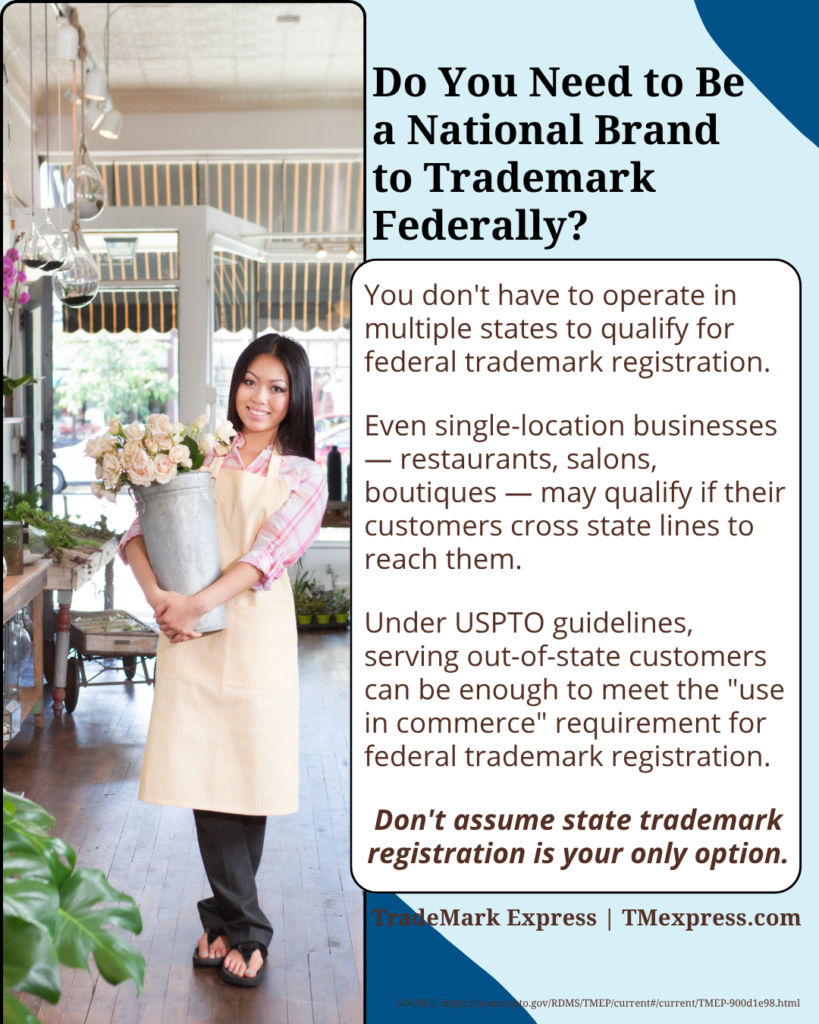
Under USPTO guidelines, intrastate use of a mark can qualify as “use in commerce” when that use, taken as a whole, has a direct effect on interstate commerce. In other words, if your customers live in another state, territory, or country, the USPTO considers that sufficient to qualify your mark for federal registration — even if your business never leaves its single location.
A classic example: a single-location restaurant that serves out-of-state travelers, i.e., tourists is considered to be operating in commerce for federal trademark purposes.
If your customers cross state lines to reach you, federal registration may be within reach. This is worth exploring before assuming state registration is your only option.
Here’s a quick comparison:
State Trademark | Federal Trademark | |
Coverage | One state per filing | All 50 states |
Cost | Lower per state | One filing fee |
Protection level | Limited | Broader and stronger |
® Symbol | No | Yes |
Amazon Brand Registry | No | Yes |
Time to register | Faster | Longer (12–18+ months) |
Frequently Asked Questions
Can I file a trademark in two states at the same time? Yes — you can file separate state trademark applications simultaneously. Each state has its own process and fees. However, if nationwide protection is your goal, a single federal application is usually more practical and cost-effective.
Does a state trademark protect my business name in other states? No. A state trademark registration only protects your name within the state where it’s registered. Operating in another state without additional protection leaves your name vulnerable there.
Is federal trademark registration better than registering in two states? For most businesses, yes. Federal registration provides protection across all 50 states with a single application and carries more legal weight than state-level registration.
Do I need a trademark to protect my business name? You gain some common law rights simply by using your name in commerce, but those rights are limited and harder to enforce. State or federal registration creates a public record of your claim and strengthens your ability to protect the name.
What happens if someone else is already using my business name in another state? It depends on when they started using it and whether they have any registration. This is exactly why a comprehensive trademark search — covering federal records, state records, and common law use — is so important before you file.
Ready to protect your business name — in one state, two states, or all 50? TradeMark Express provides comprehensive trademark research and application preparation assistance to help small business owners and entrepreneurs move forward with confidence. Contact us to get started.