Trademark Drawing Types: Standard vs. Special Form
When filing your trademark application, one of the most important decisions you’ll make is choosing between a standard character drawing and a special form drawing. This choice directly impacts the scope of protection your trademark receives—and many business owners don’t realize the long-term implications until it’s too late. Understanding these two drawing types will help you make an informed decision that best protects your brand investment.
What Is a Trademark Drawing?
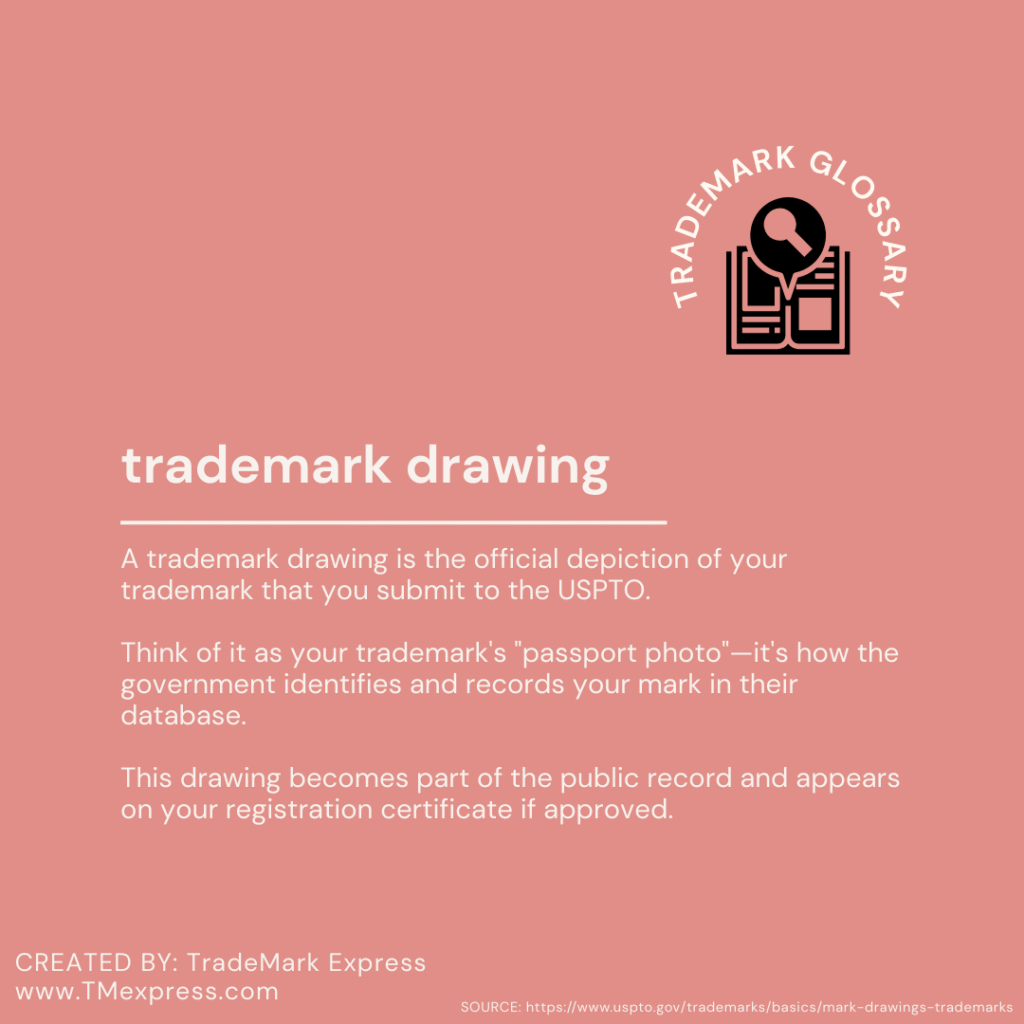
A trademark drawing is the official depiction of your trademark that you submit to the USPTO as part of your trademark application. Think of it as your trademark’s “passport photo”—it’s how the government identifies and records your mark in their database. This drawing becomes part of the public record and appears on your registration certificate if approved.
It’s crucial to understand that a drawing is different from a specimen. Your drawing shows what your trademark is, while your specimen shows how you’re actually using it in commerce with your goods or services.
The Two Types of Trademark Drawings
The USPTO recognizes two distinct types of trademark drawings, each offering different levels of protection:
Standard Character Drawings: Maximum Flexibility
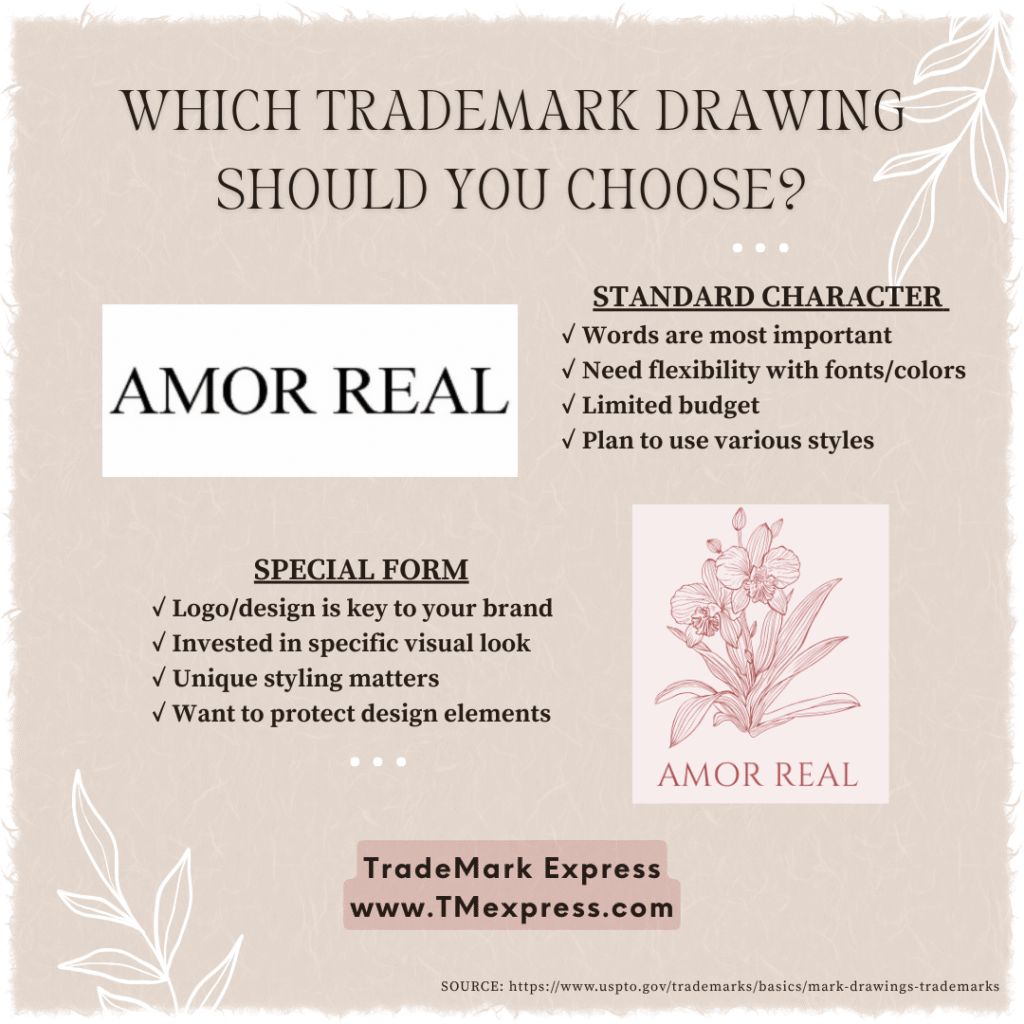
A standard character drawing shows your trademark as text only—no fancy fonts, colors, or design elements. It’s simply the words, letters, or numbers that make up your trademark, displayed in basic black text on a white background.
Key characteristics:
- Text only (no graphics, logos, or stylization)
- No specific font, size, or color requirements
- Must use Latin characters (A-Z) and standard numerals
- Can include common punctuation and symbols from the USPTO’s approved character set
The major advantage? Standard character drawings provide the broadest protection possible. When you register in standard characters, you own those words in any font, style, size, or color combination.
Special Form Drawings: Specific Visual Protection
A special form drawing (also called a stylized or design trademark) includes specific visual elements like logos, unique fonts, colors, or graphic designs. This is what you choose when the visual appearance of your trademark is just as important as the words themselves.
You must use a special form drawing when your trademark includes:
- Stylized fonts or lettering
- Logos or graphic elements
- Specific colors
- Special characters not in the USPTO’s standard set
- Elements like superscripts, subscripts, or emoticons
The trade-off? Your protection is limited to that exact visual representation.
Which Drawing Type Should You Choose?
This decision depends on your business priorities, budget, and brand strategy. Here’s how to think through it:
Choose Standard Character When:
- The wording is the most important part of your brand
- You want maximum flexibility in how you display your trademark
- You’re working with a limited budget and can only file one application
- You plan to use your trademark in various fonts, colors, or styles
Choose Special Form When:
- Your logo or visual design is central to your brand identity
- You’ve invested heavily in a specific visual presentation
- The stylization creates a unique impression that would be lost as plain text
- You want to protect specific design elements
The Smart Strategy: Comprehensive Protection
Many established companies don’t choose just one—they file multiple applications to protect different elements of their brand. One approach the USPTO mentions is to register:
- The company name in standard characters
- The logo as a special form drawing
- The slogan separately in standard characters
This approach provides comprehensive coverage but requires a larger investment. For businesses with limited resources, focusing on the most important element (often the company or product name in standard characters) typically provides the best value.
Before You File: Comprehensive Trademark Research
Regardless of which drawing type you choose, conducting thorough trademark research is essential before filing your application. This research should examine similarities in sound, appearance, and meaning across federal trademark and state trademark databases as well as common law sources.
When evaluating trademark service providers, ensure they:
- Search multiple databases, not just federal registrations
- Look for phonetic similarities (marks that sound alike)
- Identify visual similarities in word and/or design elements
- Check for conceptual conflicts (marks with similar meanings)
- Review the same or related goods and services categories
Comprehensive research helps you avoid costly rejections, opposition proceedings, or infringement disputes down the road.
Drawing Requirements
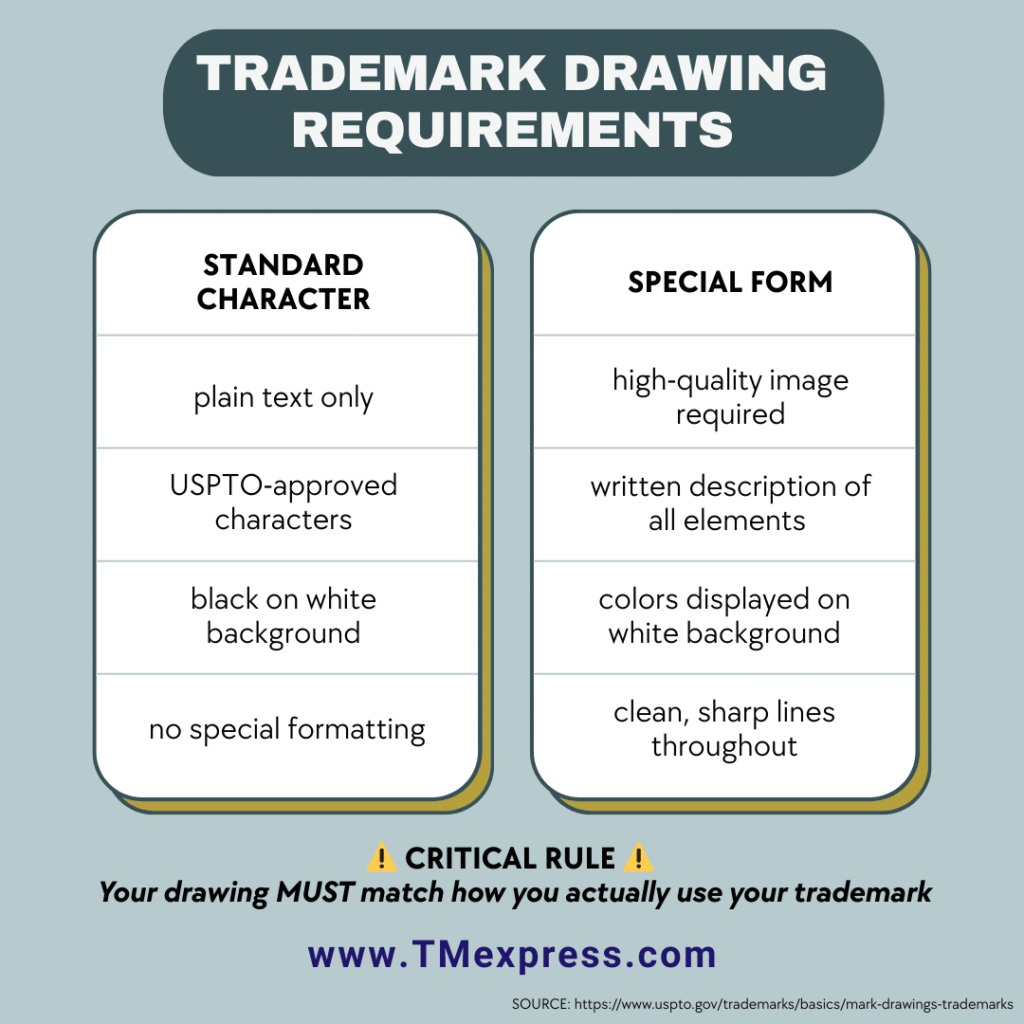
Standard Character Requirements:
- Include a “standard character claim” statement
- Use only characters from the USPTO’s approved set
- Display text in black on white background
- Avoid underlining, superscripts, subscripts, or special formatting
Special Form Requirements:
- Submit a high-quality image reproduction
- Provide a written description of all elements in the drawing
- If using color, display the trademark in color on white background
- Ensure all lines are clean, sharp, and not crowded
Critical Matching Rule:
Your drawing must match how you’re actually using the trademark. If you’re filing based on current use, the trademark in your drawing must be a “substantially exact” representation of what appears on your specimen.
What Happens After You File?
Once your application receives a filing date, your trademark drawing becomes part of the public record. It’s uploaded to the USPTO’s system where anyone can search and view it. This transparency actually works in your favor—it puts others on notice of your trademark rights and may help prevent future conflicts.
Your drawing also determines what appears on your registration certificate if your application is approved.
Key Takeaways for Business Owners
The drawing type you choose shapes the scope of protection your trademark receives. Standard character drawings offer broader, more flexible protection for the text elements of your mark, while special form drawings protect specific visual presentations.
For most small businesses and startups, filing a standard character drawing for their primary brand name or product name provides the best return on investment. As your business grows and your brand becomes more established, you can always file additional applications to protect logos, taglines, or other brand elements.
Remember: you can’t change your mind after filing. Material changes to your drawing after submission typically aren’t allowed, so it’s worth taking time upfront to make the right choice for your business goals.
Ready to Protect Your Brand?
Don’t navigate trademark drawings alone. At TradeMark Express, we conduct comprehensive trademark research to identify potential conflicts before you file. Our detailed research covers federal and state databases, common law sources, and examines similarities in sound, appearance, and meaning as well as related goods/services to give you confidence in your trademark application.
Start with a professional trademark search today to ensure your chosen mark is available and learn which drawing strategy will provide the strongest protection for your brand.
Pingback: Quick Guide to USPTO Trademark Description of Mark