
Here's What the New USPTO Serial Number Series Means for Your Trademark Application
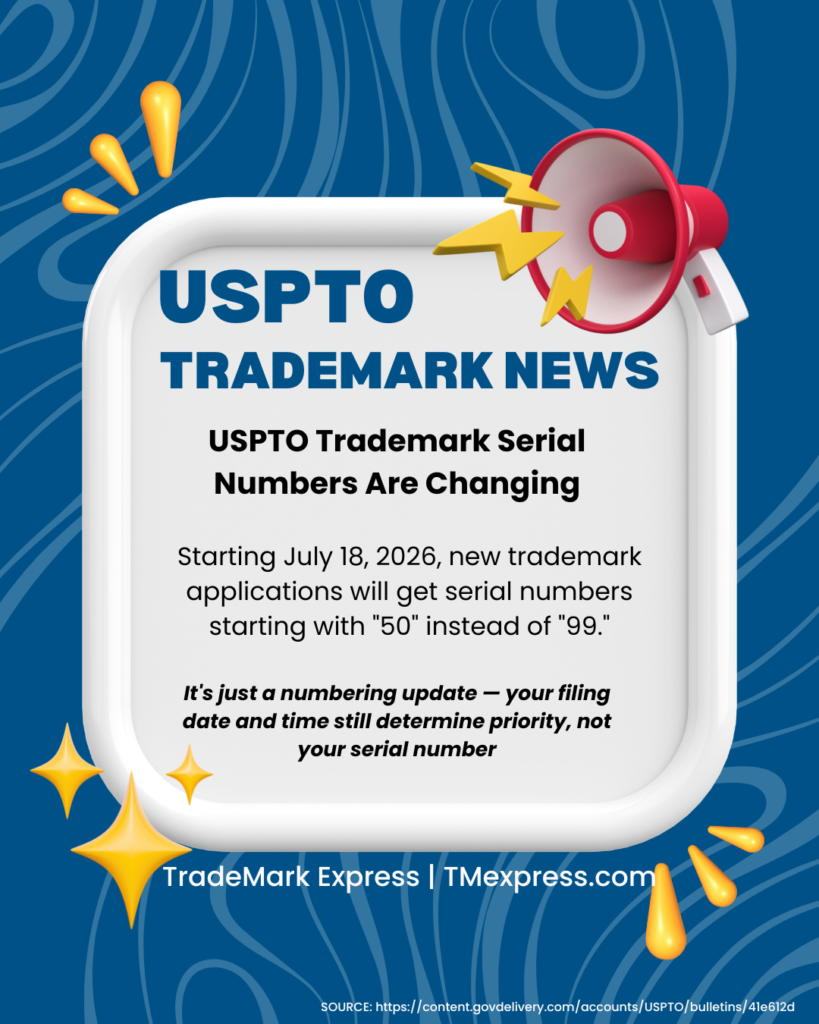
Starting July 18, 2026, the United States Patent and Trademark Office (USPTO) will begin assigning new trademark application serial numbers that start with “50” instead of continuing the current “99” series. This is simply a numbering update, not a change to how trademark applications are filed, reviewed, or protected.
What Is a Trademark Serial Number?
A trademark serial number is the unique eight-digit number the USPTO assigns to every trademark application the moment it’s filed. Think of it as your application’s permanent tracking number. You’ll use it to check your application’s status in the USPTO’s Trademark Status and Document Retrieval (TSDR) system, communicate with the USPTO, and reference your filing in any correspondence with a trademark attorney or filing service.
Why Is the USPTO Changing the Serial Number Series?
For years, the USPTO has issued serial numbers in ascending order, and that numbering has now worked its way through the “99” series. Rather than run out of available numbers, the USPTO is opening a new range that starts with “50.” This kind of rollover isn’t unprecedented. It’s a routine, administrative adjustment that keeps the numbering system functional as filing volume continues to grow.
What's Actually Changing
- New applications filed under Section 1 (use-based or intent-to-use) or Section 44 (based on a foreign application or registration) will begin receiving serial numbers starting with “50” as of July 18, 2026.
- Serial numbers will still be eight digits total, and each one will still serve as the unique identifier for that specific application.
- Special series designations aren’t affected. For example, extensions of protection filed under the Madrid Protocol will continue to begin with “79,” just as they do now.
What's Not Changing
This update has no effect on how your application is examined, how long the process takes, or your legal rights. A few things worth remembering:
- Priority is still based on filing date and time, not on the serial number itself. A lower serial number doesn’t mean an earlier filing date, and a higher one doesn’t mean a later one.
- The application process stays the same. You’ll still go through the same USPTO examination, publication, and registration steps regardless of which serial number series your application falls into.
- Existing registrations and serial numbers are unaffected. If you already have a trademark application or registration on file, its serial number won’t change.
What Business Owners and Applicants Should Do
Most trademark applicants won’t need to do anything differently. However, if you or your team use spreadsheets, docketing software, or internal systems that sort, filter, or flag serial numbers based on a specific number range, it’s worth reviewing those systems ahead of the July 18, 2026 rollout. Some tools that assume ascending numerical order could misfile or missort new applications once the “50” series begins.
If you’re currently preparing to file a trademark application, this change doesn’t affect your timing. There’s no advantage to filing before or after July 18 based on the serial number series alone.
What matters far more is making sure your mark is available and legally sound before you file.
Why a Trademark Search Still Matters More Than a Serial Number
A serial number confirms that your application was received. It doesn’t confirm that your trademark is registrable. Before filing, a comprehensive trademark search can help you spot potential conflicts with existing marks, including those that aren’t identical but could still create a likelihood of confusion in the eyes of the USPTO.
Filing without a search often means finding out about a conflict only after receiving an Office Action, which can cost you time, filing fees, and, in some cases, the ability to use your business name.
FAQ
Does the new serial number series affect how long it takes to register a trademark? No. The serial number change is purely administrative. Application processing times depend on USPTO examination timelines, not on which serial number series an application belongs to.
Will my existing trademark’s serial number change because of this update? No. This change only applies to new applications filed on or after July 18, 2026. Existing serial numbers for pending applications and registered trademarks stay the same.
Does a “50” series serial number mean anything different than a “99” series number? No. Both are simply unique identifiers. Neither series reflects priority, application strength, or likelihood of approval.
How do I find my trademark application’s serial number? Your serial number appears on your filing receipt and in the USPTO’s TSDR system, where you can search by serial number, registration number, or applicant name to check status.
Should I file my trademark application before or after the new series begins? Timing your filing around the serial number change isn’t necessary. What matters most is confirming your mark is clear for use and registration before you file, regardless of the date.
Protect Your Brand Before You File
Serial numbers are just bookkeeping. What actually determines whether your trademark application succeeds is whether your mark is available and distinctive enough to register.
TradeMark Express provides comprehensive trademark search reports covering federal, state, and common law sources, so you can file with a clear picture of your risk before you commit time and filing fees.
Contact us to get started on your search today.
The information provided on this site is for general informational purposes only. All information on the Site is provided in good faith; however, we make no representation or warranty of any kind, express or implied, regarding the accuracy, validity, or completeness of any information on the Site. The Site cannot and does not contain legal advice. The legal information is provided for general informational and educational purposes only, and is not a substitute for legal advice. Consult a licensed attorney for legal advice.