How to Trademark a Social Networking Platform

How to Trademark a Social Networking Platform

Launching a social networking platform can be exciting, but building a recognizable brand comes with risks. One of the most important steps to protect your platform and its identity is obtaining a trademark. Without proper protection, your brand name, logo, or tagline could be copied or challenged, potentially leading to costly disputes.

Understanding how to trademark a social network platform gives you confidence in building your community and expanding your reach. This guide walks you through every step—from choosing a strong name to maintaining your registered trademark—so you can make informed decisions and safeguard your business. By the end, you’ll know how to secure your platform’s brand and avoid common pitfalls.

Why a Trademark Matters for Social Networking Platforms

A trademark is more than just a legal label—it’s a business tool.

Trademark Definition: A trademark is a distinctive identifier like a word, symbol, or design that sets your goods or services apart from others in the market.

For social networking platforms, trademarks offer several key benefits that can impact your brand, finances, and long-term growth.

Protect your brand identity

A social networking platform relies on recognition and trust. Your name, logo, and slogans are how users identify your service. Registering a trademark ensures that no one else can use confusingly similar marks, helping maintain your platform’s distinct identity. For example, consider the difference between Facebook and MyFace—users would likely confuse a similar-sounding name without proper protection.

Secure financial and business advantages

Trademarks can increase your company’s value, especially if you plan to attract investors or sell your business. Registered marks can be licensed or franchised, creating new revenue streams. They also give you leverage in negotiations, demonstrating that your brand is a legally protected asset.

Infographic explaining why social networking platforms should register a trademark, highlighting brand protection, business value, legal risk reduction, and trust-building

Reduce legal risks

Operating a platform without trademark protection exposes you to potential disputes or infringement claims. Even if your platform is unique, a prior user could block your branding or demand costly changes. A registered trademark acts as a preventive measure, reducing the risk of expensive litigation down the line.

Build trust and credibility

Users and partners often perceive platforms with a registered trademark as more professional and reliable. It signals that you are serious about your business and committed to protecting your brand. This trust can be crucial when onboarding new users, advertisers, or collaborators.

In short, a trademark safeguards your identity, enhances business value, reduces risks, and builds credibility—making it an essential step for any social networking platform.

6 Steps to Trademark a Social Network Platform

Trademarking a social networking platform involves multiple steps, each critical to securing reliable protection.

Step 1: Choose a Strong Name

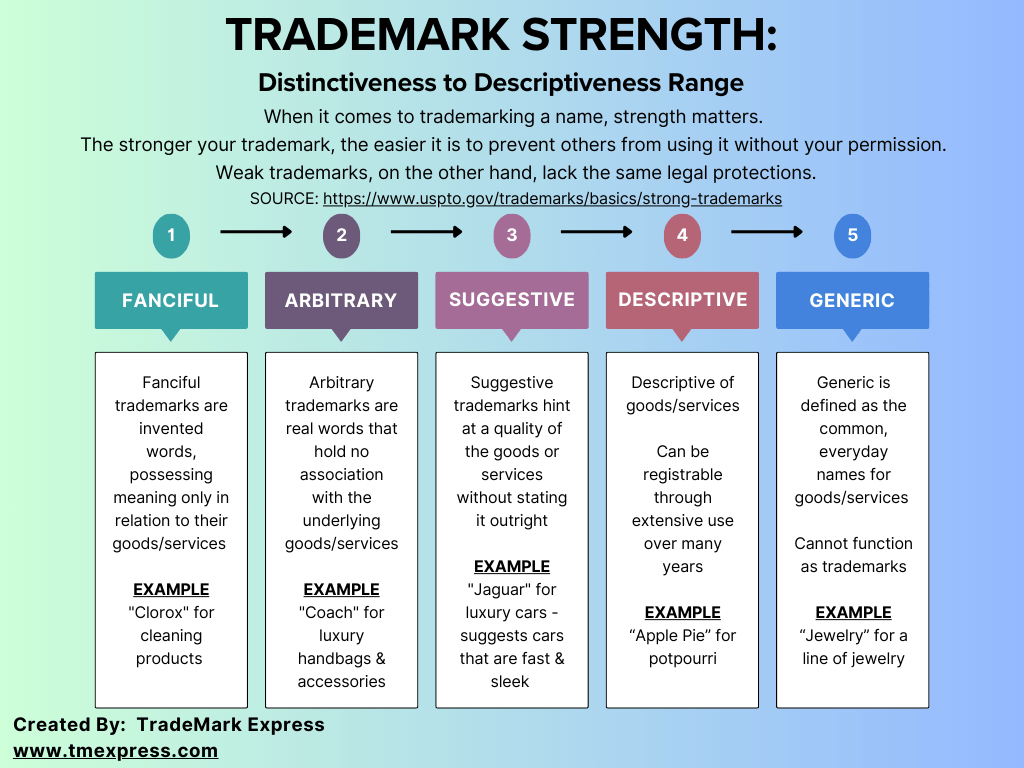
A strong, protectable name is the foundation of your trademark. Names fall along a Distinctiveness/Descriptiveness Continuum:

Trademark Distinctiveness to Descriptiveness Continuum
  • Generic names (like “Social Network”) describe the service and can never be registered.
  • Descriptive names (like “Friend Chat”) describe features but may face refusal without proof of secondary meaning.
  • Suggestive names (like “Gatherly”) hint at your service without directly describing it—these are easier to protect than descriptive marks.
  • Arbitrary or fanciful names (like “Instagram” or “TikTok”) are unrelated words or invented terms and enjoy the strongest protection.

For social networking platforms, unique, arbitrary, or suggestive names work best. They are easier to defend in disputes and create stronger branding opportunities. Avoid names that are too similar to existing platforms, even in spelling or sound. Which brings us to the next step…

Step 2: Conduct Comprehensive Trademark Clearance Research

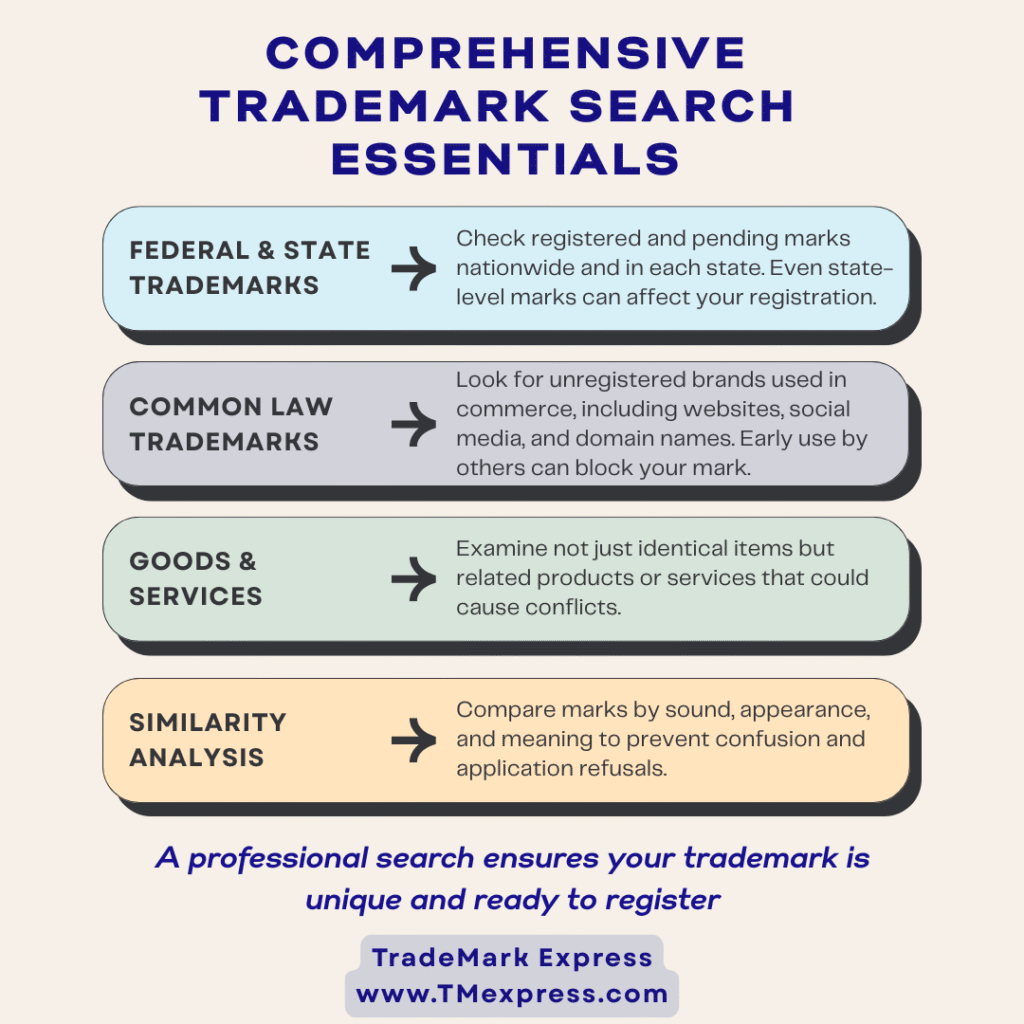
Before filing, thorough research is essential. A proper clearance search reduces the risk of conflicts and ensures your brand can be protected.

Check existing trademarks

Start with federal trademark and state trademark databases to identify similar marks. Federal searches cover USPTO registrations, while state searches uncover regional filings that might block your mark.

Investigate common law usage

Many small platforms may operate under unregistered names, aka common law. Searching online, domain registrations, app stores, and social media helps identify potential conflicts. Even unregistered marks can pose legal challenges.

Graphic showing the key steps of a comprehensive trademark search, including checking federal/state trademarks, common law use, related goods/services, and similarity analysis

Evaluate similarities

Your search should consider names that sound alike, look similar, or convey the same meaning. For example, “Chatly” and “Chatterly” may be confusingly similar, even with different spellings.

Graphic showing four ways trademark confusion can occur: sound similarity (“Lite” vs. “Light”), appearance similarity, meaning similarity (“Sunrise Café” vs. “Morning Light Coffee”), and related goods/services in the same industry

Select the right goods/services and NICE classes

Trademarks are registered for specific goods or services. Social networking platforms are commonly classified in Class 9 for mobile applications, Class 42 for the underlying online platform and community technology, and Class 45 for social networking services, depending on the nature of the offering. Choosing correct classes ensures your protection covers all relevant uses.

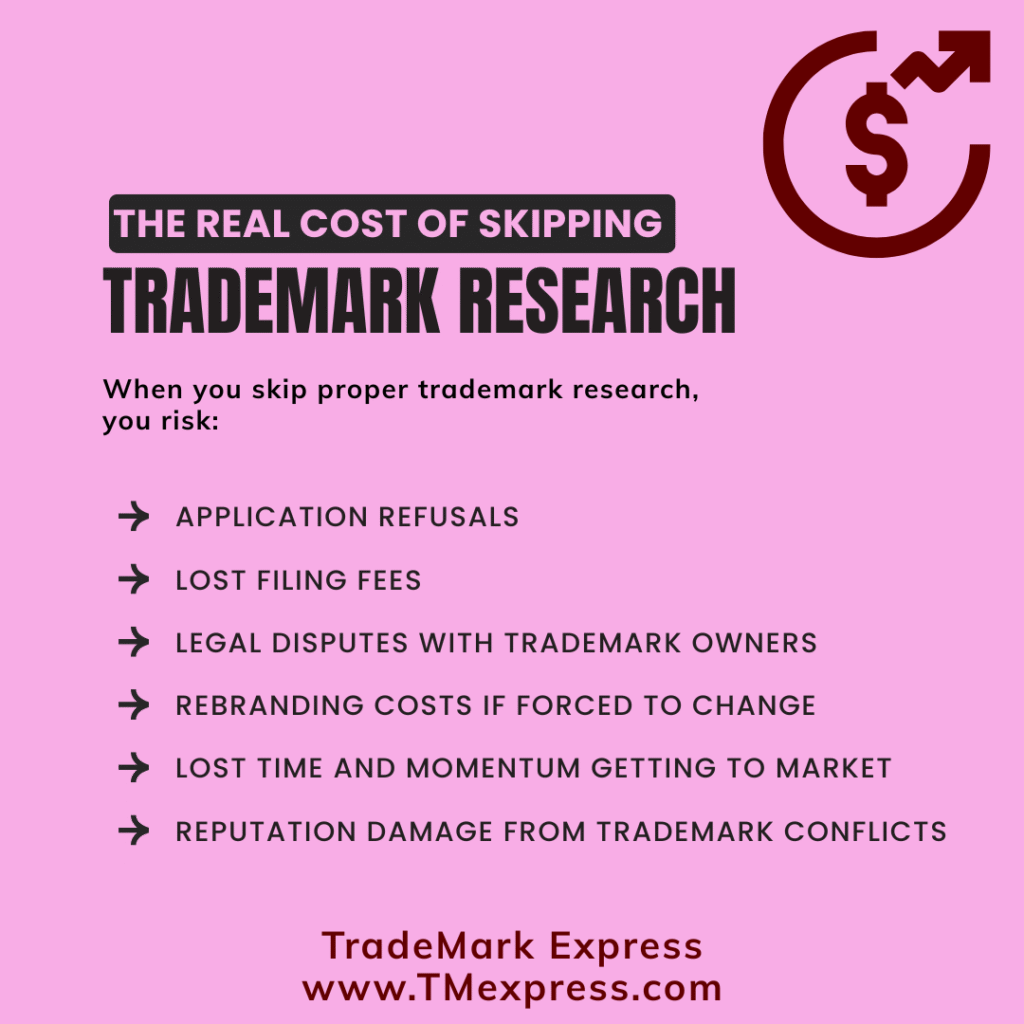
Skipping comprehensive research can lead to costly rebranding or refused applications. Investing in a detailed search provides clarity, reduces risk, and informs your filing strategy.

Infographic listing six risks of skipping trademark research: application refusals, lost filing fees, legal disputes, rebranding costs, lost time and momentum, and reputation damage

Step 3: Prepare and File Your Trademark Application

Once your name appears clear, the next step is preparing a trademark application that accurately reflects how your social networking platform operates.

Define your goods, services, and classes

You’ll need to clearly identify what your platform offers and select the appropriate trademark classes. For social networking platforms, this often includes categories related to mobile applications, online platforms, or social networking services. Choosing the right classes helps ensure your protection matches how your brand is actually used.

Assemble the required application details

A complete application typically includes the mark itself (word mark or logo), ownership information, and a concise description of your goods or services. You’ll also need to indicate whether the mark is already in use or will be used in the future under an Intent-to-Use basis (more about this in Step 4 below).

File with the USPTO

Trademark applications are submitted electronically through the USPTO’s Trademark Center. Filing fees depend on the application format and the number of classes selected and are published on the USPTO website.

Graphic listing key steps to filing a trademark application — confirming use, choosing the right class, clear descriptions, USPTO filing, and planning for renewals

Taking the time to prepare the application carefully can help reduce delays and improve the chances of a smoother review process.

Step 4: Intent-to-Use vs Use in Commerce

Understanding the difference between Intent-to-Use (ITU) and Use in Commerce is crucial:

  • Use in Commerce: You are already offering your platform to users, and the trademark is actively associated with your services. Evidence might include website screenshots, app store listings, or marketing materials.
  • Intent-to-Use: You haven’t launched your platform yet but plan to. Filing ITU lets you secure the mark now and complete the “use” requirement later.
intent-to-use trademark vs use in commerce trademark, differences between

Choosing the right option ensures your application reflects your business stage and avoids delays.

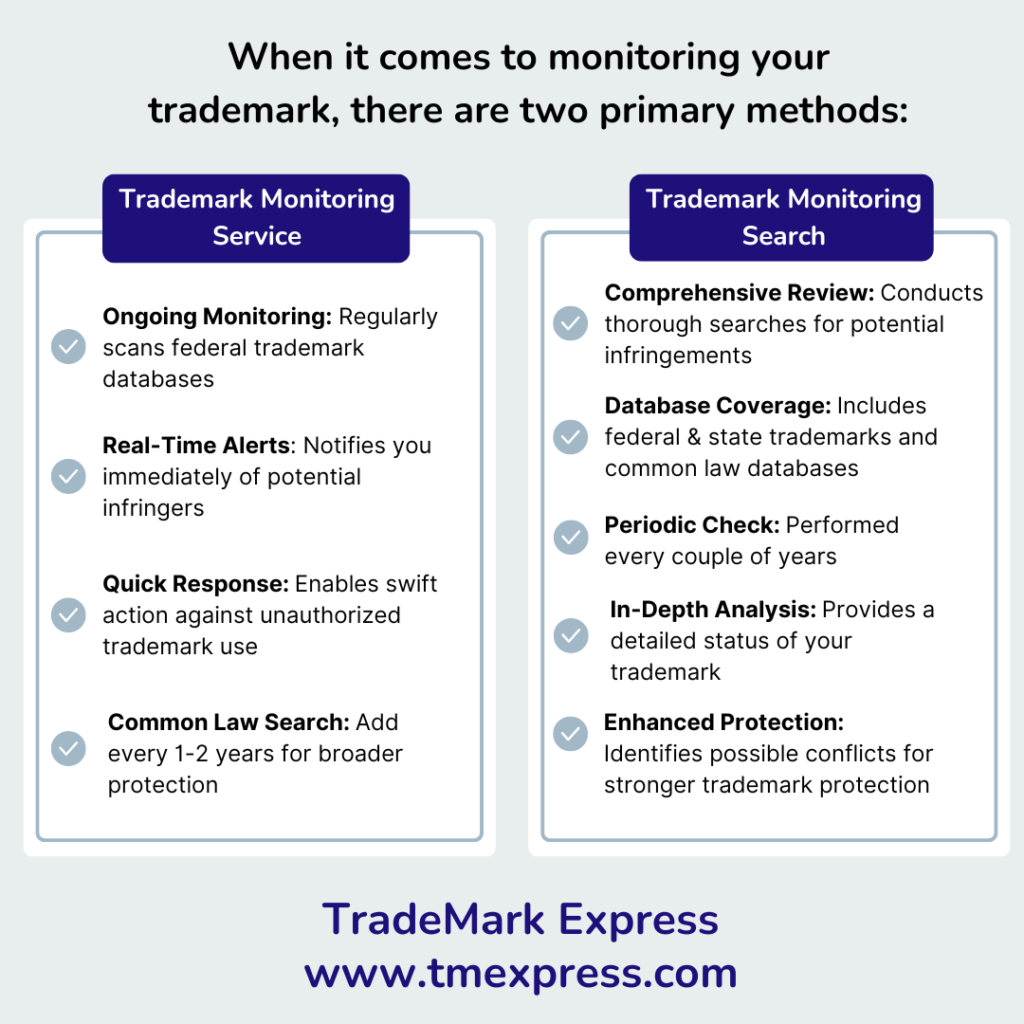
Step 5: Monitor Your Trademark Application

Even after filing, active monitoring is necessary:

  • Watch for office actions: The USPTO may request clarifications or raise objections. Responding promptly to any and all office actions keeps your application on track.
  • Track third-party filings: Competitors may file similar marks that could affect your approval. Early awareness allows you to address potential conflicts proactively.
two ways to monitor your trademark: trademark monitoring service OR trademark monitoring search

Monitoring reduces surprises and keeps your path to registration clear.

Step 6: Maintain a Registered Trademark

Once registered, ongoing maintenance preserves your rights:

KEY DEADLINES

trademark renewals infographic

Ongoing monitoring and proper use

Consistently use your mark in the correct format, and watch for infringing uses online. Proper use ensures your trademark remains enforceable and protects your investment.

Social Networking Specific Considerations

Social networking platforms have unique trademark challenges and opportunities.

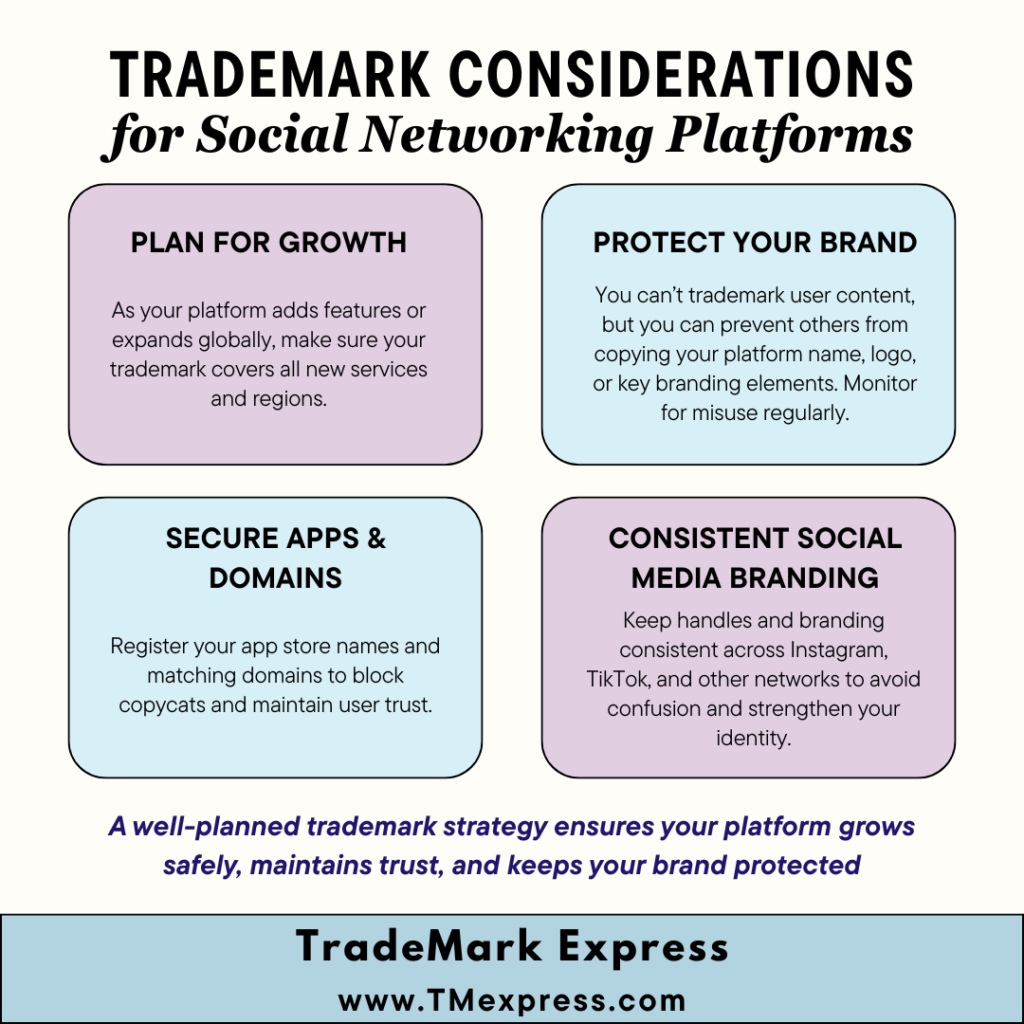
Infographic showing trademark tips for social networking platforms, highlighting growth planning, brand protection, app and domain security, and consistent social media handles.
  • Rapid growth and expansion
    Platforms often expand features or launch apps in multiple regions. Ensure your trademark covers new services and international markets to avoid gaps in protection.
  • User-generated content
    Your platform may host countless usernames and handles. While you can’t trademark individual user content, you must protect your brand against unauthorized use or imitation. Consider monitoring key phrases or logos associated with your platform.
  • App stores and domains
    Securing app store names and matching domain names is critical. Trademark your platform in order to help prevent copycats in app listings or domains, protecting user trust and your market share.
  • Social media handles and branding
    Even small variations in spelling can create confusion. Align your trademark with your handles on Instagram, TikTok, and other networks to maintain consistency and reduce infringement risk.

Conclusion

Trademarking your social networking platform protects your brand, builds trust, and reduces the risk of costly disputes. By choosing a strong name, conducting comprehensive research, filing properly, monitoring your application, and maintaining your registration, you secure your platform’s identity for years to come.

The process may seem detailed, but taking these steps now can save time, money, and headaches later. A clear trademark strategy gives you the confidence to grow your platform and focus on engaging users.

Order your social networking platform trademark today to secure your brand and start building protection immediately. TradeMark Express provides comprehensive research and application preparation, plus access to our trusted trademark attorney network to guide you through every step.

DISCLAIMER: References to particular trademarks, service marks, products, services, companies, or organizations appearing on this page are for illustrative and educational purposes only and do not constitute or imply endorsement.
The information provided on this site is for general informational purposes only. All information on the Site is provided in good faith; however, we make no representation or warranty of any kind, express or implied, regarding the accuracy, validity, or completeness of any information on the Site. The Site cannot and does not contain legal advice. The legal information is provided for general informational and educational purposes only, and is not a substitute for legal advice. Consult a licensed attorney for legal advice.

Leave a Comment

Your email address will not be published. Required fields are marked *