
Trademark and Recipes: What's Protected?
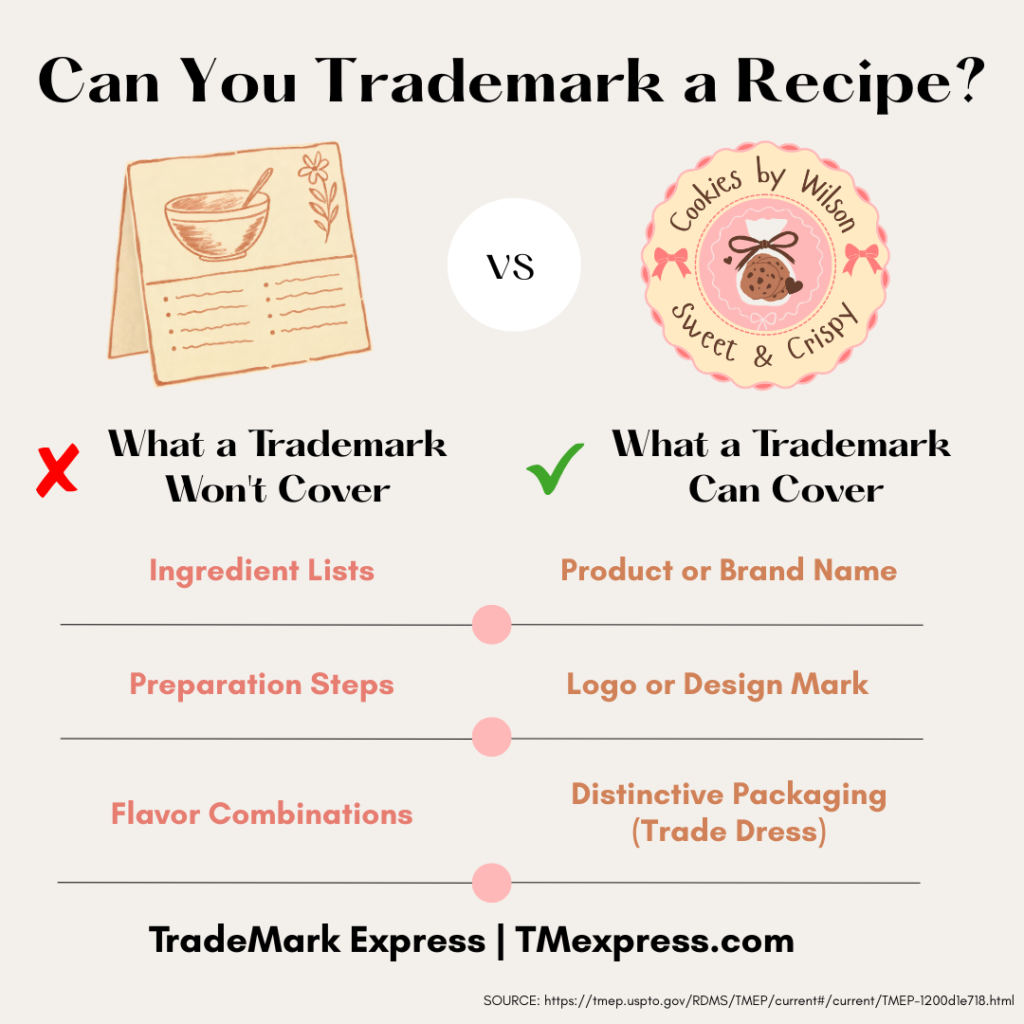
No, you cannot trademark a recipe itself. Trademark law protects brand identifiers — names, logos, slogans, and packaging that tell customers where a product comes from — not the list of ingredients or steps used to make it.
That distinction trips up a lot of food entrepreneurs, so let’s break down what’s actually protectable and what isn’t.
Why the Recipe Itself Isn't Protected
A trademark exists to identify the source of a product, not the formula behind it. The specific combination of ingredients, measurements, and preparation steps in a recipe doesn’t function as a brand identifier — it’s simply how the product is made.
Say a home cook develops a signature spice blend for a hot honey she calls Blaze Drizzle. The precise ratio of chili, honey, and smoke flavoring isn’t something trademark law can protect. If she wants to keep that formula private, that’s a trade secret question, not a trademark one, and it involves different legal protections entirely.
What You Can Actually Trademark
While the recipe itself is off the table, several things built around it are fair game:
- The product or brand name — like “Blaze Drizzle” itself, once it’s used in commerce to identify the hot honey.
- A logo or brand mark used on labels, packaging, or marketing.
- A slogan or tagline associated with the product.
- Trade dress — the distinctive, non-functional appearance of packaging, such as a uniquely shaped bottle or a signature label design, as long as it identifies the product’s source rather than serving a purely functional purpose.
So, if our home chef starts selling Blaze Drizzle in a distinctively shaped bottle with a recognizable label, both the name, the logo, and the packaging design could potentially qualify for trademark protection — even though the honey-and-chili ratio inside never will.
Want to know more? Check out our post: How to Trademark Your Food Brand
Why Trademark Research Matters Before You Brand It
Once you’ve settled on a name for your food or beverage product, the real risk isn’t the recipe — it’s launching a brand name that’s already spoken for. This is where a comprehensive trademark search becomes essential, and it needs to go well beyond a quick USPTO name lookup.
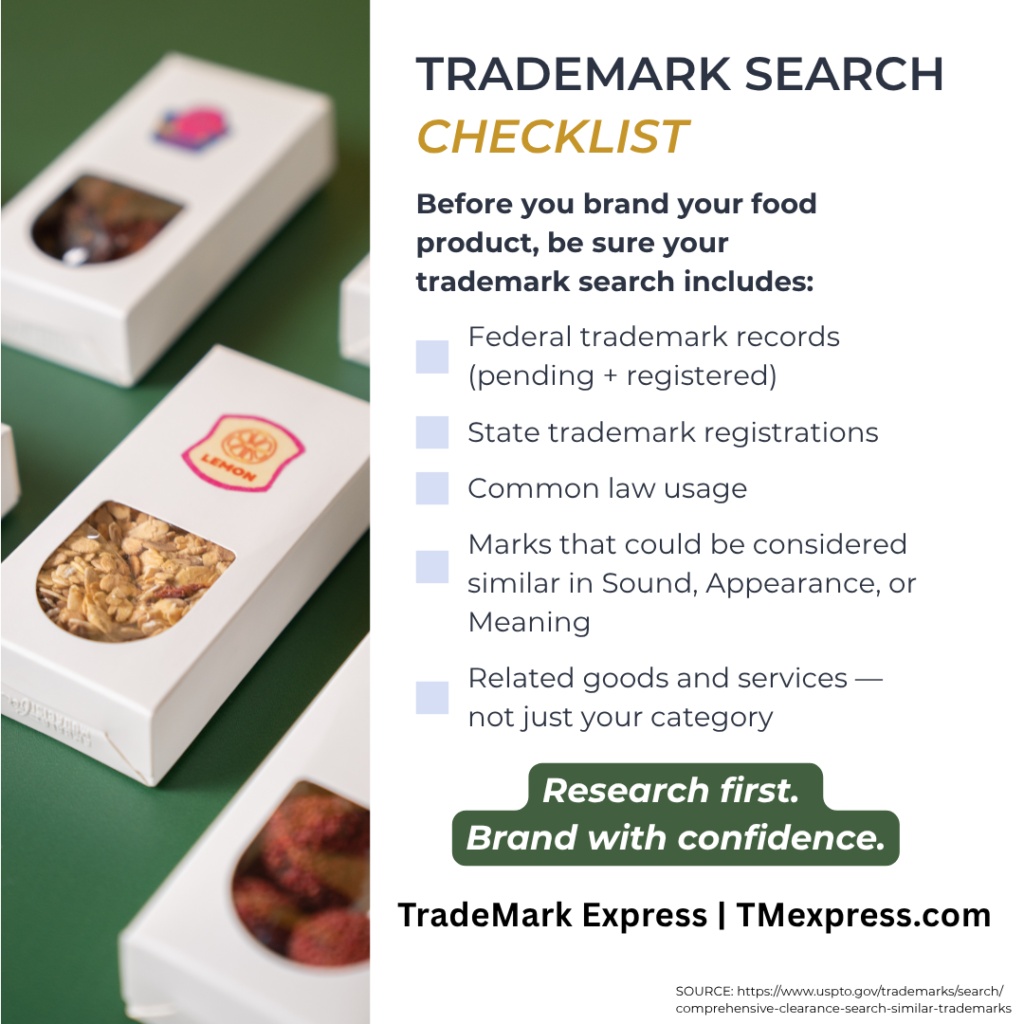
A thorough trademark clearance search should account for:
- Federal trademark records — both pending and registered marks in the USPTO database, since a pending application can still block your path to registration.
- State trademark registrations — many businesses register at the state level only, so a federal-only search can miss real conflicts.
- Common law usage — trademark rights can exist simply through actual use in commerce, even without any registration. These common law rights are geographically limited, meaning a small food producer using a similar name in one region may hold protectable rights there, even if they never filed anything.
- Similar marks in sound, appearance, or meaning — the USPTO doesn’t require an exact match to find a conflict. If “Blaze Drizzle” is confusingly similar to an existing “Blazing Drizzle” or “Blaize Drizzel,” that’s a real problem a surface-level search will miss.
- Related goods and services — conflicts aren’t confined to identical product categories. A hot honey brand could run into trouble with an existing mark used for barbecue sauces or spice blends if consumers might reasonably assume the two are connected.
Skipping any of these layers is one of the most common reasons applications hit obstacles or businesses get hit with a cease-and-desist letter after they’ve already invested in packaging, labels, and marketing.
FAQ
Can I trademark my grandmother’s secret recipe?
No — the recipe itself isn’t eligible for trademark protection. You could potentially trademark the name you give the finished product, though.
Does copyright protect recipes instead?
Copyright generally doesn’t protect a bare list of ingredients or a simple set of instructions, though descriptive text surrounding a recipe may have separate copyright considerations. That’s a distinct legal question from trademark protection.
What should I trademark for my food business?
Typically the brand name, logo, and any distinctive packaging or slogans tied to your product — not the recipe or formula behind it.
How do I know if my product name is already taken?
A full trademark search — checking federal and state registrations along with common law and similar-mark use — is the most reliable way to find out before you commit to a name.
Ready to Protect Your Food Brand?
Before you print labels or launch your product, make sure the name behind it is actually yours to use. TradeMark Express offers comprehensive trademark and common law searches along with application preparation assistance, so you can move forward with confidence. Reach out to get started.