The short answer is: sometimes — but that doesn’t mean it’s safe.
Business names exist in several overlapping legal systems, and whether two companies can share a name depends on a lot of factors. If you’re naming a new business or protecting an existing one, this is exactly the kind of question you need to understand before you invest in a brand.
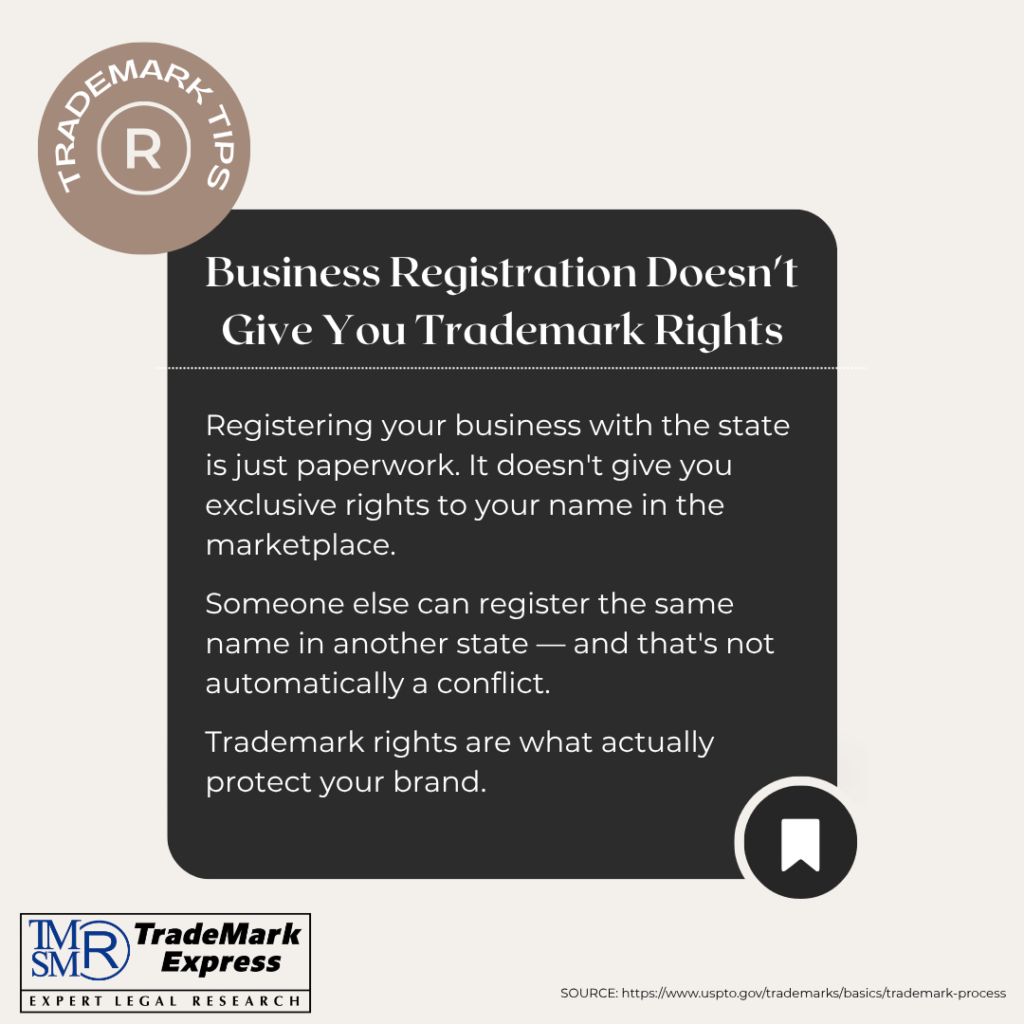
Business Registration Doesn't Equal Brand Rights
When you register a business name with your state — whether as an LLC, corporation, or assumed name — that registration is primarily administrative. It tells the state who you are for tax and legal purposes. It doesn’t give you exclusive rights to use that name in the marketplace, and it doesn’t prevent someone else from using a similar name in another state or even, in some cases, in your own.
Two businesses can be registered under similar or identical names in different states without any automatic conflict. The problem arises when both are trying to use that name in commerce — especially in overlapping markets.
Where Trademark Law Comes In
Trademark rights are what actually protect a business name as a brand identifier.
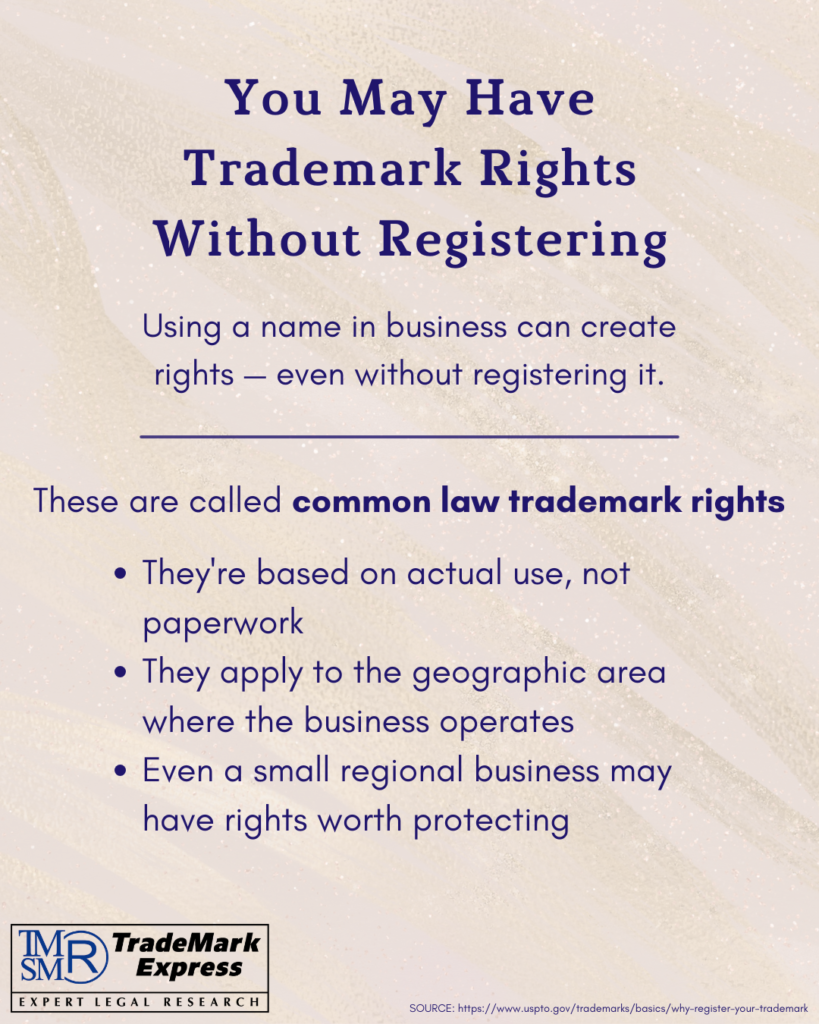
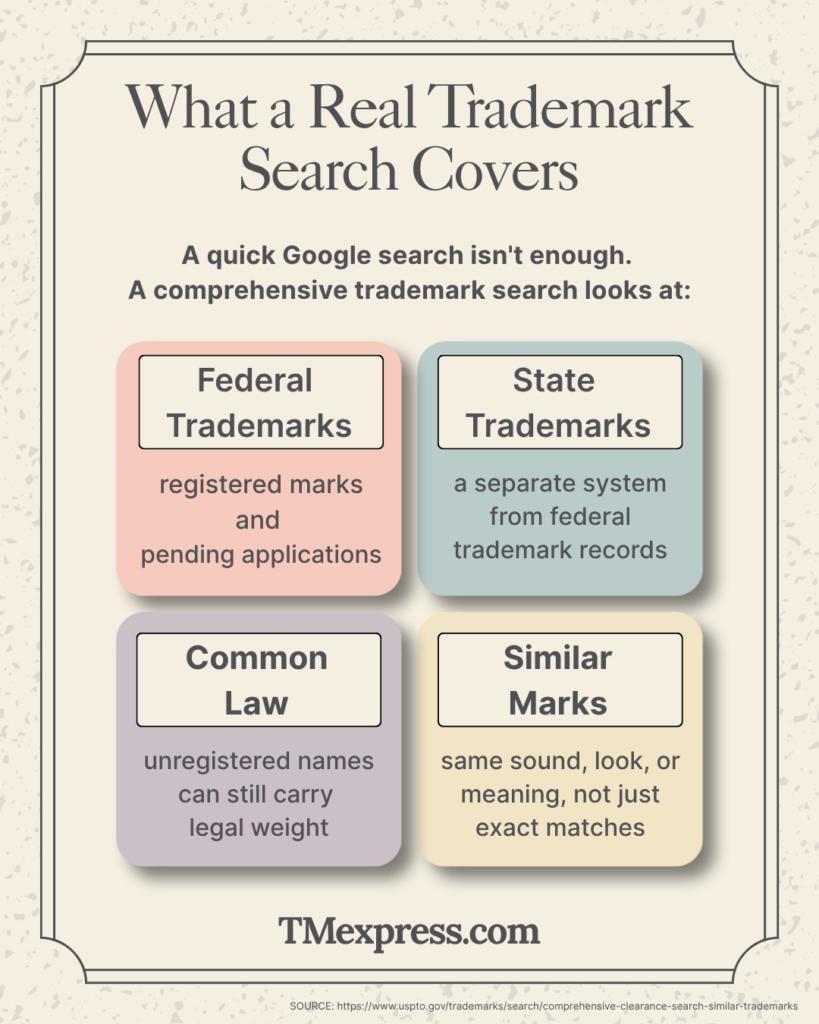
Common law trademarkrights arise from actual use of a name in commerce — no registration required. A business that has been using a name in the marketplace — even without a federal trademark registration — may have established common law rights in that name in the geographic area where it operates. If your new brand name is already in use by someone else, even a small regional business without a registered trademark, that could create a conflict.
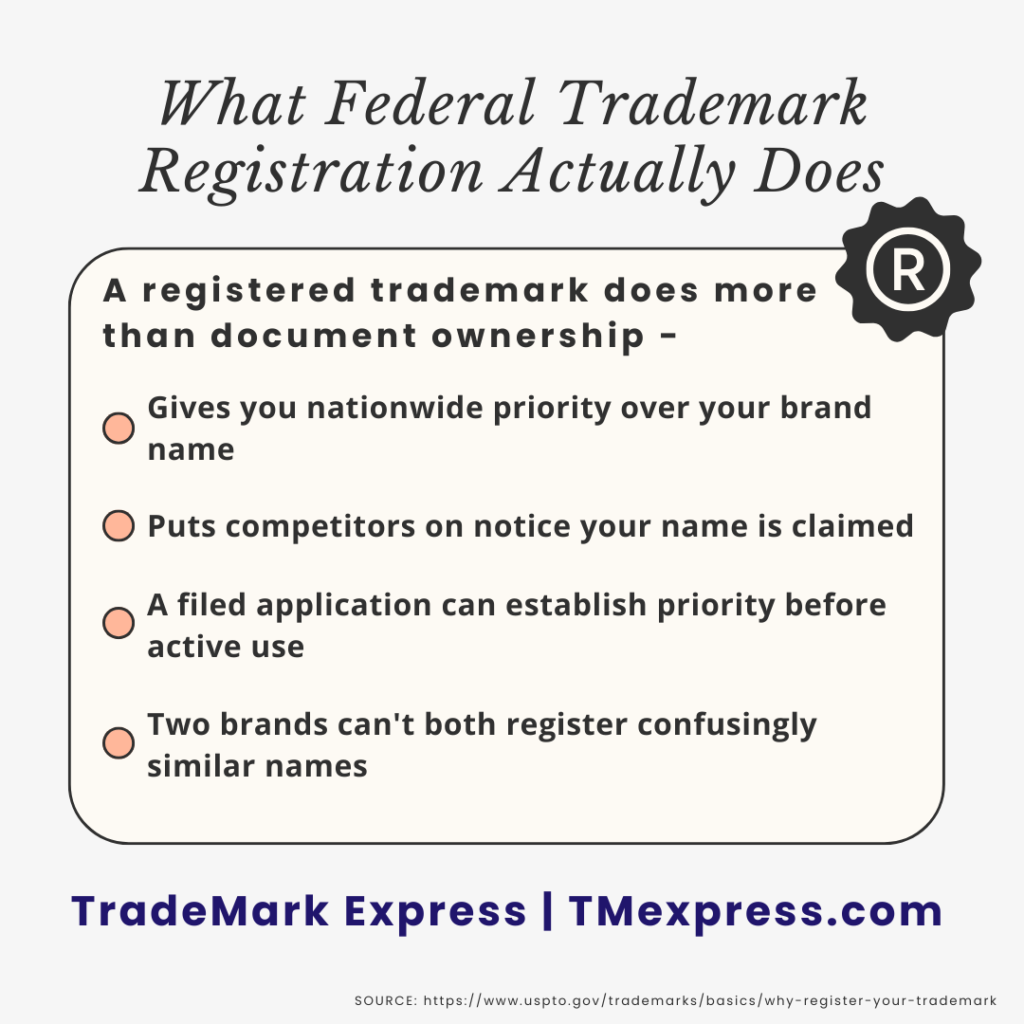
Federal trademark registration with the USPTO strengthens those rights considerably. A registered mark provides nationwide priority and puts the public on notice that the name is claimed. A filed application can also establish priority even before a mark is in active use. Two businesses cannot both hold a federal trademark registration for confusingly similar names used on related goods or services — that’s the standard the USPTO applies when reviewing applications.
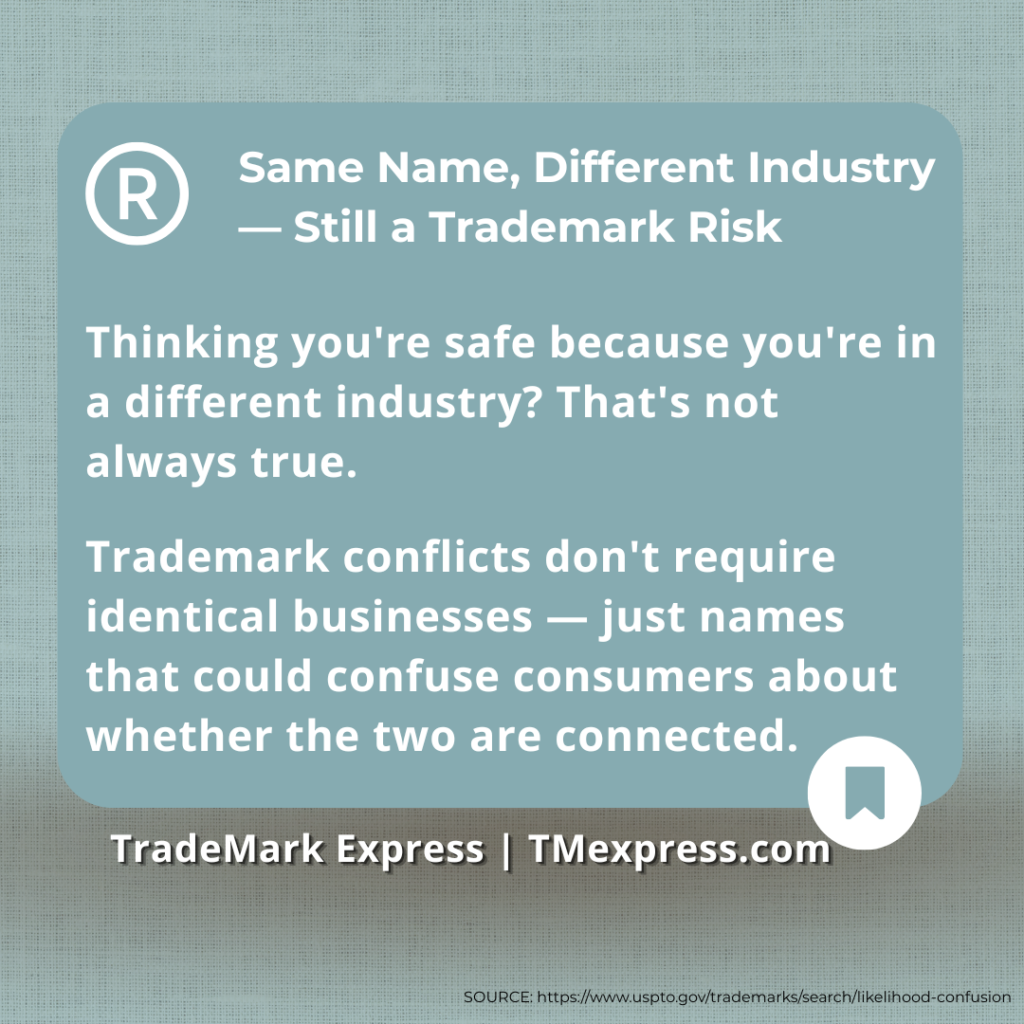
Same Name, Different Industries — Is That Okay?
It can be, but it’s not a safe assumption. Trademark conflicts don’t require identical names or identical businesses. The USPTO evaluates whether two marks are confusingly similar when used on related goods or services. That means a name conflict can exist even if the two businesses aren’t in the exact same industry — if consumers might reasonably assume a connection, a conflict may exist.
For example, a name used for an accounting software company and the same name used for a business consulting firm could raise conflict issues, even though they aren’t direct competitors. The relatedness of the goods and services matters just as much as the similarity of the names.
Common law usage — businesses using a name in commerce without any formal registration can still have protectable rights in their geographic area
Similar marks — not just identical names, but marks that are close in sound, appearance, or meaning, since that’s the actual standardthat applies in a conflict
Skipping this step — or relying ona surface-level search — is one of the most common and costly branding mistakes small businesses make. Finding out your name is already in use after you’ve built brand recognition, printed packaging, or launched a website is an expensive problem.
The Bottom Line
Can two businesses have the same name? It happens — but whether it creates a legal conflict depends on trademark rights, not just registration status. Registering your business with the state doesn’t clear the name for use as a brand. Someone else may already have common law rights from years of use, a pending federal application that hasn’t published yet, or an active registration you didn’t know to look for.
Before you build a brand around a name, a comprehensive trademark searchis the step that tells you what you’re actually working with. The path forward is a lot clearer — and a lot safer — when you know what’s already out there.
TradeMark Express provides comprehensive trademark research and application preparation assistance for small businesses, startups, and entrepreneurs. If you’re ready to check whether your business name is available, contact usto get started.