Your Trademark Search Came Back Clear — But Is the Result Actually Reliable?
Getting a clear trademark search result feels like a win. It means your brand name appears to be available, and you’re one step closer to moving forward with confidence.
But before you start filing paperwork or scaling your brand, there’s one question worth asking first: was that search actually comprehensive?
Not all trademark searches are built the same.
A result that says “you’re clear” is only as trustworthy as the search behind it. Understanding what a thorough clearance search looks like — and whether yours qualifies — is the most important thing you can do before taking any next steps.
What Makes a Trademark Search Truly Comprehensive
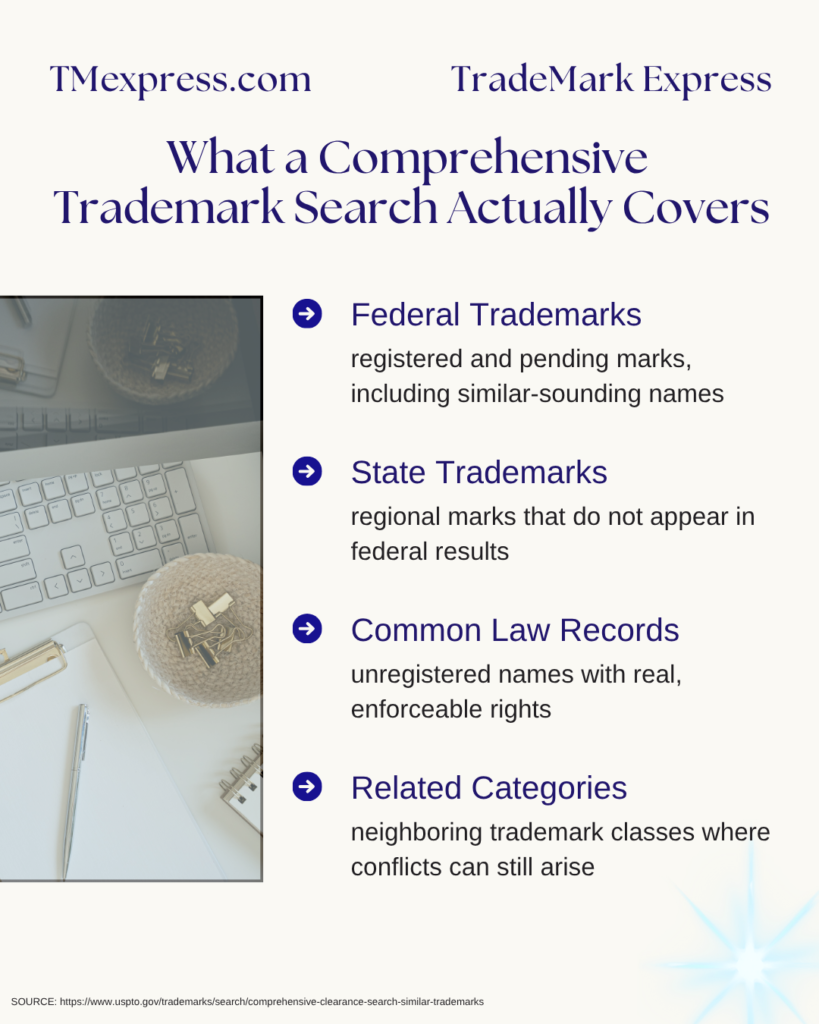
A basic trademark search checks one database: the USPTO’s Trademark Search system, which lists federally registered and pending marks. That’s a reasonable starting point, but it’s far from the complete picture.
A comprehensive trademark clearance search goes several layers deeper.
Federal Trademark Records
This is the foundation — a review of the USPTO database for identical and similar marks across your relevant trademark classes. But similarity isn’t just about exact matches. A thorough search also looks at marks that sound alike, look alike, or carry a similar commercial impression.
State Trademark Registrations
Every U.S. state maintains its own trademark registry. A business operating regionally may have established rights through a state trademark registrationthat never shows up in a federal search. If you’re entering a market where a state-registered mark already exists, that’s a conflict worth knowing about.
Common Law Marks
Here’s where many basic searches fall short. Common law trademark rightsarise from actual use of a mark in commerce — no registration required. A business that has been operating under a name for years, even without a federal registration, may have enforceable rights in the geographic areas where they operate. These marks won’t appear in any trademark registry, which is why a comprehensive search also includes business name databases, domain records, and commercial use sources.
Similar Marks in Related Categories
Trademark conflicts don’t always come from identical marks in the same industry. In some cases, marks in related or adjacent categories can create a likelihood of confusionif consumers might reasonably think the products or services come from the same source. A reliable search reviews not just your exact trademark class but neighboring categories where overlap could be an issue.
If the search you received covered all of these areas, you’re working with a result you can likely rely on.
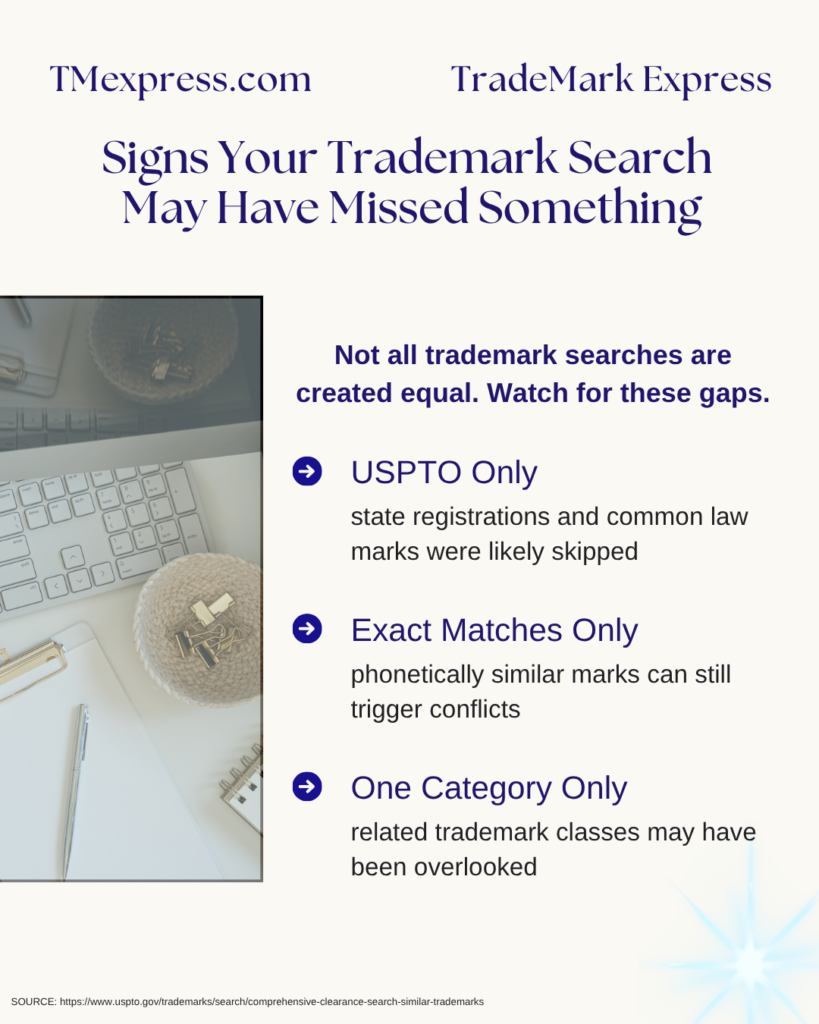
Signs Your Trademark Search May Have Missed Something
If it only pulled from the USPTO database, you may be missing significant risk factors that could surface later — after you’ve already invested in your brand.
If the search only looked for exact or near-exact name matches, phonetically similar marks may have been overlooked entirely — and those are often the ones that trigger conflicts during USPTO examination.
And if it only evaluated your primary product or service category, you could be missing marks in related classesthat a USPTO examiner might consider close enough to cause confusion.
What a Clear Trademark Result Actually Means
Once you’ve confirmed the search was comprehensive, it’s worth understanding what “clear” does and does not mean.
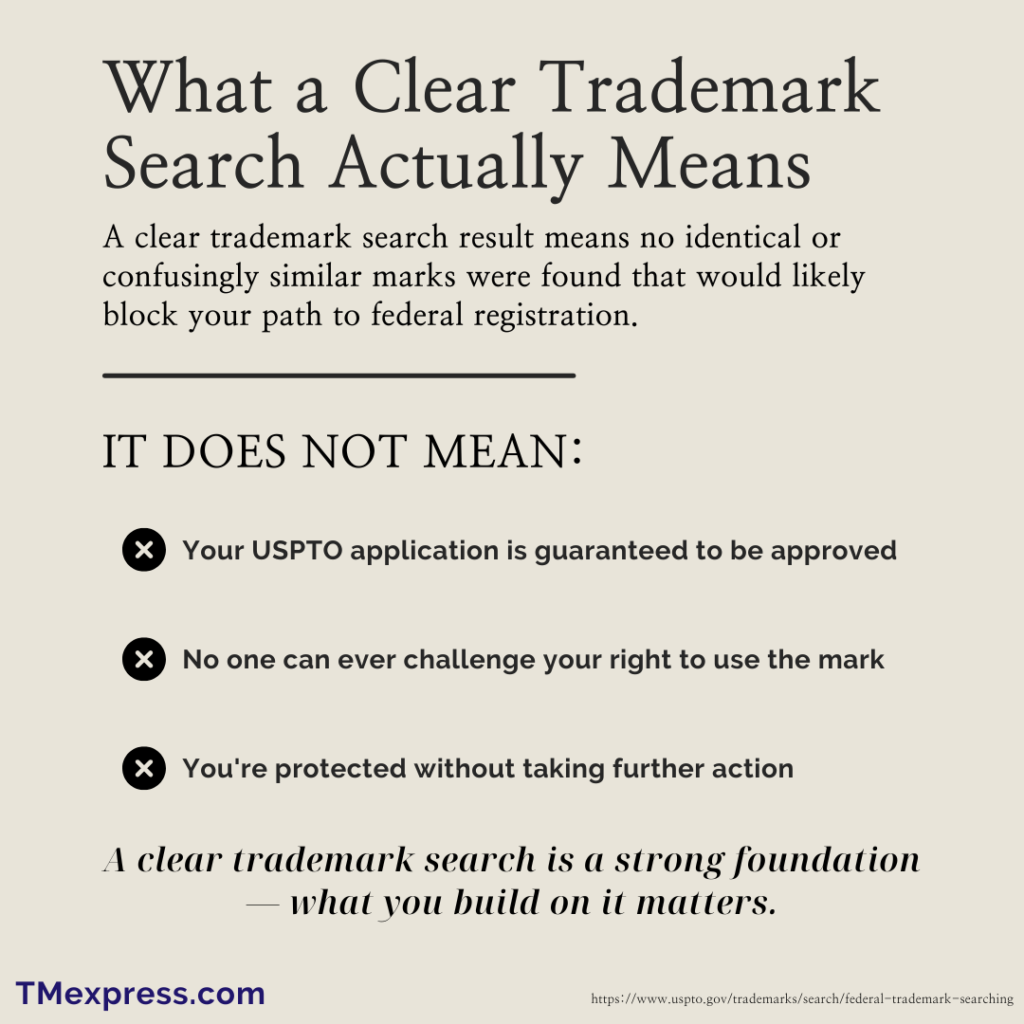
A clear result means that, based on the records reviewed, no identical orconfusingly similar marks were found that would likely block your path to federal registration or create an immediate conflict with existing rights.
It does not mean:
Your application is guaranteed to be approved by the USPTO
No one will ever challenge your right to use the mark
You’re protected without taking any further action
A clear search result is a strong foundation. What you build on it is up to you — and the next steps matter.
Review Your Search Results Before Moving Forward
Even with a comprehensive search in hand, take time to read through the results rather than just looking for a bottom-line verdict.
Look for Marks That Are Close But Not Blocking
A thorough search report may flag marks that weren’t identified as direct conflicts but are still worth being aware of. These are useful reference points as your brand grows — and worth keeping in mind as you consider how distinctive you want your mark to be.
Confirm the Right Trademark Classes Were Covered
Clearance is only meaningful when the search covers the categories that match your actual goods or services. Make sure the classes reviewed align with what your business does, not just a general industry category.
Talk Through the Findings
If you received your search through TradeMark Express, you can connect witha trademark attorney from our referral networkto review the results and discuss what they mean for your specific situation before you file anything.
Decide Whether to File a Federal Trademark Application
A clear result from a comprehensive searchis typically the point at which most business owners move forward with filing a federal trademark application with the USPTO.
Federal registration gives you:
Nationwide priority over others who try to use a similar mark
Timing matters here. Trademark rights in the U.S. are largely based on priority — the first to use or file typically has the stronger claim. If you’ve done your due diligence and the path looks clear, moving forward promptly is the practical choice.
Don't Wait Too Long After Receiving a Clear Trademark Search
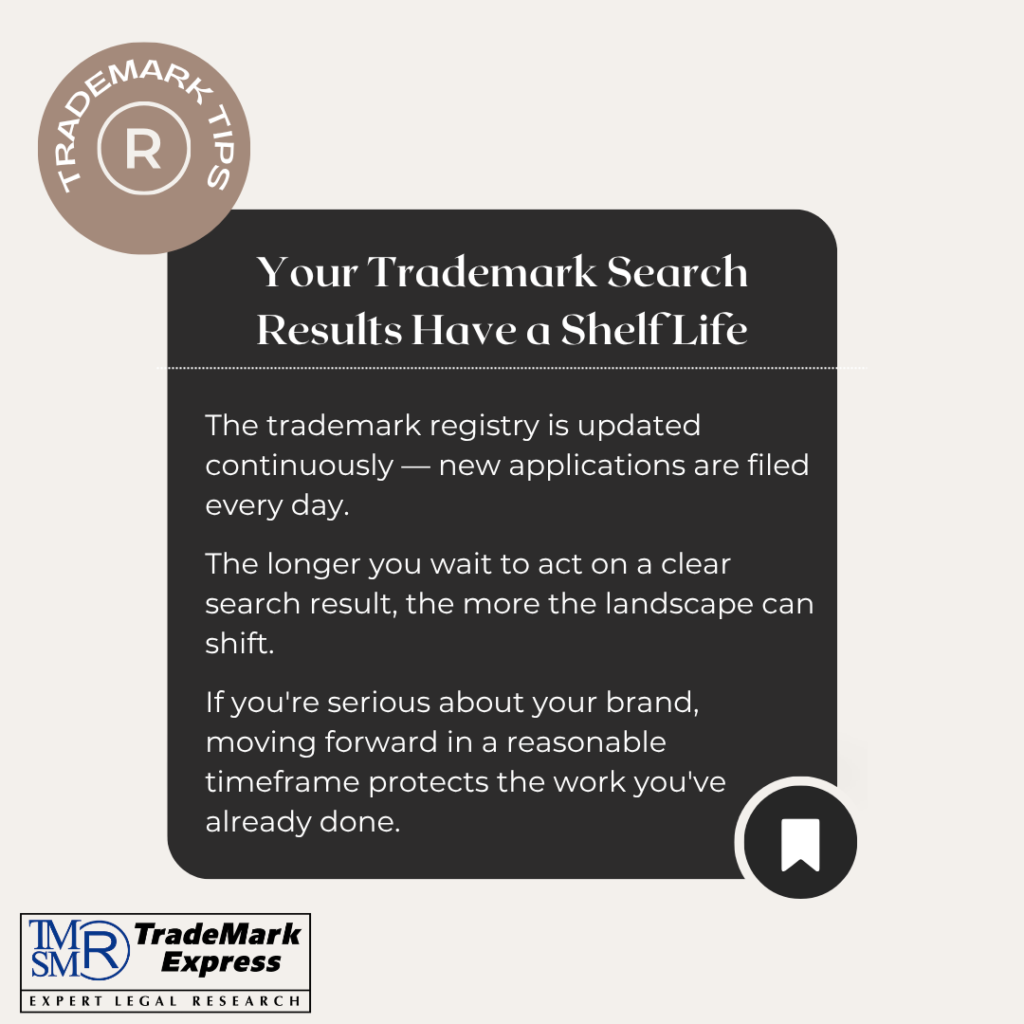
Search results have a shelf life.
The trademark registry is updated continuously, and new applications are filed every day. The longer you wait to act on a clear result, the more the landscape can shift.
If you’ve received a comprehensive clear search and you’re serious about your brand, moving forward in a reasonable timeframe protects the work you’ve already done.
Not Sure If Your Search Was Comprehensive Enough?
If you ran a quick free search, used an automated tool, or had someone pull only the USPTO database, there’s a good chance the result — however encouraging — doesn’t tell the full story.
A comprehensive trademark searchcovers federal records, state registrations, common law use, and related categories so you know what you’re actually working with before you invest in your brand.
Learn more about how the process works on our trademark search overview page, or reach out today to get a search you can rely on.
The information provided on this site is for general informational purposes only. All information on the Site is provided in good faith; however, we make no representation or warranty of any kind, express or implied, regarding the accuracy, validity, or completeness of any information on the Site. The Site cannot and does not contain legal advice. The legal information is provided for general informational and educational purposes only, and is not a substitute for legal advice. Consult a licensed attorney for legal advice.