How to Trademark a Fintech Brand
Fintech brands move fast. You launch an app, onboard users, and start building trust—all while competitors are doing the same. Your brand name, logo, and product identity quickly become valuable business assets.
This guide explains how to trademark a fintech brand in clear, practical terms. You’ll learn what makes a fintech name protectable, how the trademark process works, and how to avoid common missteps that can cost time and money.
Why a Trademark Is Important for a Fintech Business
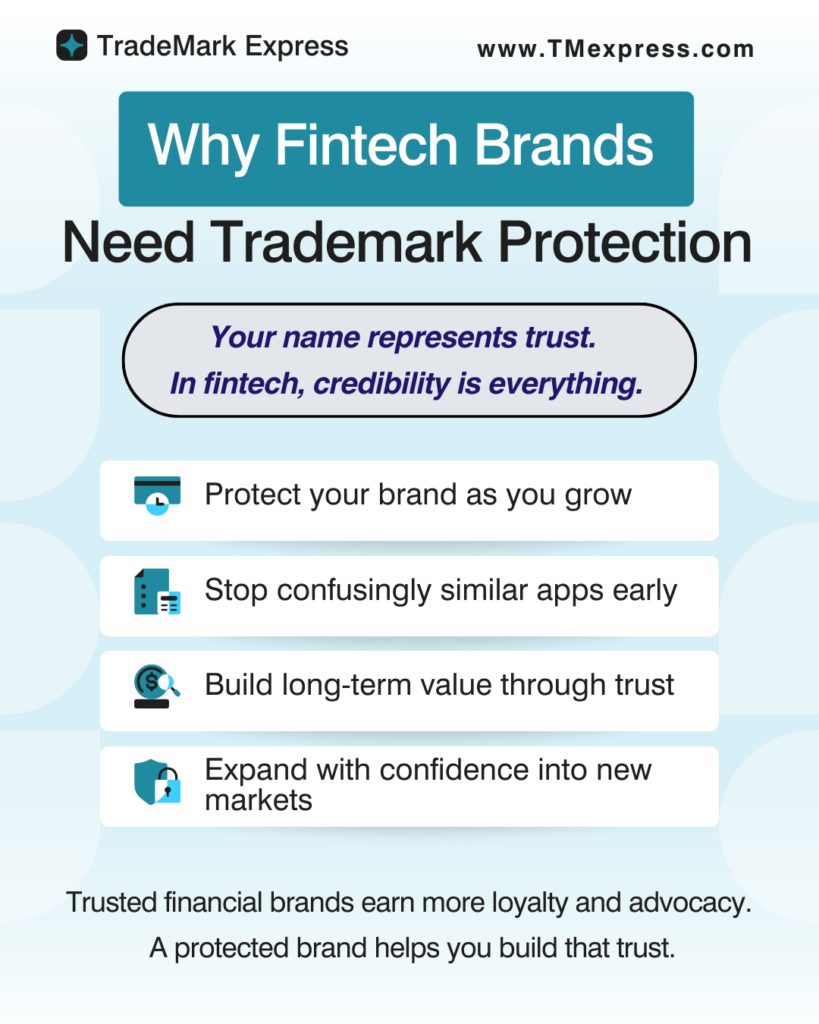
A fintech brand sits at the intersection of technology and trust, with your name signaling credibility and reliability.
A trademark protects your brand as your business scales. If another company launches a similar app or service, a registered trademark helps you address issues early before it affects users or revenue.
Trademarks also support long-term value. Edelman’s Trust Barometer reports that trusted financial brands see more than twice the loyalty and advocacy, highlighting why protection is critical for digital-first fintechs.
Finally, trademarks give fintech brands confidence to expand—whether adding features, partnering with banks, or entering new markets, protection provides a solid foundation against brand conflicts.
Step-by-Step Process for Obtaining a Fintech Trademark
Choose a Strong, Protectable Name
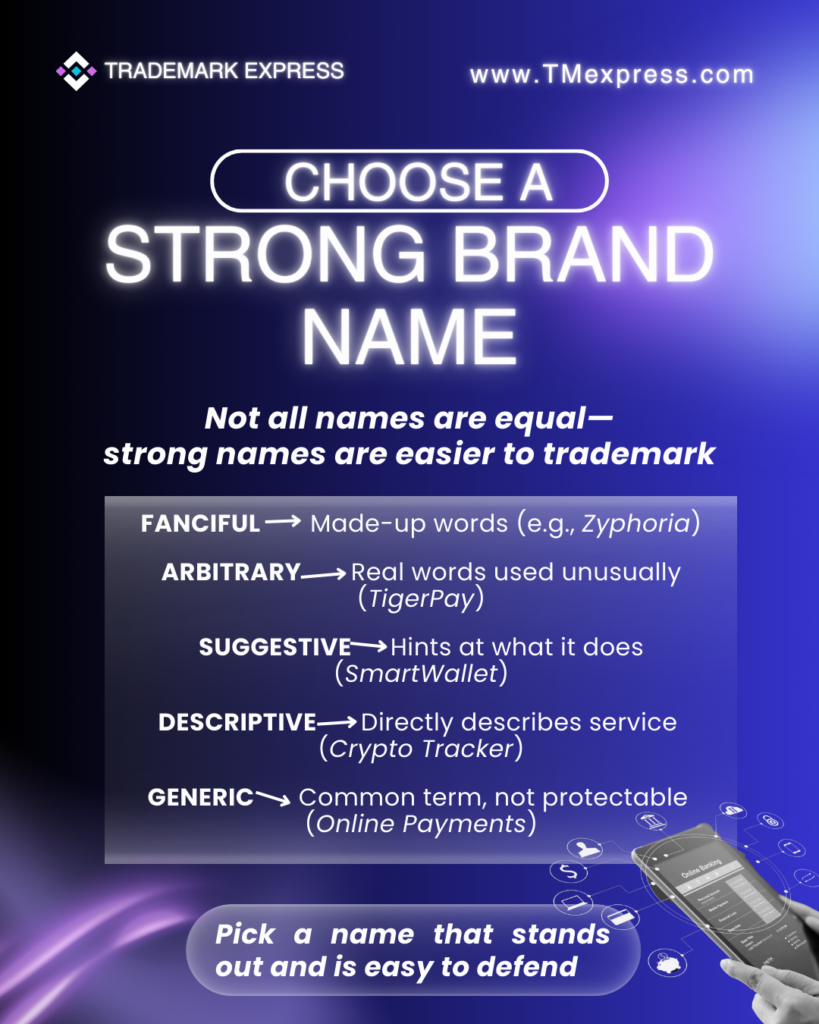
Not all brand names are created equal. Some are easy to protect, while others are difficult or impossible to register.
In the middle are suggestive names, which hint at what the product does without directly describing it. These can be registrable but may require more analysis.
At the weak end are descriptive and generic names, such as terms that directly describe financial services or technology features. These are often refused and/or provide limited protection.
For fintech brands, descriptive names can be especially risky. Terms like “Pay,” “Wallet,” “Crypto,” or “AI Finance” are widely used and hard to claim exclusively. A more unique name gives you a clearer path to registration and stronger long-term protection.
A distinctive fintech name is easier to trademark and easier to defend.
Conduct Comprehensive Trademark Clearance Research
Skipping proper trademark research is one of the most expensive mistakes fintech founders make. A quick online search is not enough.
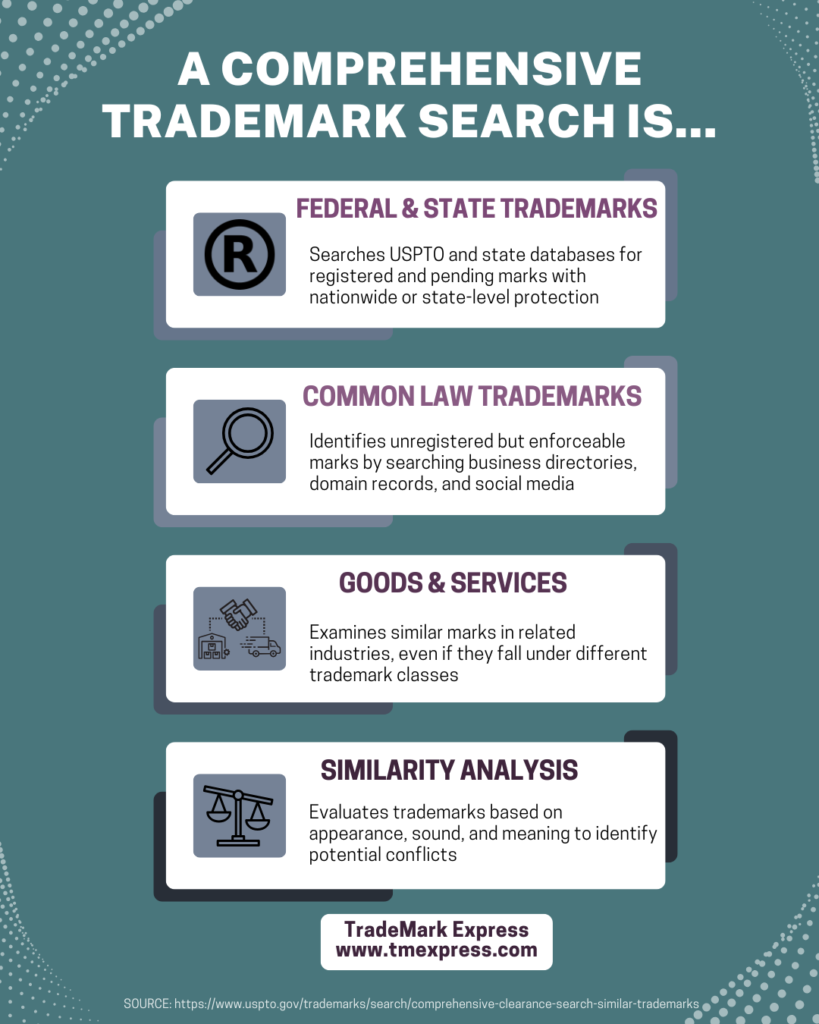
Comprehensive clearance research looks beyond exact matches. It includes federal trademark registrations, state trademarks, and common law usage—meaning unregistered names used in the real world. A fintech startup with prior use can still pose a risk, even without a registration.
Similarity matters almost as much as identical spelling. Names that sound alike, look alike, or convey a similar meaning can create a likelihood of confusion. For example, a digital payments app called “ZyPay” may conflict with “ZiPay,” even if the spelling differs.
Goods and services also matter. Fintech businesses often span multiple NICE classes, such as downloadable software (found in trademark class 9), financial services (trademark class 36), or SaaS platforms (typically trademark class 42). Evaluating how your services overlap with existing trademarks is critical to understanding risk.
From a business standpoint, proper research helps you avoid rebranding costs, investor concerns, and delayed launches. From a legal standpoint, it reduces the chance of refusal or disputes later.
Thorough trademark research helps you make informed decisions before you invest further in your fintech brand.
File the Trademark Application
Once research is complete, the next step is filing the application with the USPTO. This is where precision matters.
You’ll need to clearly identify your goods and services and select the appropriate NICE classes. For fintech companies, this often includes software-related classes and financial service categories. Choosing the wrong scope can limit protection or create issues later.
The USPTO application process includes submitting your mark, owner details, goods and services descriptions, and filing basis. Filing fees vary by application type and class, so it’s best to reference the USPTO’s current fee schedule directly.
Accuracy is critical. Small errors can lead to delays, Office Actions, or additional costs. Application preparation should align with how your fintech brand actually operates today—or how it will operate soon.
A well-prepared trademark application sets the tone for the entire registration process.
Intent-to-Use vs. Use in Commerce
Not all fintech brands are live when they file. The USPTO allows two main filing bases: Use in Commerce and Intent-to-Use (ITU).
Use in Commerce applies when your fintech product or service is already available to customers, such as a live app or platform with active users. You’ll need to submit a specimen showing real-world use.
Intent-to-Use is for brands that plan to launch but are not yet live. ITU filings reserve your place in line, but you must later prove use before registration. ITU offers flexibility, while Use in Commerce can move faster if you’re already operating.
The right trademark filing basis depends on whether your fintech brand is already in the market.
Monitor the Trademark Application
Filing is not the finish line. Trademark applications require ongoing attention.
During examination, the USPTO may issue Office Actions requesting clarification or raising concerns. Monitoring deadlines ensures you can respond on time and keep the application moving forward.
Beyond the USPTO process, monitoring helps you spot potentially conflicting filings by others. Early awareness allows you to address issues before confusion spreads in the marketplace.
Active trademark monitoring helps protect both your application and your growing fintech brand.
Maintain a Registered Trademark
Trademark protection continues only if you meet ongoing requirements.
Key maintenance milestones include:
- Section 8 Declaration: Between years 5–6 after registration
- Section 15 Declaration (optional): After 5 years of continuous use
- Section 8 & 15 Combined Declaration: Between years 5–6 after registration
- Section 8 & 9 Renewal: Every 10 years
In addition, proper use of your mark and ongoing marketplace monitoring help preserve its strength. Missing deadlines or misusing the mark can weaken or cancel protection.
Maintenance keeps your fintech trademark active and enforceable over time.
Industry-Specific Considerations for Fintech Brands
Fintech businesses face unique trademark challenges that go beyond standard branding concerns.
First, fintech names often rely on technical or financial terminology. While these terms feel intuitive, they are commonly used across the industry and can limit protectability. Pairing them with distinctive wording can reduce risk.
Second, fintech brands frequently evolve. An app that starts as a budgeting tool may expand into payments, lending, or investing. Planning trademark coverage with future growth in mind helps avoid gaps later.
Third, fintech brands operate heavily in digital environments. App stores, APIs, dashboards, and downloadable software all affect how trademarks are used and evaluated. Consistent branding across platforms supports stronger protection.
Finally, fintech companies often attract global audiences early. Even if you start with U.S. protection, understanding how international expansion may affect your trademark strategy is important for long-term planning.
Fintech trademarks require forward-thinking and industry-aware planning.
Conclusion
Trademarking a fintech brand is not just a legal step—it’s a strategic business decision. A strong name, thorough research, and proper filing help protect the trust you build with users.
By understanding how to trademark a fintech brand, you can avoid costly mistakes, reduce uncertainty, and move forward with confidence. The earlier you address trademark protection, the easier it is to scale without disruption.
If you’re building a fintech brand, now is the time to take protection seriously and make informed choices.
Order your fintech trademark today to secure your brand and start building protection immediately. TradeMark Express provides comprehensive trademark research and application preparation, with referrals to our trusted trademark attorney network when needed.