
How to Trademark Your Real Estate Brand
Building a strong real estate brand takes vision, strategy, and hard work. But protecting that brand is just as important as creating it. A well-chosen name, logo, or slogan can set you apart in a competitive market, but without a trademark, your brand could be at risk. Here’s how to trademark your real estate brand and safeguard the identity you’ve worked so hard to create.
Why Trademarking Matters for Real Estate Brands
Trademarking isn’t just a formality—it’s a powerful tool to protect your business. A registered trademark safeguards your business name, logo, and marketing materials from unauthorized use. It also prevents competitors from adopting names or branding that are confusingly similar to yours, which can help you maintain a professional reputation and customer trust. For real estate professionals, whose brands often rely heavily on personal recognition and client referrals, this protection is especially valuable.
Understanding Different Trademark Types
Before you file, it’s important to understand the types of trademarks available:

- Federal trademarks provide nationwide protection. If you plan to grow your business across states and/or if your clients are based outside of your home state, this is the strongest form of protection.
- State trademarks offer protection only within the state where they’re registered. They are a good option for smaller, local businesses.
- Common Law usage gives you rights simply by using your name or logo in commerce—even without registration. While useful, these rights are limited in scope and much harder to enforce than registered trademarks.
When thinking about which type of trademark might make sense for your brand, it helps to look at the scope of your business and where you operate.

- Are your services focused locally, or do you plan to grow across multiple states?
- Is your brand already being used elsewhere?
- Do you assist clients who live in other states—or even other countries?
- How broadly do you want your brand to be protected?
Considering these questions can give you a clearer picture of which type of trademark aligns with your business and can also guide your next steps in researching existing marks and preparing for registration.
The Importance of Comprehensive Trademark Research
A thorough trademark search is crucial before filing. Skipping this step can lead to conflicts, costly legal battles, and even the need to rebrand.
Comprehensive research should include:
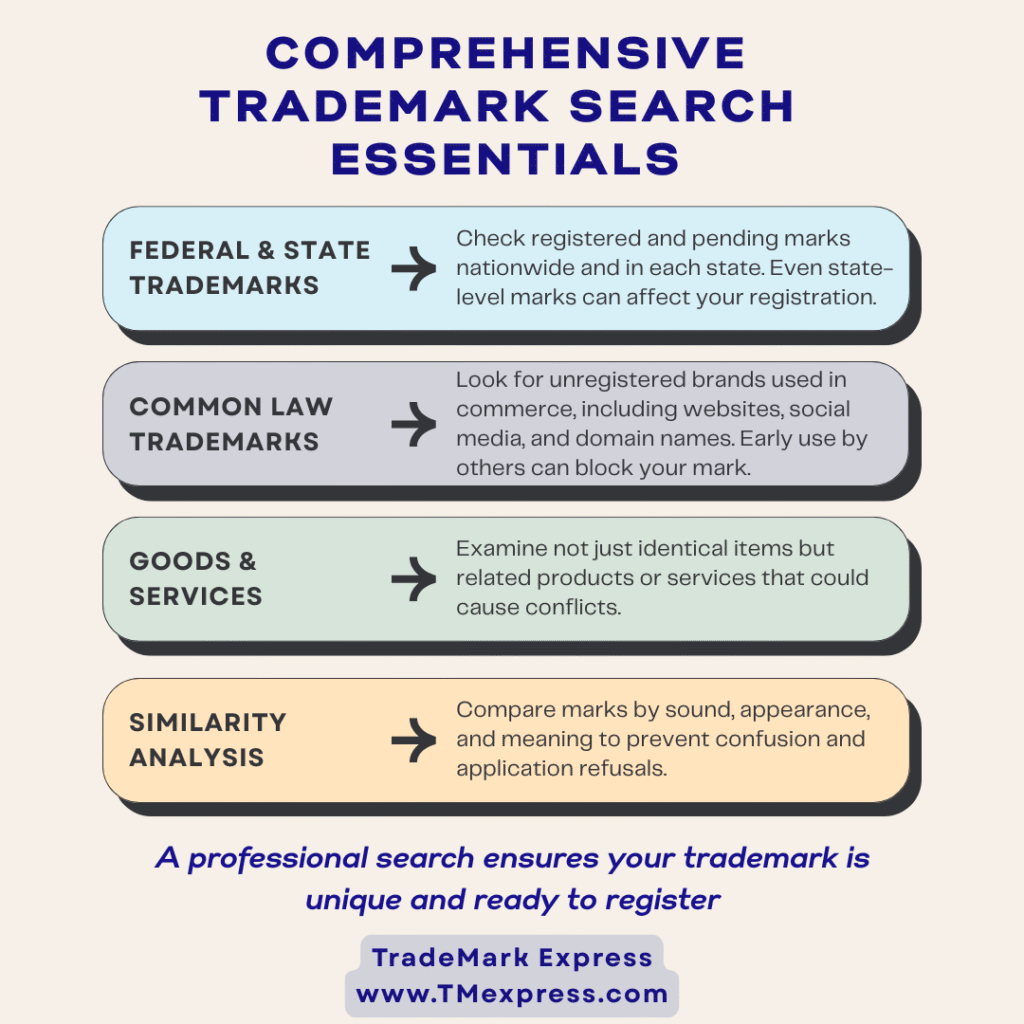
- Federal and state trademark databases: Check for any registered trademarks similar to your brand.
- Common Law usage: Search online platforms, social media, and local business directories for unregistered but active names.
- Similar marks: Look for names that sound alike, look alike, or have similar meanings to your intended brand.
- Related goods/services: Identify businesses offering related services that could create confusion among clients.
This type of in-depth search helps ensure your brand stands out and reduces the risk of disputes down the road.
Choosing a Strong Real Estate Brand Name
Your brand name is the foundation of your real estate identity. To maximize trademark protection:

- Avoid generic or purely descriptive names like “Homes in Oregon” or “City Realty.” Choose unique, memorable names that make your business distinct.
- Consider your niche—residential, commercial, luxury, or property management—and reflect it in your branding. Names that convey your specialization can be easier to protect and more appealing to clients.
- Notice: Certain terms, like REALTOR®, are federally registered trademarks owned by the National Association of Realtors®. Only members in good standing may use this term, and it cannot be included in your brand name without permission. Similarly, other industry-specific terms or logos may be protected. Reviewing trademarked terms in your field can help you avoid potential conflicts and ensure your brand is legally safe to use. This is part and parcel of a comprehensive trademark search.
Filing Your Real Estate Trademark
Once you’ve chosen a strong name and completed your research (and the research shows the name is clear), the next step is filing your trademark.
One of the first considerations is trademark class selection. Trademarks are organized into different classes based on the goods or services they represent, so choosing the correct class is essential to ensure your brand is properly protected.
For real estate businesses, examples include Class 035 for real estate marketing services, Class 036 for real estate agency services, Class 037 for real estate development, and Class 045 for real estate closing services. Selecting the right class helps clearly define the scope of your trademark and can prevent conflicts with other businesses in related fields.

Next, you’ll need to navigate the USPTO filing process. This involves submitting your application along with all required documents and adhering to USPTO guidelines. Accuracy is key—mistakes or missing information can delay the process or lead to refusal.
While it’s possible to file on your own, professional assistance can make the process smoother. A trademark professional can help ensure your application is complete, guide you in selecting the correct class, and reduce the risk of common pitfalls, improving your chances of a successful registration.
Maintaining Your Trademark
Registration is only the beginning. Protect your investment by:
- Tracking deadlines: Stay on top of renewal and continued-use filings to keep your trademark active.
- Monitoring new marks: Watch for new businesses or brands that might infringe on your rights. This proactive approach helps maintain exclusivity.
Practical Trademark Tips for Real Estate Professionals

- Start research early: Before you launch a new office, property development, or marketing campaign, check for existing trademarks and local business names. This can help you avoid conflicts with other real estate companies and protect your brand from the start.
- Use your brand consistently: Apply your name, logo, and tagline consistently across listings, signage, social media profiles, and advertising. In real estate, where reputation and recognition drive referrals, consistent branding strengthens your rights and builds trust with clients.
- Plan for growth wisely: If you manage properties or provide services in multiple states—or plan to expand—consider how your brand will be protected in those areas. For real estate professionals working internationally or with cross-border investors, understanding international trademark options early can help prevent future conflicts.
Trademarking your real estate brand is an investment in your business’s future. A carefully researched and properly filed trademark can protect your identity, build credibility, and give you confidence to grow.
Protect your brand today. Contact TradeMark Express for expert trademark research and application assistance to ensure your real estate brand is fully safeguarded.