
What to Do When Someone Is Using Your Trademark
You built your brand from the ground up. You chose the name, designed the look, and put it on everything. Then one day you discover someone else is using it — or something confusingly close to it. It’s frustrating, and if you’re not sure what to do next, you’re not alone.
This guide walks you through the steps to take when you believe someone is infringing on your trademark.
First, Take a Breath — Then Gather the Facts
Before doing anything else, document what you’re seeing. Take screenshots. Note the URLs, business names, product categories, and dates. The more specific your records, the better.
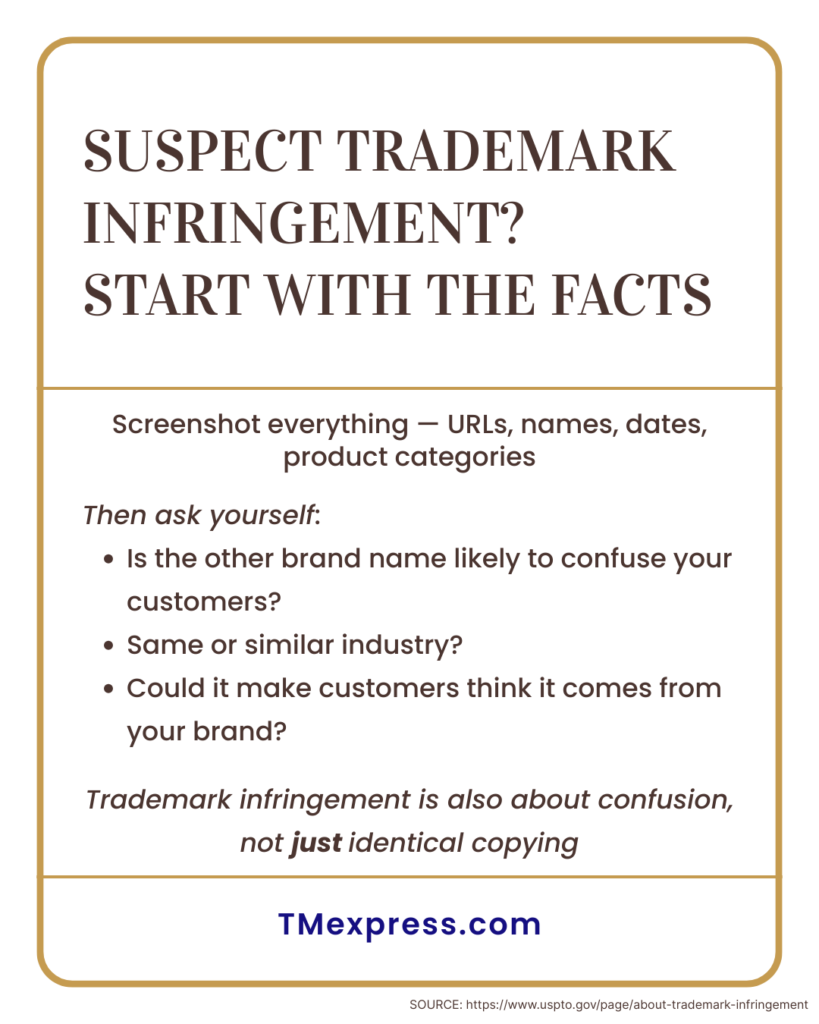
Then ask yourself a few key questions:
- Is the infringing use in the same industry or product category as yours?
- Is it likely to confuse customers into thinking it’s your brand?
- Are they using the same mark, a similar spelling, or just a similar-sounding name?
These details matter. Trademark infringement isn’t about identical copying — it’s about the likelihood of confusion. A similar name in a completely different industry may not rise to the level of infringement. A nearly identical name targeting the same customers likely does.
How the Details Change Everything
The facts of your situation — your registration status, the similarity of the names, and the markets involved — shape everything about how you respond. Here are three quick examples that show how much the nuance matters.
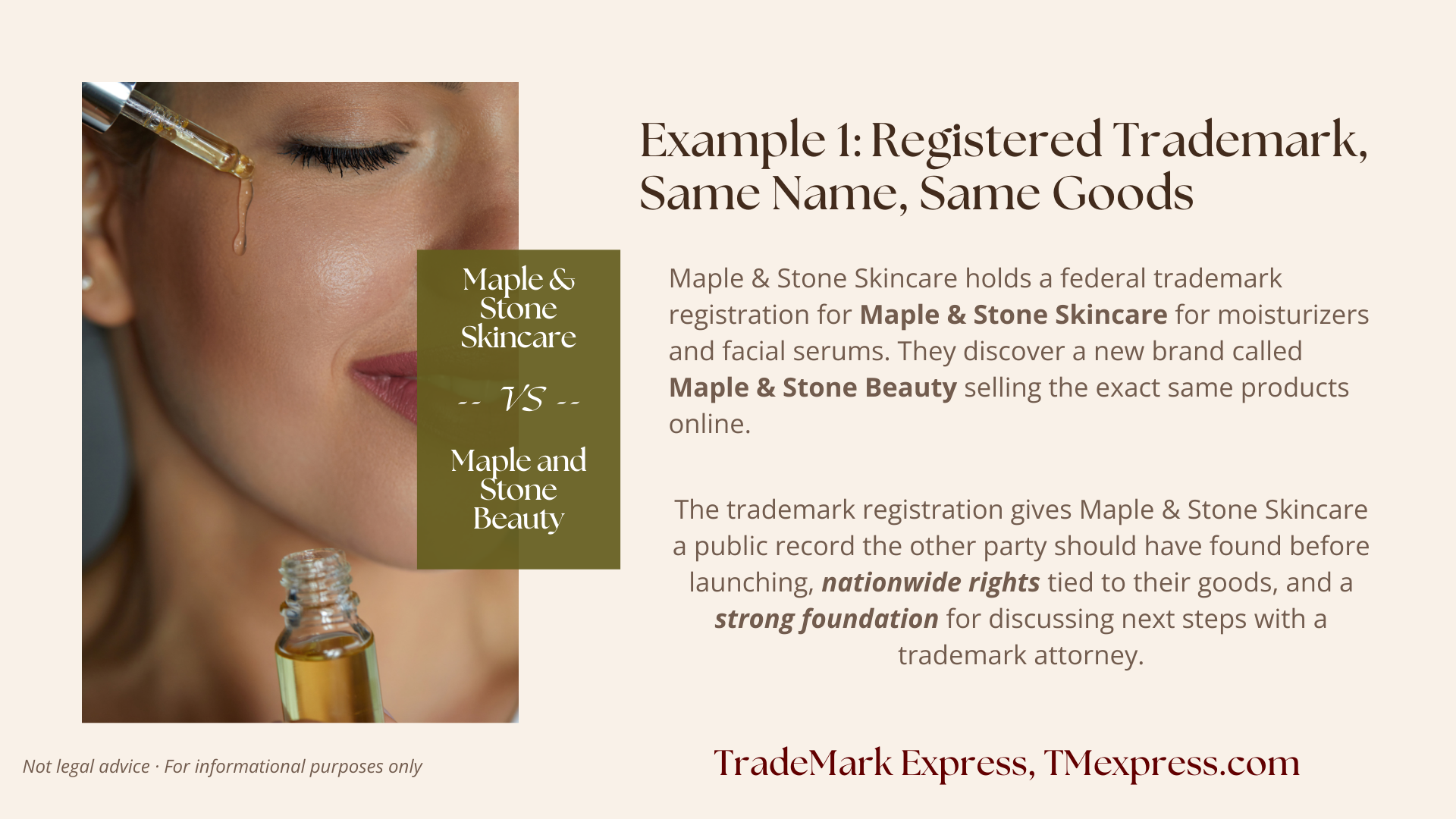
Example 1: Registered Trademark, Same Name, Same Goods
Maple & Stone Skincare holds a federal trademark registration for Maple & Stone Skincare for moisturizers and facial serums. They discover a new brand called Maple and Stone Beauty selling the exact same products online. The registration gives Maple & Stone Skincare a public record the other party should have found before launching, nationwide rights tied to their goods, and a strong foundation for discussing next steps with a trademark attorney.
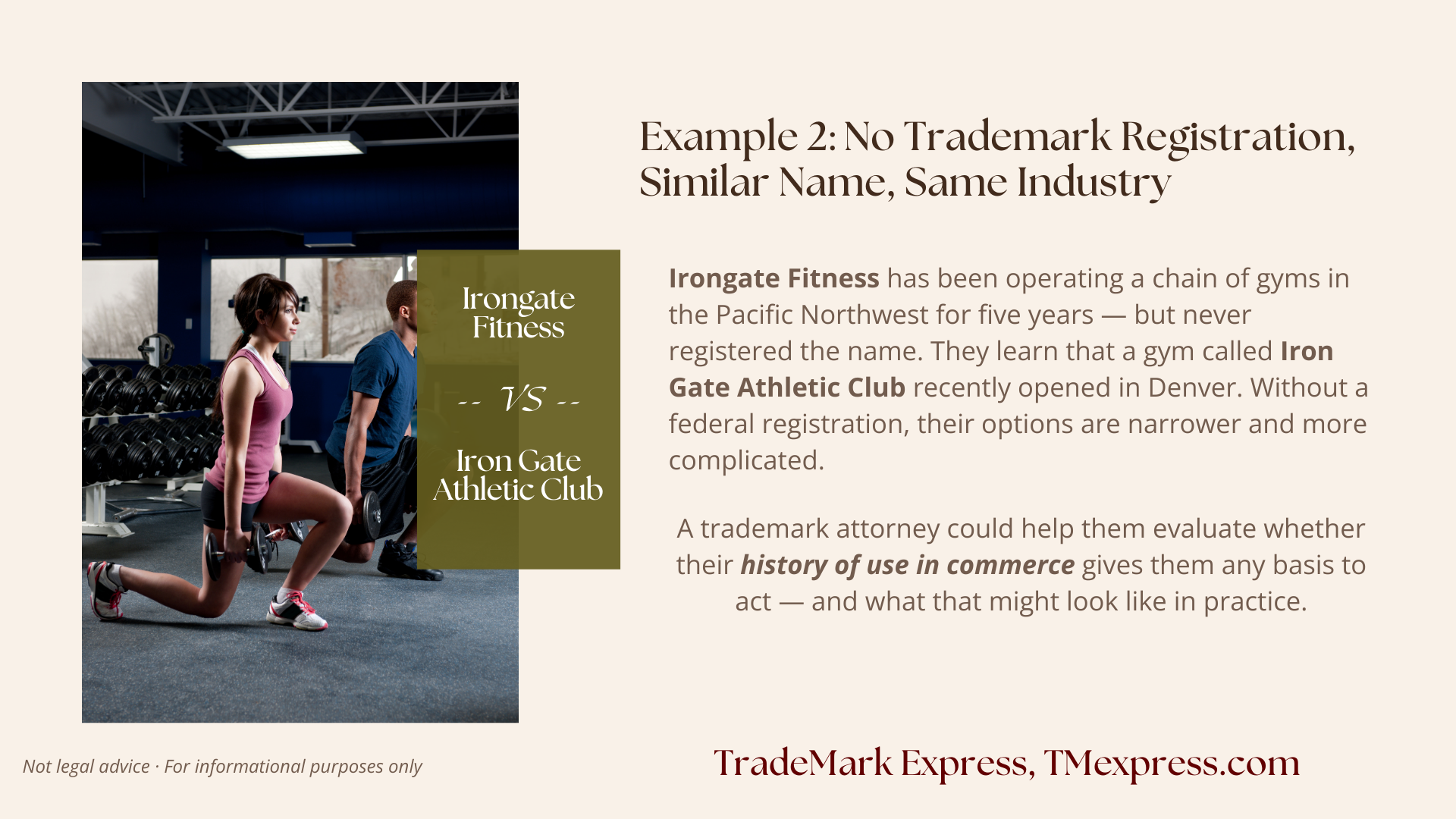
Example 2: No Trademark Registration, Similar Name, Same Industry
Irongate Fitness has been operating a chain of gyms in the Pacific Northwest for five years — but never registered the name. They learn that a gym called Iron Gate Athletic Club recently opened in Denver. Without a federal registration, their options are narrower and more complicated. A trademark attorney could help them evaluate whether their history of use in commerce gives them any basis to act — and what that might look like in practice.
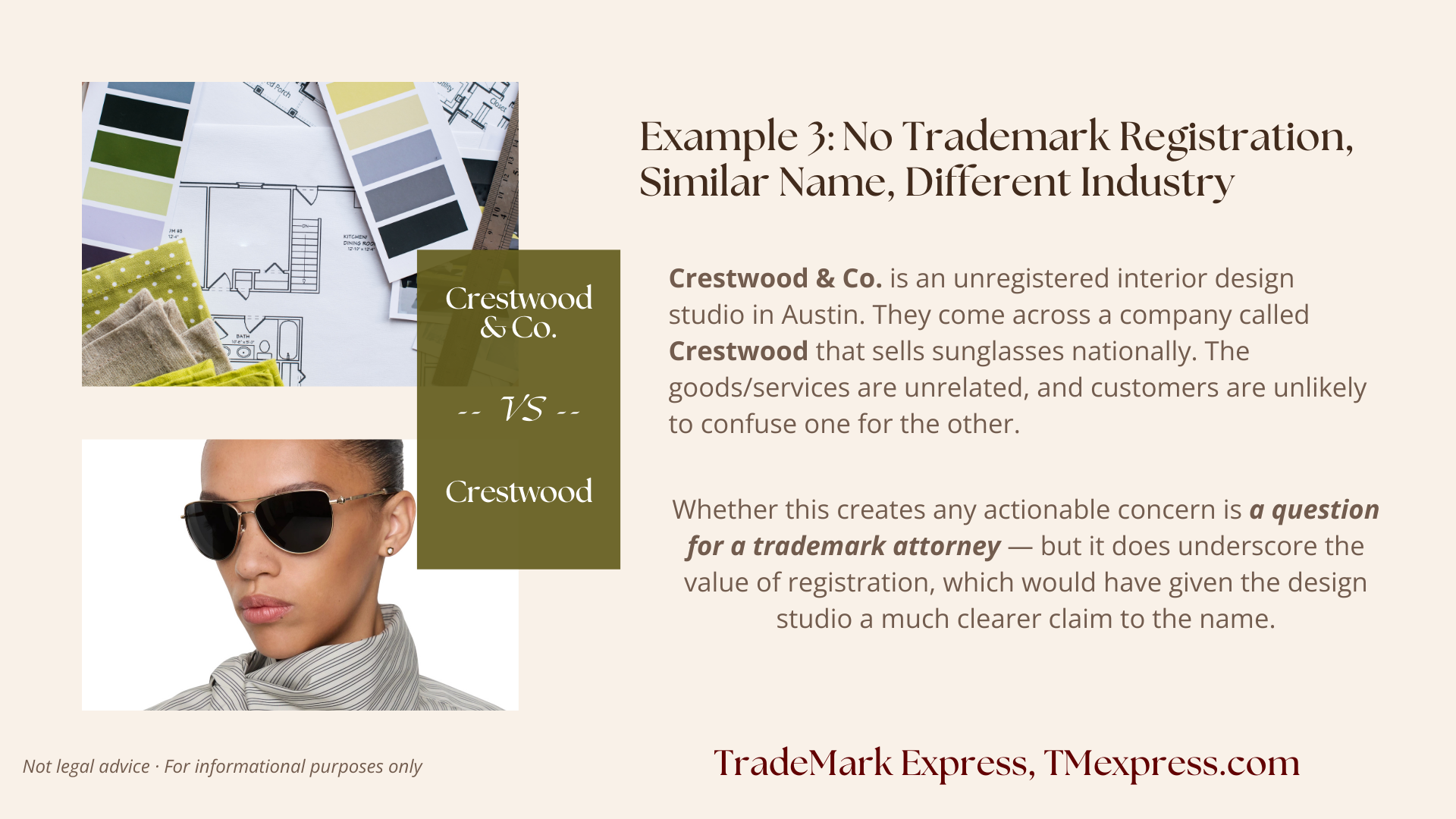
Example 3: No Trademark Registration, Similar Name, Different Industry
Crestwood & Co. is an unregistered interior design studio in Austin. They come across a company called Crestwood that sells sunglasses nationally. The goods/services are unrelated, and customers are unlikely to confuse one for the other. Whether this creates any actionable concern is a question for a trademark attorney — but it does underscore the value of registration, which would have given the design studio a much clearer claim to the name.
Check Your Trademark Registration Status
Your ability to act — and how strongly you can act — depends heavily on whether your trademark is registered with the USPTO.
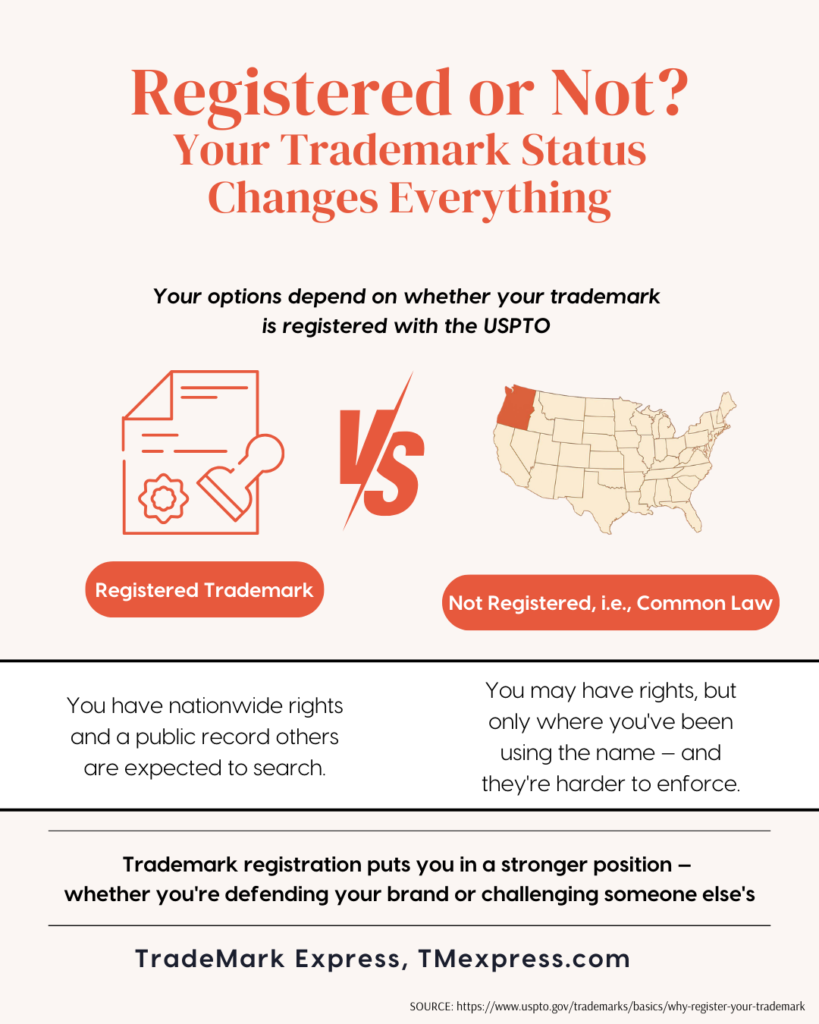
If your trademark is registered, you have significant legal protections. Federal trademark registration gives you the exclusive right to use the mark nationwide in connection with your goods or services, and it creates a public record that others are expected to search before adopting a new brand name.
If your trademark is not registered, you may still have common law rights based on actual use in commerce, but those rights are generally limited to the geographic area where you’ve been using the mark. Enforcing unregistered rights is more complicated and less predictable.
This is one of the key reasons trademark registration matters — it puts you in a much stronger position if someone ever challenges your brand or you need to challenge theirs.
Understand Your Options
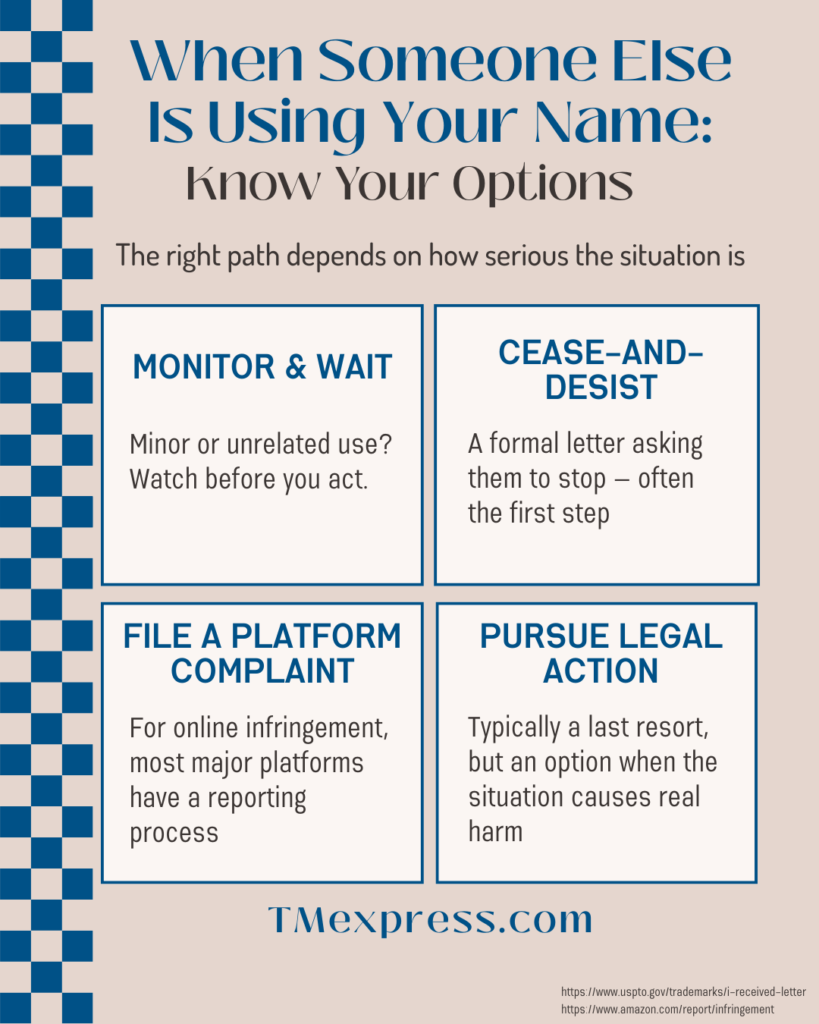
Once you have the facts, there are several paths you can take, depending on the severity of the situation and your goals.
Monitor and Wait
If the use appears minor, localized, or in an unrelated industry, you may decide to monitor the situation before taking action. This doesn’t mean ignoring it — it means watching to see if the use grows or escalates before spending resources on a formal response.
Send a Cease-and-Desist Letter
A cease-and-desist letter is often the first formal step. It notifies the other party that you believe they are infringing on your trademark and asks them to stop. In many cases, this alone resolves the issue — especially if the other party wasn’t aware of your mark.
Cease and desist letters are typically drafted and sent by a trademark attorney. The tone and wording matter, and having an attorney behind the letter signals that you’re serious.
File a Complaint with the Platform
If the infringement is happening online — through a website, social media profile, or marketplace listing — most major platforms have a process for reporting trademark violations. Amazon, Etsy, Instagram, and others all have brand protection programs that allow registered trademark owners to submit complaints and request removal of infringing content.
Pursue Legal Action
If the infringement is causing real harm to your business and the other party refuses to stop, litigation may be an option. This is typically a last resort due to the time and cost involved, but it may be necessary in serious cases.
When to Talk to a Trademark Attorney
Trademark disputes involve legal nuance. While you can take some initial steps on your own — documenting the infringement, filing a platform complaint — it’s a good idea to consult with a trademark attorney before sending formal communications or pursuing any legal action.
An attorney can help you:
- Assess the strength of your claim
- Draft a cease-and-desist letter
- Advise you on the likelihood of success
- Represent you in any formal proceedings
Before that conversation, a comprehensive trademark search can make it significantly more productive.
A search gives you — and the attorney — a clearer picture of the landscape: what the infringing party may have on file, whether they hold any registrations, what goods or services those registrations cover, and how your mark stacks up against theirs. Walking into that attorney consultation with solid research in hand means less time getting up to speed and more time focused on your actual options.
Could This Have Been Prevented?
Sometimes, yes. One of the most common reasons businesses face trademark conflicts is that they didn’t conduct a thorough trademark search before filing — or at all. A comprehensive trademark search reveals not just exact matches, but similar marks in related categories that could create confusion or conflict down the road.
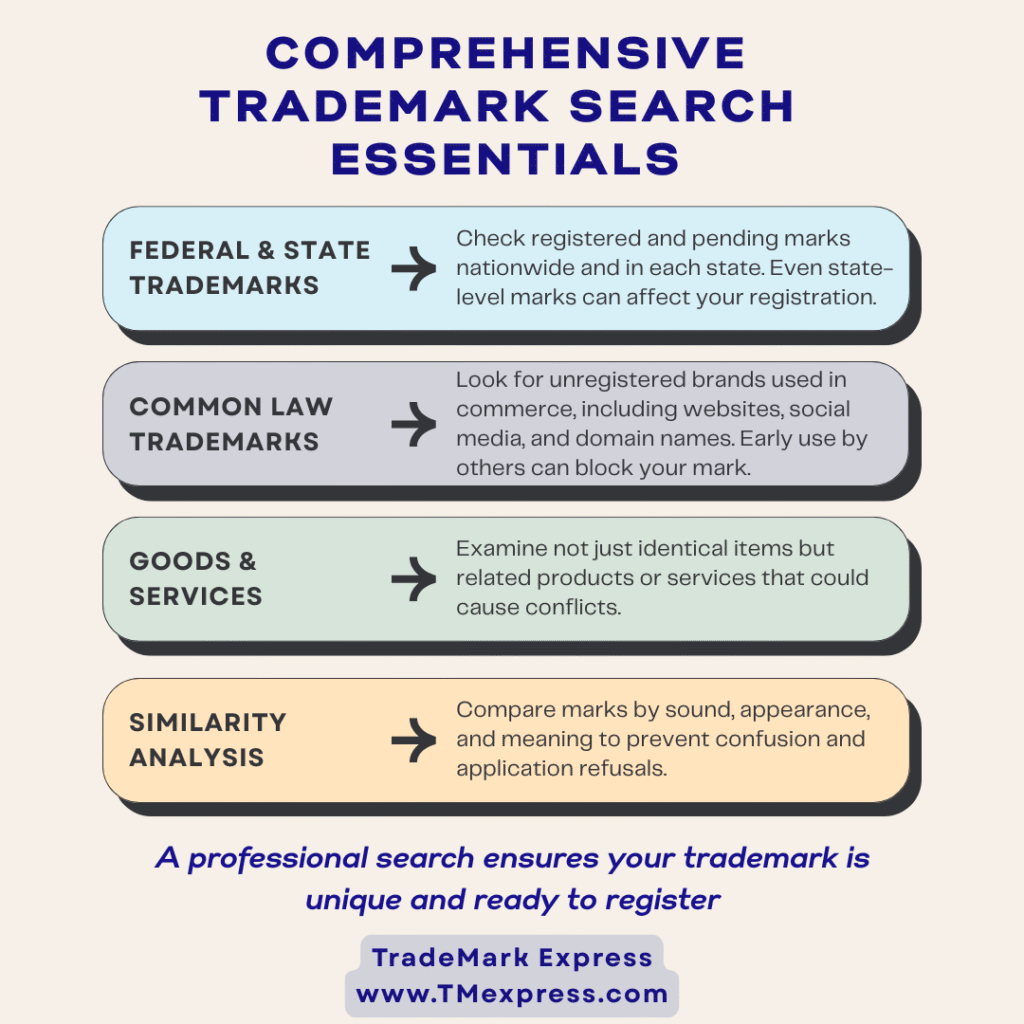
If you’re still in the early stages of building your brand, investing in a professional trademark search is one of the smartest moves you can make. It helps you choose a name you can actually own and defend — and it reduces the risk of someone challenging your rights later.
The Bottom Line
Discovering that someone is using your trademark is stressful, but you have options. Start by gathering evidence and assessing the situation carefully. Know your registration status. Understand the tools available to you — from platform complaints to cease and desist letters. And when the situation warrants it, work with a trademark attorney to protect what you’ve built.
Ready to strengthen your trademark position? TradeMark Express provides comprehensive trademark searches that give you a clear picture of what’s already out there — before you file, and before conflicts arise. Start your trademark search today.
I enjoy what you guys are up too. This kind of clever work and reporting!
Keep up the amazing works guys I’ve included you guys to our blogroll.