How to Trademark a Video Game

How to Trademark a Video Game

Creating a video game is an exciting mix of creativity, technology, and strategy. But building a brand that players recognize and remember requires more than great gameplay—it requires protection.

A trademark helps ensure your game’s name, logo, or tagline stays yours, even as your audience grows. In this guide, you’ll learn clear, actionable steps to trademark your video game, avoid common pitfalls, and safeguard your brand for the long term.

Why a Trademark Matters for Video Games

Video games dominate the entertainment world, with relentless expansion and skyrocketing revenue.

According to Circana, “total U.S. consumer spending on video game hardware, content, and accessories reached $60.7 billion in 2025…[and Circana] projects U.S. video game industry spending to rise +3% to $62.8 billion in 2026.”

With growth comes competition—and potential brand conflicts.

Infographic highlighting why video games need trademarks, showing industry growth and benefits like protecting identity, revenue, and business opportunities

A strong trademark helps you:

  • Protect your brand identity: Your game’s name, logo, and tagline are often your most valuable assets. Registering a trademark prevents others from using similar names that could confuse players or damage your reputation.
  • Safeguard monetization opportunities: Many video game brands generate revenue beyond the game itself—through in-game purchases, merchandise, licensing, or esports partnerships. A registered trademark ensures you have the exclusive rights to expand and monetize your brand.
  • Secure business opportunities: Publishers, platforms, and merchandising partners often require a registered trademark before entering agreements.

Without protection, your game could face costly disputes or even lose the exclusive right to its brand. A trademark safeguards both your creative vision and your financial investment.

Step-by-Step Guide to Obtaining a Trademark

Trademarking a video game involves careful planning, research, and timely action. Here’s a practical roadmap for securing your brand.

Step 1: Choose a Strong Name

Your game’s name is your first impression—and the foundation of a protectable trademark.

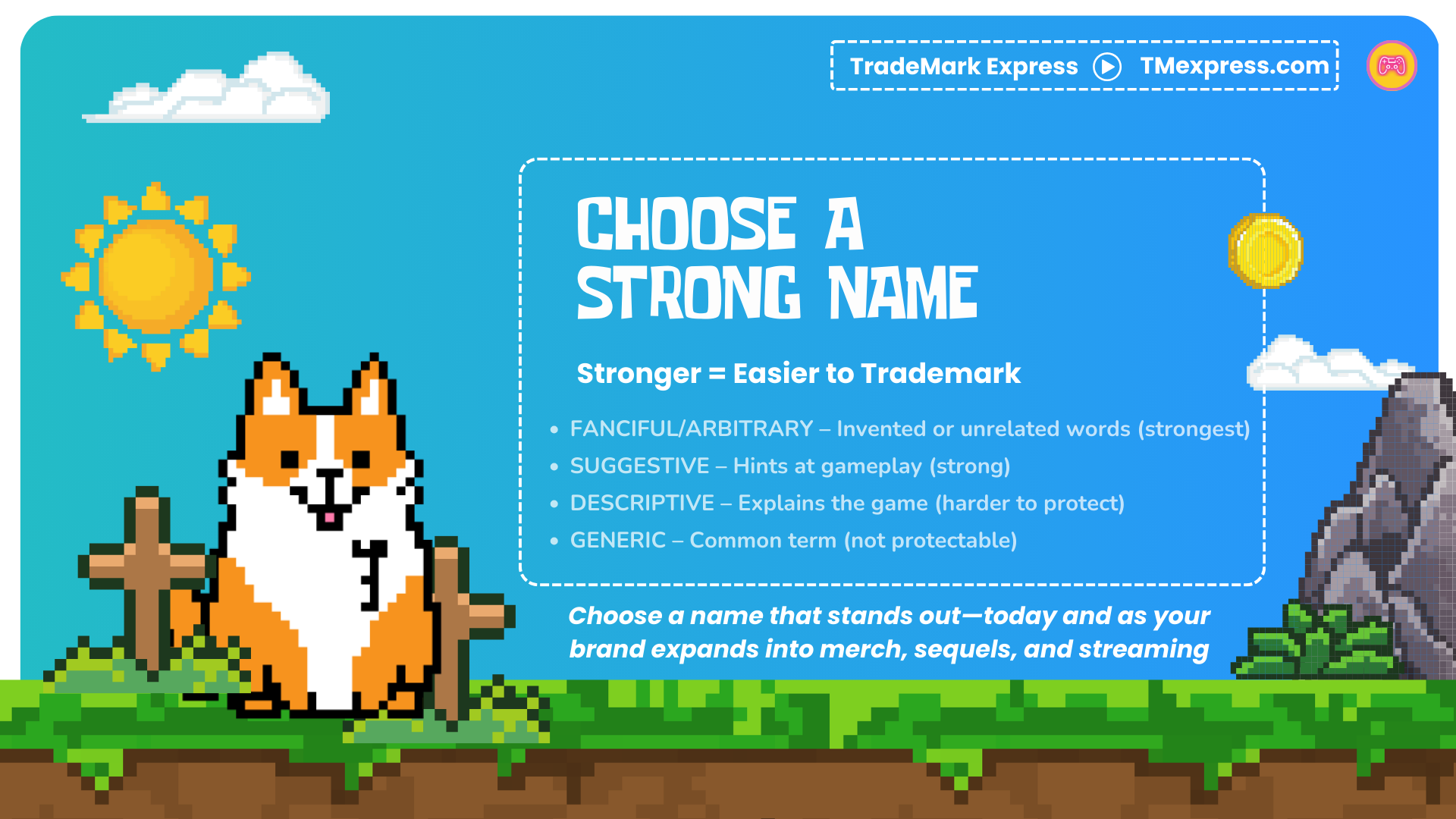
Graphic explaining strong versus weak video game names, including fanciful, suggestive, descriptive, and generic examples

Names exist along the Distinctiveness/Descriptiveness Continuum:

  • Fanciful or arbitrary names (like “Zypheron” or “Bleu Wizard”) are invented or unrelated to the game’s content and are the easiest to protect.
  • Suggestive names (like “SpeedQuest”) hint at gameplay without describing it directly and can also be strong trademarks.
  • Descriptive names (like “Epic Racing Game”) explain the game’s content and may be harder to register without proof of acquired distinctiveness.
  • Generic names (like “Shooter”) cannot be trademarked.

A unique, protectable name reduces the risk of disputes and makes your brand memorable. Think beyond the game itself—consider future merchandise, expansions, or streaming channels when naming.

Step 2: Conduct Comprehensive Trademark Clearance Research

A comprehensive trademark search is critical to avoid conflicts and save money down the line.

Infographic showing trademark search steps for video games, including federal, state, and common law searches

Check Federal Trademarks and State Trademarks: Begin with the USPTO’s database to find existing federal trademarks and review state-level trademark databases for localized registrations.

Explore Common Law Usage: Many businesses operate without registering trademarks, creating potential conflicts through unregistered use, aka common law.  

Evaluate Similarities: Look for names that sound alike, appear visually similar, or share meaning. Even slight overlaps can trigger disputes if they confuse players.

Identify Goods/Services & NICE Classes: Video games cover multiple product and service categories. Using the correct NICE classes ensures your trademark protects all relevant uses:

Infographic describing the different possible trademark classes for video games
  • Class 009: Downloadable video game software, downloadable RTS (real-time strategy) video game software, headsets for playing video games
  • Class 028: Home video game machines, interactive control floor pads or mats, interactive gaming chairs for video games
  • Class 041: Entertainment services, namely providing online FPS (first-person shooter) or multiplayer video games
  • Class 042: Video game development services, or providing temporary use of online non-downloadable video game programs

Practical Implications: Overlooking similar marks or misclassifying your goods/services can result in rejected applications, cease-and-desist letters, or expensive rebranding. Comprehensive research helps you make informed, confident decisions about your game’s name.

Step 3: File Your Trademark Application

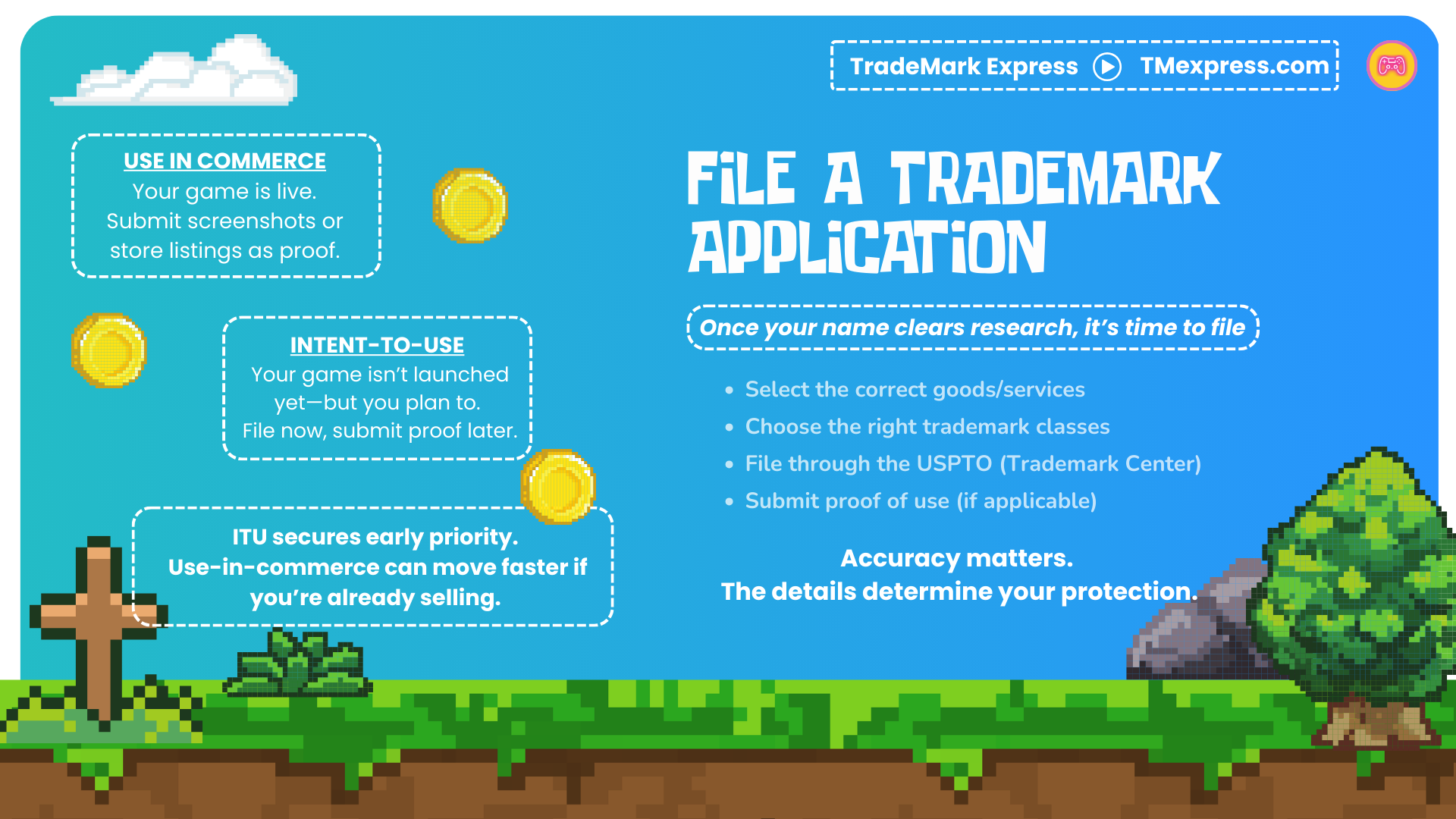
Once your search clears your name, you can prepare your application.

Select Goods/Services & NICE Classes: Accurately define where your trademark will apply. The examples above cover major categories in gaming. Depending on your game’s features, merchandise, or streaming, you may need multiple classes. Accurate classification prevents gaps in protection.

Key USPTO Steps: File online via the USPTO’s Trademark Center, pay the filing fee (current fees here), and submit specimens showing your mark in use.

Graphic explaining how to file a video game trademark application, including use in commerce and intent-to-use options

Intent-to-Use (ITU) vs. Use in Commerce

  • Use in Commerce: You already sell or distribute your game. Submit evidence like screenshots, game listings, or promotional materials.
  • Intent-to-Use (ITU): You haven’t launched yet but plan to. You file an ITU application and later submit proof of use before registration.

Choosing the right approach: ITU applications allow early priority while you finalize your product, but maintaining deadlines is essential. Use-in-commerce filings streamline registration if your game is already live.

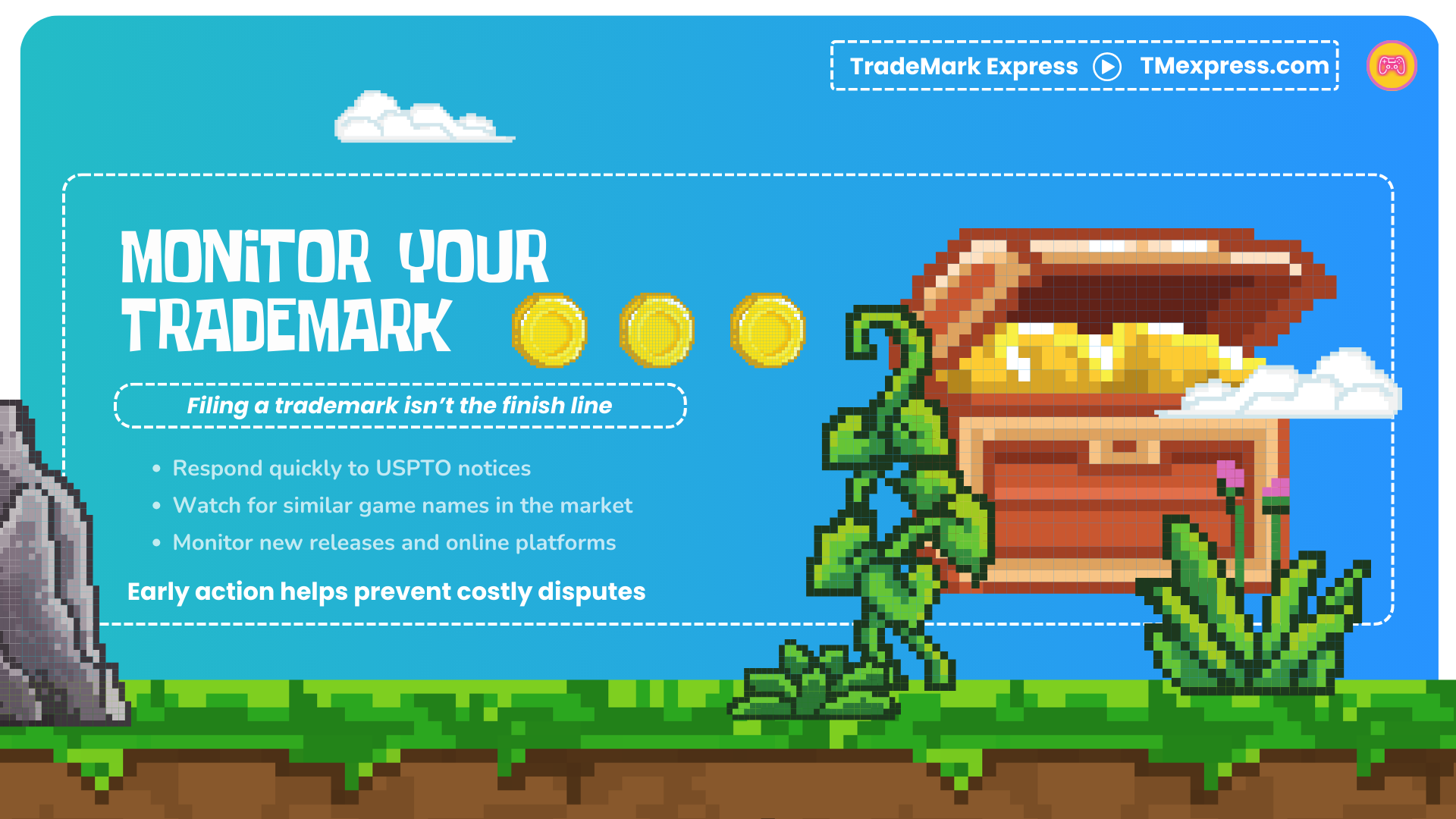
Step 4: Monitor Your Trademark Application

After filing, active trademark monitoring ensures nothing slips through the cracks.

Infographic emphasizing the importance of monitoring a trademark application and watching for similar game names

Track Your USPTO Filing: Respond promptly to Office Actions or requests from the USPTO to avoid delays or abandonment.

Watch for Potential Infringers: Keep an eye on new game releases, social media, and marketplaces. Early detection of similar marks prevents disputes and protects your investment.

Ongoing monitoring and consistent use across platforms—game stores, merchandise, and social media—safeguard your trademark long-term.

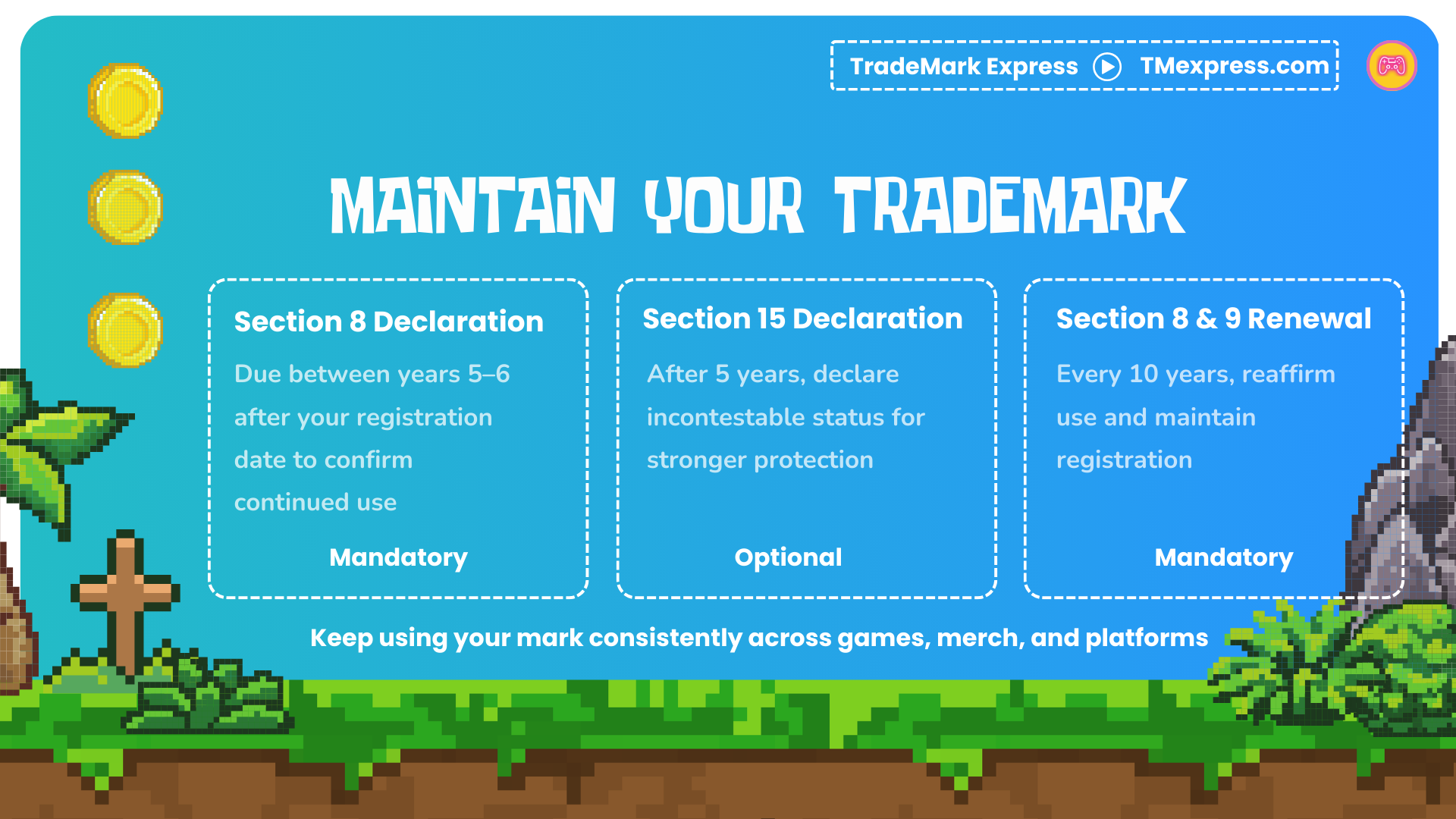
Step 5: Maintain Your Registered Trademark

Registration is just the beginning. Proper maintenance keeps your rights intact.

Graphic outlining trademark maintenance deadlines for video games, including Section 8, Section 15, and 10-year renewals

Staying on top of these deadlines ensures your trademark remains active, enforceable, and fully protected for the long term.

Industry-Specific Trademark Considerations for Video Games

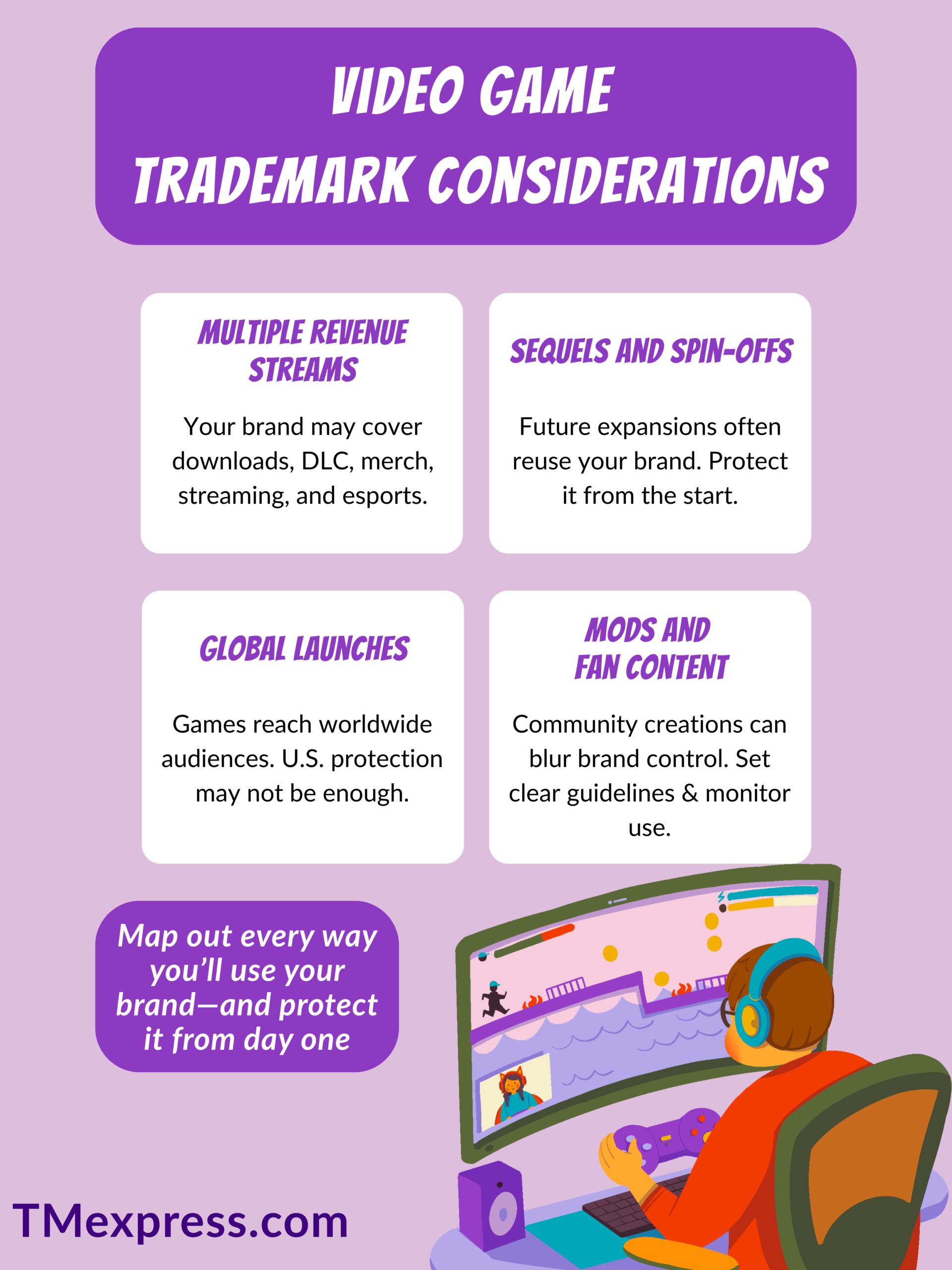
Video games present unique challenges and opportunities in trademark protection.

Infographic outlining video game–specific trademark considerations, including multiple revenue streams, global reach, sequels, and fan-created content
  1. Multiple Revenue Streams: Your trademark may need to cover digital sales, physical merchandise, downloadable content, streaming, and esports partnerships. Consider all potential uses upfront.
  2. Expansions and Spin-offs: Sequels or spin-off games often reuse brand elements. Protecting the original trademark ensures future expansions remain tied to your brand without conflict.
  3. Global Reach: Games often launch worldwide. While U.S. registration provides strong domestic protection, international filings may be necessary for markets like Europe or Japan. Using systems like the Madrid Protocol can streamline this process.
  4. Community and Modding: Player-generated content, mods, and fan creations can blur brand control. Clearly communicate permissible use and monitor platforms to maintain trademark integrity.

Practical Tip: Create a checklist of all current and potential uses—software, apps, merchandise, streaming channels—then align your trademark strategy accordingly. This prevents costly surprises and helps you expand confidently.

Order your video game trademark today to secure your brand and start building protection immediately. At TradeMark Express, we provide comprehensive trademark research, prepare your USPTO application, and connect you with our trusted attorney network—helping you protect your video game every step of the way.

DISCLAIMER: References to particular trademarks, service marks, products, services, companies, or organizations appearing on this page are for illustrative and educational purposes only and do not constitute or imply endorsement.

The information provided on this site is for general informational purposes only. All information on the Site is provided in good faith; however, we make no representation or warranty of any kind, express or implied, regarding the accuracy, validity, or completeness of any information on the Site. The Site cannot and does not contain legal advice. The legal information is provided for general informational and educational purposes only, and is not a substitute for legal advice. Consult a licensed attorney for legal advice.

Leave a Comment

Your email address will not be published. Required fields are marked *