
How to Trademark a Cosmetics Brand
Why Trademarks Matter for Cosmetics Brands
The U.S. cosmetics industry is a powerhouse, valued at approximately $101.48 billion in 2024 and projected to reach $185.26 billion by 2034. This dynamic market is brimming with opportunities for new brands to make their mark. However, with such rapid growth comes increased competition and the risk of brand imitation.
Think of industry leaders like Fenty Beauty, MAC Cosmetics, and Glossier. Their trademarks are integral to their success, allowing them to build strong, recognizable brands that resonate with consumers. For emerging cosmetics brands, establishing a trademark is a crucial step in laying a solid foundation for long-term growth and recognition.
What You Can Trademark in the Cosmetics Industry
A beauty brand trademark can protect far more than just your company name. In the cosmetics world, every element that makes your brand recognizable to customers can potentially be safeguarded.

Your brand name is the most obvious example—think of household names like Fenty Beauty or MAC Cosmetics. A strong name helps customers identify your products instantly. You can also trademark specific product lines, such as Urban Decay’s Naked palettes, which have become iconic in the makeup community.
Logos and visual symbols are another key element. Just as the swoosh is instantly recognizable in sportswear, the Chanel double-C logo is iconic in cosmetics and luxury beauty, instantly signaling the brand to consumers. Slogans, like Maybelline’s “Maybe she’s born with it. Maybe it’s Maybelline.” can also be protected, helping reinforce your brand message across advertising and packaging.
Steps to Trademark a Cosmetics Brand
1. Choose a Distinctive Name
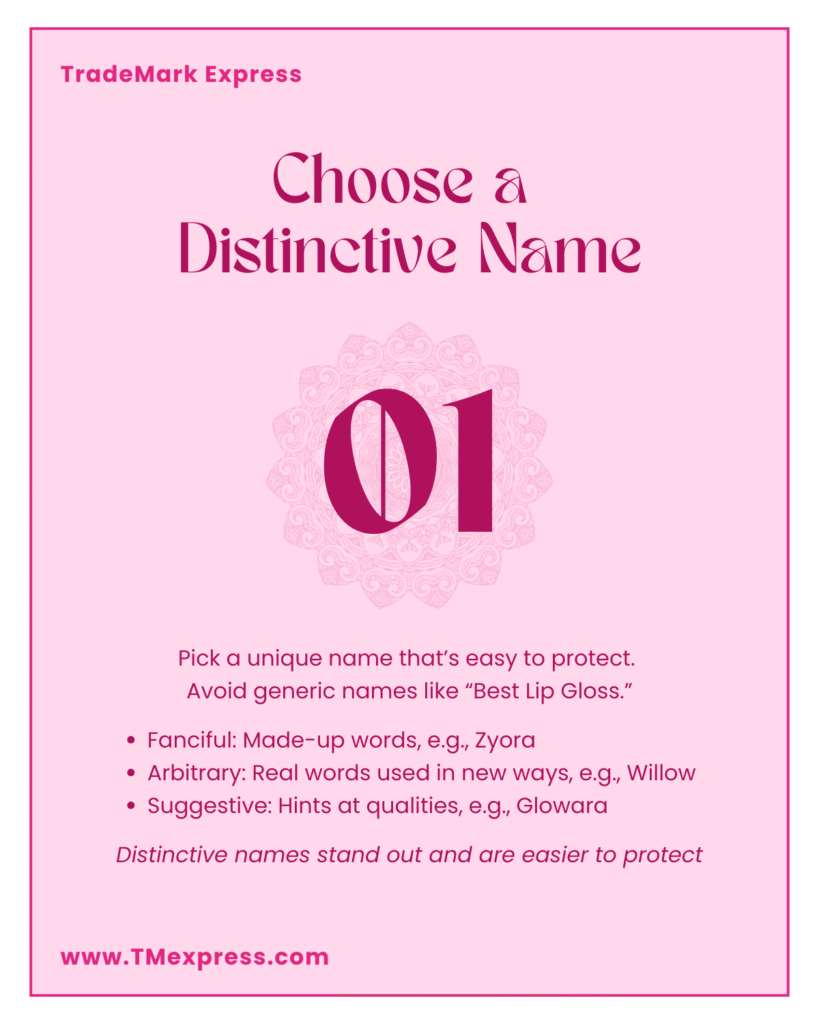
• Fanciful (completely made-up words): Example – “Zyora” for skincare. Strongest protection because it has no meaning outside your brand.
• Arbitrary (real words used in unrelated ways): Example – “Willow” for a lipstick brand. The word exists, but it has no direct connection to cosmetics.
• Suggestive (hints at qualities without describing them): Example – “Glowara” for highlighters. Suggests radiance without being literal.
2. Conduct a Comprehensive Trademark Search
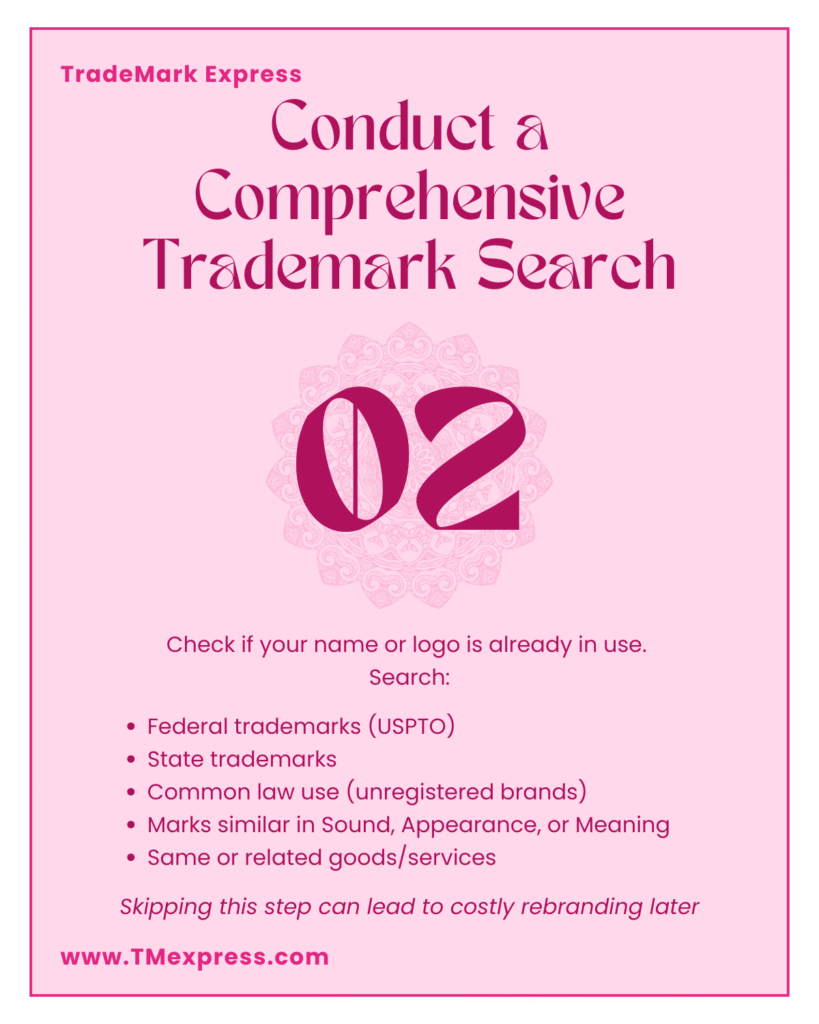
• Federal trademarks in the USPTO database.
• State trademarks where you plan to operate.
• Common Law usage, meaning businesses using a name without registration. (For example, a small local beauty salon using the same name could still create conflicts.)
• Similar marks that sound alike, look similar, or share meaning.
• Related goods/services that may overlap with cosmetics, like skincare, haircare, or fragrances.
3. File Your Application with the USPTO
Once your search clears, you can file an application with the U.S. Patent and Trademark Office (USPTO). You’ll need to specify the goods (cosmetics, skincare, makeup, etc.) and submit the required filing fees, which are based, largely in part, on the class or classes filed.
Most cosmetics fall under Trademark Class 3, which covers beauty products like makeup, skincare, perfumes, and haircare. Choosing the correct class is a key part of your application, since it defines the scope of your protection and helps avoid conflicts with unrelated industries. While Class 3 is the primary category for cosmetics, some brands may also need to consider additional classes—such as Class 21 for applicators or containers, Class 5 for medicated cosmetics, or Class 35 for retail services—depending on how their products are sold and marketed.
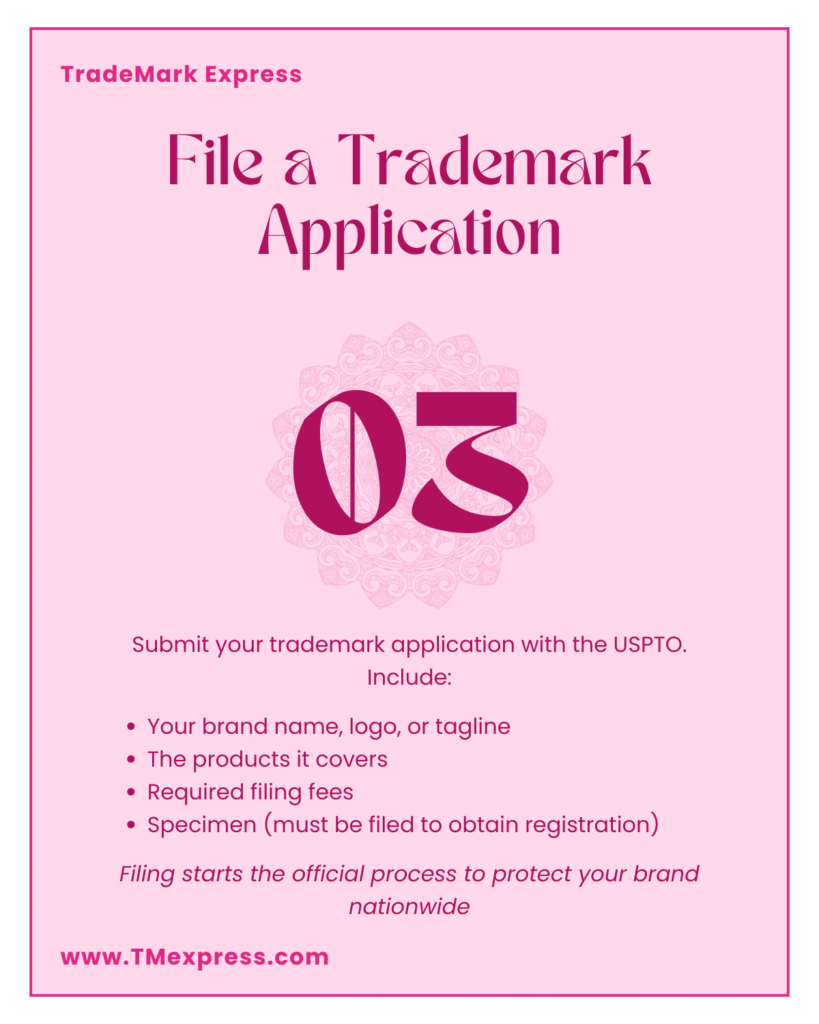
4. Maintain and Monitor Your Trademark
The Importance of Comprehensive Trademark Research
Before you commit to a cosmetics brand name, a comprehensive trademark search is a smart first step — it catches conflicts before they become costly.
Cosmetics brand names are especially prone to overlap with existing Class 3 marks, so a search should cover both your brand name and any product-line names you’re planning to use. Learn more in our guide to trademark searches.
Costs and Timelines
• Filing fees – Base fee is $350 per class of goods.
• Timeline – From filing to registration, expect about 12 months on average, though it may take longer if the USPTO raises issues or oppositions are filed.

Final Thoughts
At TradeMark Express, we specialize in comprehensive trademark research and application preparation. If you’re ready to protect your cosmetics brand, contact us today to get expert support every step of the way.