
What Happens to Your Trademark When You Rebrand?
If you’ve recently changed your business name or you’re considering a rebrand, you might be wondering: Do I need a new trademark?
The short answer is: usually, yes — but the specifics depend on how much your name changed, what your current trademark covers, and how you’re using the new name in commerce.
Let’s break down what you need to know.
Your Trademark Protects a Specific Mark
A trademark is tied to the exact name, logo, or phrase you registered — not to your business entity in general. If you’ve changed your business name, your existing trademark doesn’t automatically extend to the new name.
Your trademark protects only what was filed.

For example, if you registered “Blue Horizon Consulting” as a trademark and you’ve now rebranded to “Horizon Solutions,” your original trademark does not cover the new name. You’re essentially starting over from a trademark perspective.
When to Think About Filing a Trademark for a New Name
You’ll likely want to file a new trademark application if:
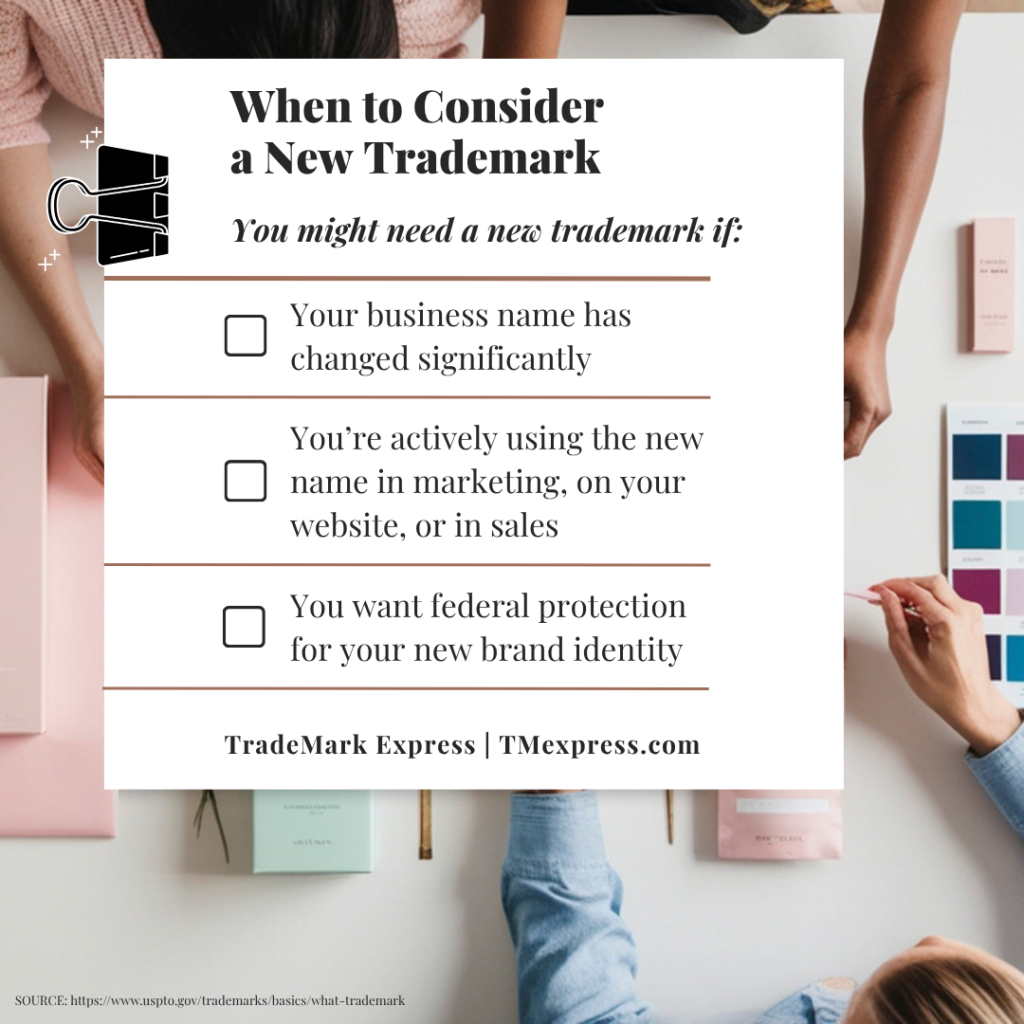
- Your business name changed significantly. If the new name is not recognizable as a variation of the original, it’s considered a new mark.
- You’re using the new name in commerce. Trademark rights are based on use. If you’re actively branding your business, marketing materials, website, and services under the new name, that’s the mark you need to protect.
- You want enforceable rights to the new name. Without a registered trademark for the new name, you have no federal protection against others using something confusingly similar.
When You Might Not Need a New Trademark
In some cases, your existing trademark might still serve you — at least temporarily:
- The change is cosmetic or minor. Slight tweaks in spelling, punctuation, or format may not require a new filing, though this is rare.
- You’re still using the old name in some capacity. If the original name is still used as part of your branding stratgy, maintaining that trademark may still make sense.
That said, even in these cases, it’s worth consulting with a trademark professional to confirm whether your existing registration adequately covers how you’re using the name now.
Don't Skip the Trademark Search
Before you file a new trademark application for your rebranded business name, you need to know if the name is actually available. Just because you’ve changed your business name with your state doesn’t mean you have the legal right to use it as a trademark.
A comprehensive trademark search checks:
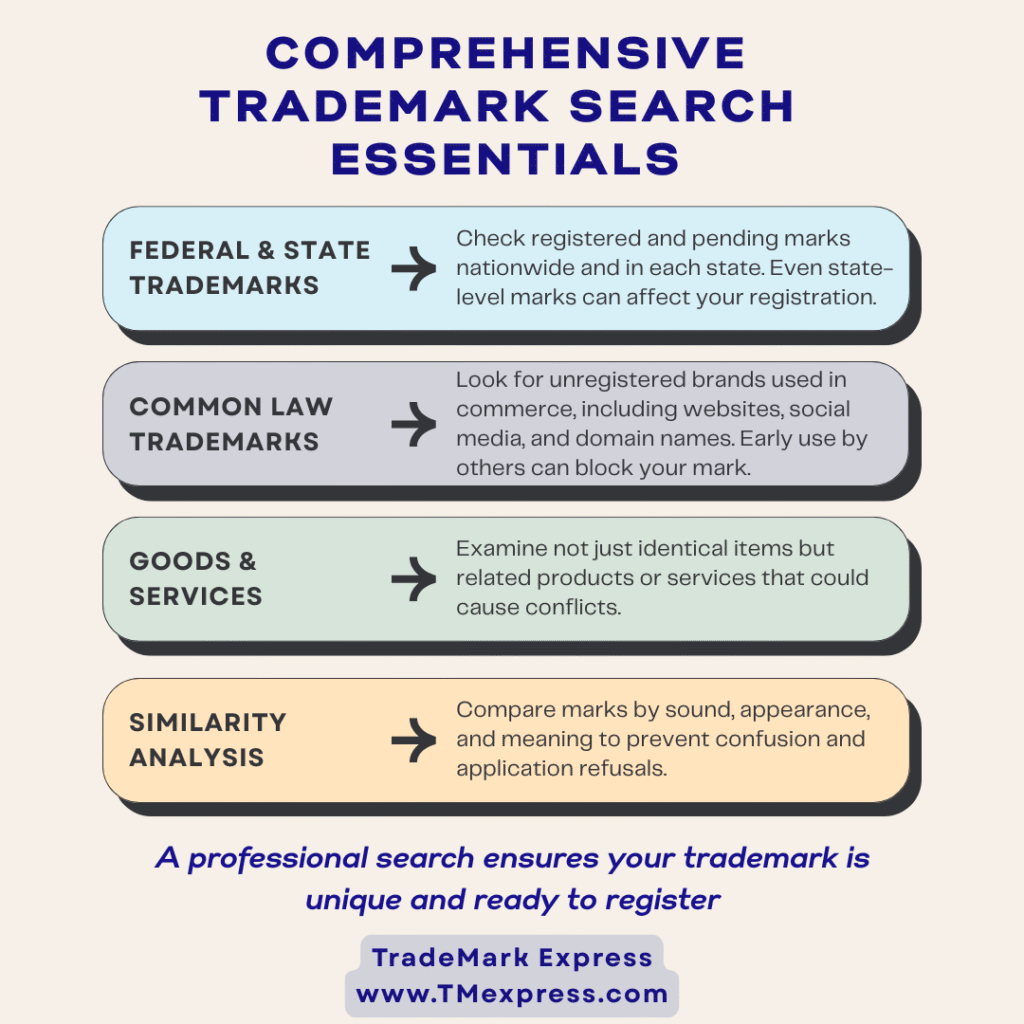
- Federal trademark records — both registered and pending trademarks in the USPTO database
- State trademark registrations — marks registered at the state level that may not appear in federal records
- Common law usage — even without registration, a business actively using a mark in commerce may have protectable rights in their geographic area, which could block your use of a similar name
- Marks that are similar in sound, appearance, or meaning — the USPTO doesn’t just look for identical matches; it evaluates whether consumers might confuse your mark with an existing one, even if the spelling or wording differs
- Related goods and services — conflicts aren’t limited to businesses in your exact industry; if your goods or services are considered related in the marketplace, a trademark conflict can still arise
Skipping this step puts you at risk of investing in a rebrand only to face a cease-and-desist letter or a rejected trademark application down the line.
How to Safeguard Your New Brand Name
If you’ve already rolled out your new business name — updated your website, printed new business cards, launched new marketing — you might want to think about moving quickly to secure trademark protection.
Here’s what that process looks like:

- Conduct a full trademark clearance search. Make sure no one else has rights to your new name or something confusingly similar. Only a comprehensive trademark search will tell you this.
- File a new trademark application. If the search shows your name is available, file with the USPTO as soon as possible. Filing establishes your priority date — critical if someone else tries to file for a similar name later.
- Decide what to do with your old trademark. You can consider letting it lapse if you’re no longer using the old name, or maintain it if you’re still using it in some capacity (for example, as part of a product line or legacy branding).
Protect Your Rebrand From the Start
Changing your business name is a big move — and protecting that new name with a trademark should be part of your rebranding strategy, not an afterthought. A registered trademark gives you nationwide protection, the legal right to enforce your mark, and the ability to prevent competitors from using something confusingly similar.
If you’re planning a rebrand or you’ve already made the change, TradeMark Express can help. We provide comprehensive trademark searches to confirm your new name is available and assist with application preparation so you can move forward with confidence. Contact us to get started.