My Trademark Application Was Approved – What Happens Next?

Your Trademark Application Was Approved — Here Is What Comes Next

Getting that approval notice from the USPTO is a genuine milestone. You filed, you waited, and now your mark has cleared the review process. But trademark registration is not the finish line — it is more like the starting point for long-term brand protection. Here is what you need to know about what comes next.

What USPTO Approval Actually Means

When the USPTO approves your application, it means an examining attorney has reviewed your mark and determined that it meets the requirements for registration.

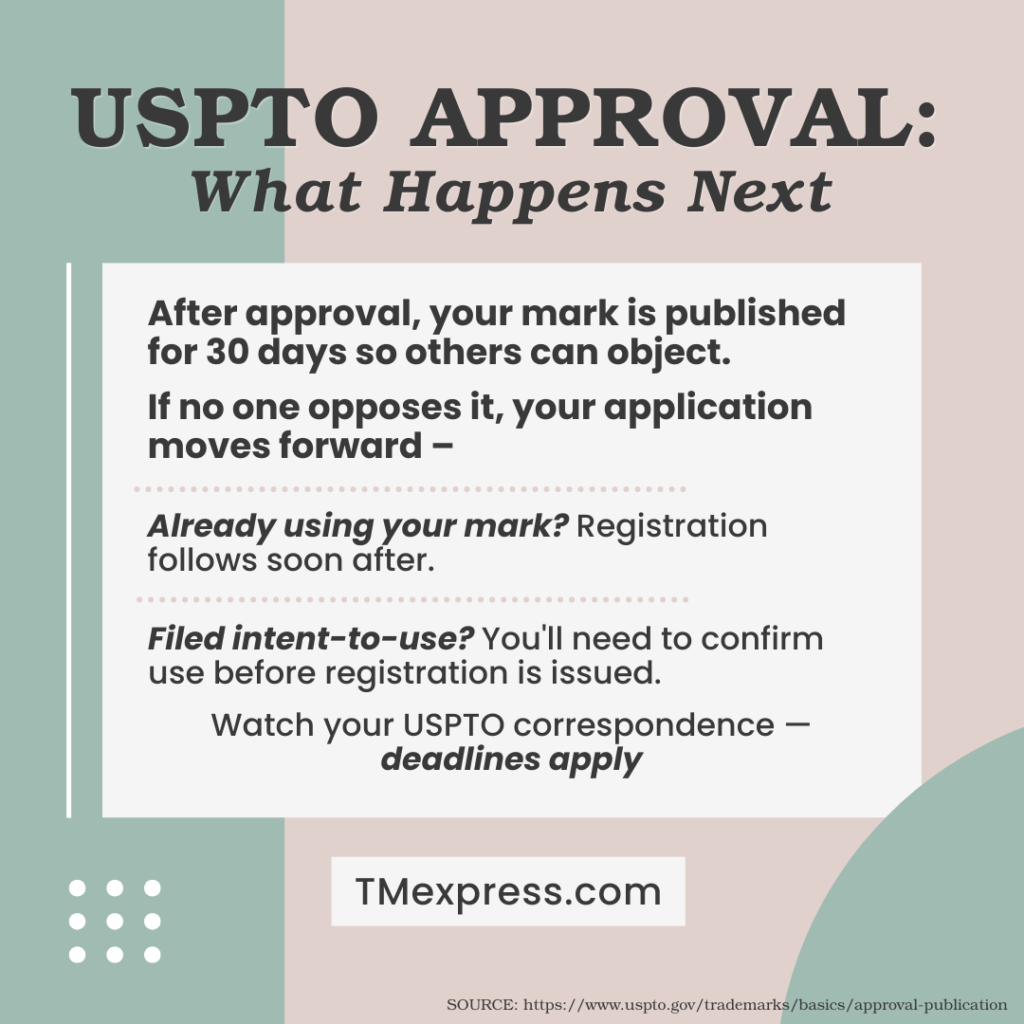
Infographic explaining what USPTO trademark approval means, including publication, opposition period, and next steps for use-based and intent-to-use applications

Depending on where you are in the process, your mark may be approved for publication in the Official Gazette — a weekly publication that gives the public an opportunity to oppose your registration if they believe it conflicts with their own rights.

If no opposition is filed within 30 days of publication, your application moves forward.

  • Use-based applications (filed with proof of use already in commerce) will proceed to registration relatively quickly after the opposition period closes.
  • Intent-to-use applications require one additional step — filing a Statement of Use to confirm the mark is now in active commerce — before a registration certificate is issued. Deadlines apply, so watch your USPTO correspondence closely.

Your Trademark Registration Certificate

Once all requirements are satisfied, the USPTO issues your Certificate of Registration. This is your official record of federal trademark rights. Keep it. You will reference it for licensing agreements, enforcement actions, and renewal filings down the road.

Your registration date and registration number are important identifiers — note them for your records and make sure your branding team is aware.

Start Using the ® Symbol

Before registration, you may have been using the ™ symbol to signal a claim to your mark. Once you receive your federal registration, you are entitled to use the ® symbol. This puts the public on notice that your mark is federally registered and can strengthen your position in any future infringement dispute.

trademark symbols tm versus r

Use ® consistently on your website, packaging, marketing materials, and anywhere else your mark appears.

Maintaining and Renewing Your Trademark

Federal trademark registration does not last automatically forever.

Staying registered requires ongoing action:

deadlines for filing trademark renewals
  • Between years 5 and 6: File a Declaration of Use (Section 8) confirming the mark is still in active commerce. You can also file for incontestability (Section 15) at this time, which strengthens your legal position significantly.
  • At year 10, and every 10 years after: File a combined renewal and declaration of use (Sections 8 and 9) to keep your registration active.

Missing these deadlines can result in your registration being cancelled, so calendar these filings well in advance.

Why Trademark Research Still Matters

Registration is a strong form of protection — but it is not a guarantee that a conflict will never emerge.

One of the most common post-registration surprises involves common law rights: a business that was already using a similar name in a specific region before your filing date may have protectable rights in that area even without a federal registration of their own. Federal trademark registration does not automatically extinguish those prior rights.

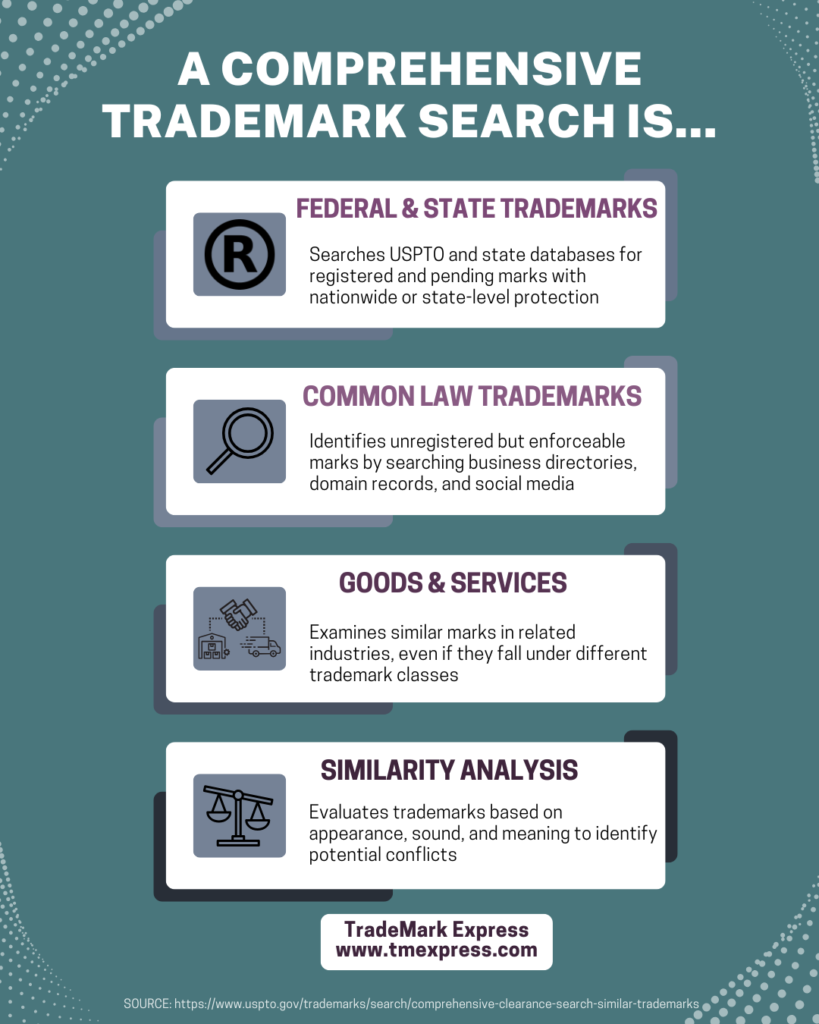
This is exactly why a thorough trademark availability search — one that goes beyond the USPTO database to cover state trademark registrations, common law usage, and marks that are similar in sound, appearance, or meaning — is so valuable before filing.

Graphic titled “A Comprehensive Trademark Search is…” showing the key elements of a trademark search: checking federal and state trademarks, identifying common law uses, reviewing same or related goods/services, and evaluating similarity in sound, appearance, or meaning.

If gaps existed in your pre-filing search, it is worth understanding where potential vulnerabilities might lie, particularly as your brand grows into new markets.

Knowing what you are working with gives you a clearer picture of how to use and protect your mark going forward.

Watch for Infringement

Registration gives you powerful rights — but those rights are only as strong as your willingness to enforce them. Once your mark is registered, it is worth monitoring the marketplace for businesses that may be using a similar name, logo, or slogan on related goods or services.

trademark monitoring definition

Ready to Protect Your Brand for the Long Haul?

Registered is just the beginning. If you want to make sure your brand is set up for long-term protection — or if you are not confident a comprehensive trademark search was part of your process before filing — TradeMark Express can help you get clarity on where you stand. And when you are ready to protect your next mark, we are here for that too. Reach out to us and let’s talk through where you are in the process.

The information provided on this site is for general informational purposes only. All information on the Site is provided in good faith; however, we make no representation or warranty of any kind, express or implied, regarding the accuracy, validity, or completeness of any information on the Site. The Site cannot and does not contain legal advice. The legal information is provided for general informational and educational purposes only, and is not a substitute for legal advice. Consult a licensed attorney for legal advice.
Leave a Comment

Your email address will not be published. Required fields are marked *