Why a Trademark Matters for AI Software Brands
AI moves fast—and so do imitators. Protect your AI software brand with a trademark to keep your name, logo, and reputation safe. This guide shows you how to trademark an AI software brand step by step, so your business can grow securely.
AI software is a fast-growing, competitive industry. According to ABI Research, “the AI software market size will reach US$467 billion in 2030.” With such growth, protecting your brand ensures your unique solutions and reputation aren’t copied.
A strong trademark also builds trust with users. Customers often associate a recognizable brand with reliability, security, and innovation—especially critical in AI, where privacy and ethical use are top concerns.
Finally, a trademark can give you leverage if disputes arise. Owning a registered trademark allows you to enforce your rights against imitators and secure partnerships or investment opportunities. In an industry where brand recognition drives downloads and adoption, that protection can be a game-changer.
Step-by-Step Guide to Trademark Your AI Software Brand
Step 1: Choose a Strong Name
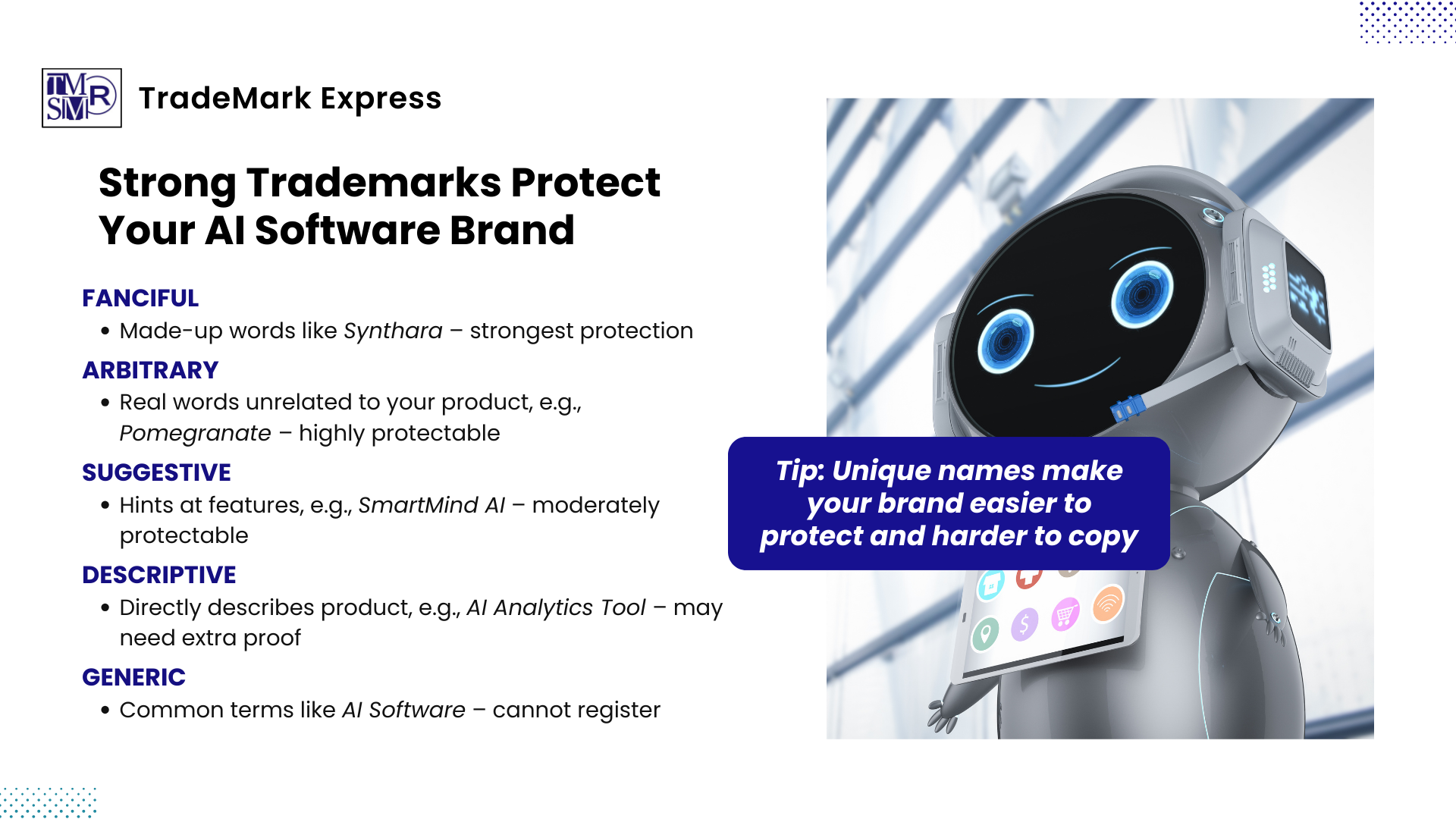
A trademark’s strength depends heavily on its distinctiveness. The USPTO uses a “Distinctiveness/Descriptiveness Continuum” to categorize names:
- Fanciful – Made-up words, e.g., “Synthara.” Strongest protection.
- Arbitrary – Real words unrelated to the product, e.g., “Pomegranate” for computers. Highly protectable.
- Suggestive – Hints at product features, e.g., “SmartMind AI.” Protectable but slightly less than fanciful.
- Descriptive – Directly describes your product, e.g., “AI Analytics Tool.” Often requires secondary meaning to register.
- Generic – Common terms like “AI Software.” Cannot be trademarked.
For AI software, aim for fanciful or suggestive names. Unique names make your brand easier to protect and less likely to be rejected during registration. But, regardless of the name you choose, you’re still going to need to…
Step 2: Conduct Comprehensive Trademark Clearance Research
Before filing, a thorough trademark search is critical. Make sure your trademark attorney or trademark services company does the following –
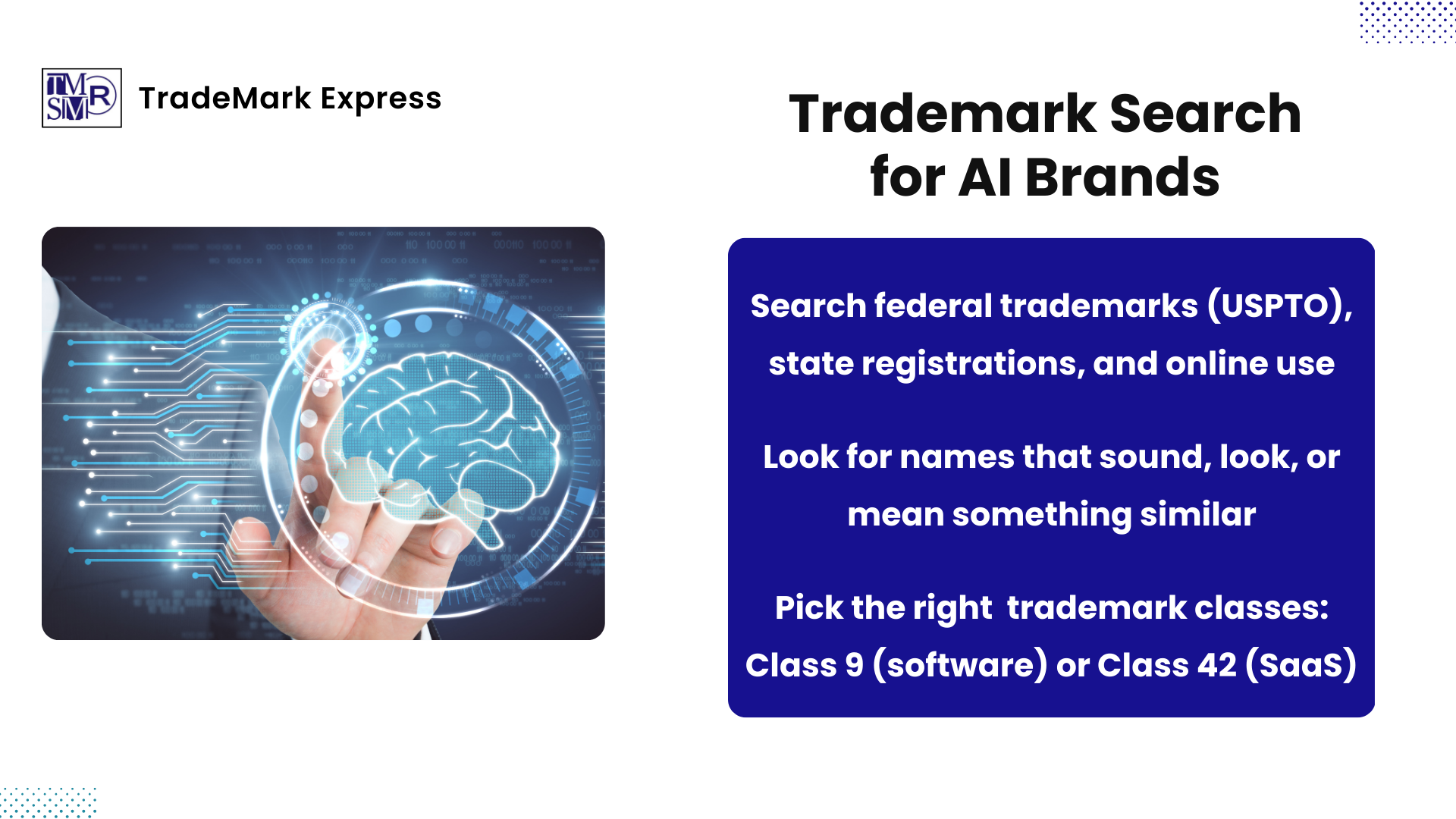
- Federal trademarks: Check the USPTO database for similar registered and pending marks.
- State trademarks: Examine state-level registrations that might conflict.
- Common law usage: Search online, app stores, social media, and domain names to spot unregistered marks in active use.
Look for similarities in sound, appearance, or meaning. For example, “Zinthara” could conflict with “Synthara” even if spelled differently.
Also, evaluate goods/services classifications using the NICE system. AI software can fall under multiple classes depending on its function—like computer software (Class 9) or software as a service (SaaS, Class 42). Proper classification ensures your trademark covers your product correctly and reduces risk of disputes.
Skipping comprehensive research could lead to costly legal challenges or a denied application. A thorough search saves time, money, and stress while giving you confidence to proceed.
Step 3: File Your Trademark Application
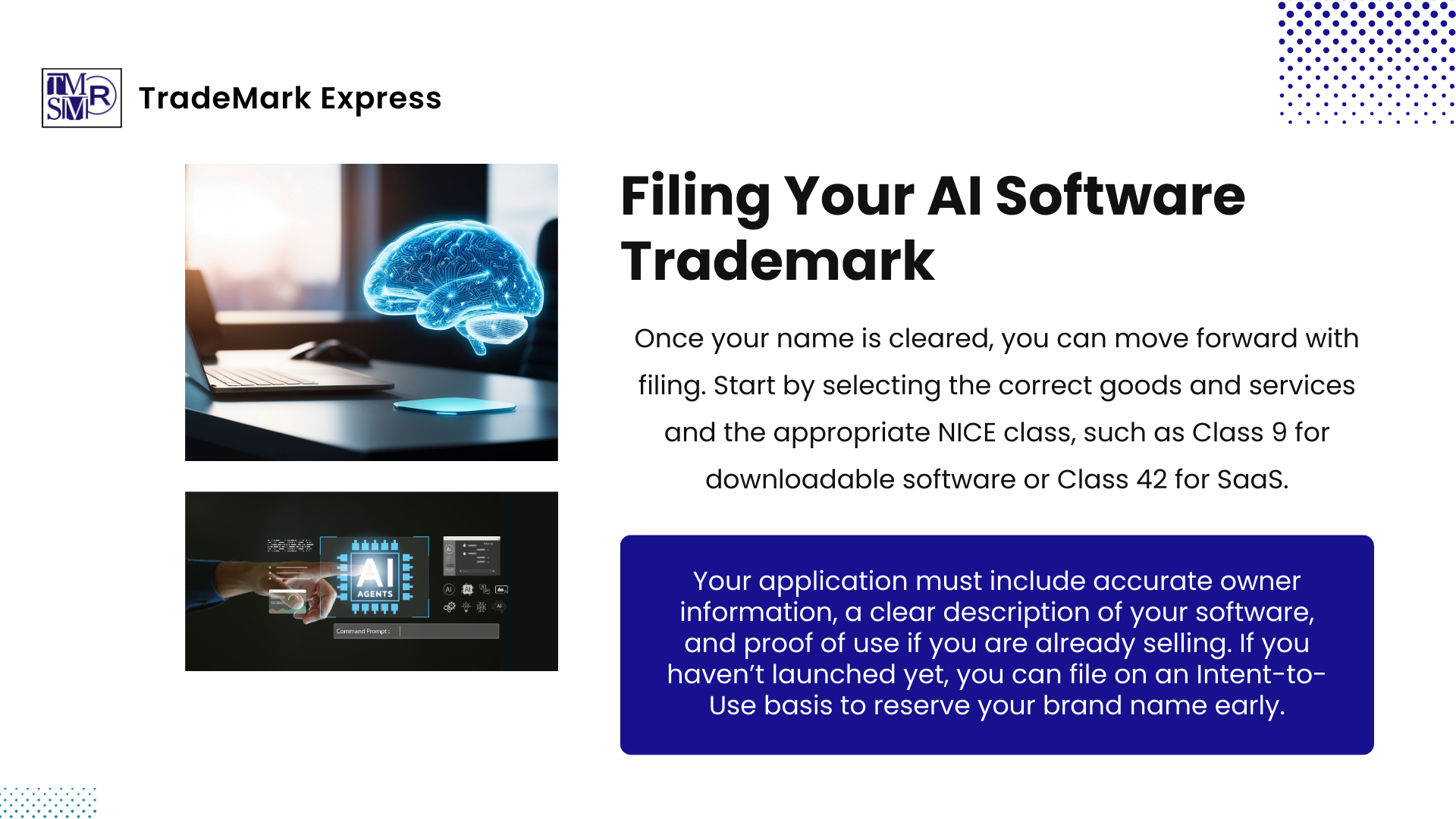
Once your name clears, you can file with the USPTO. Key steps include:
- Select goods/services and NICE classes carefully. A mismatch can delay approval.
- Prepare your application with accurate owner information, description, and specimen showing use.
- Reference current fees here: USPTO Fee Schedule.
Intent-to-Use vs Use in Commerce
- Use in Commerce: You already sell or provide services under the mark. You must show proof, like software downloads or website screenshots.
- Intent-to-Use (ITU): You haven’t launched yet but plan to use the mark. Filing early can reserve your brand name.
Advantages: ITU protects a planned brand and allows early filing, while Use in Commerce demonstrates existing market presence. Choosing the right basis depends on your stage of development.
Step 4: Monitor Your Trademark Application
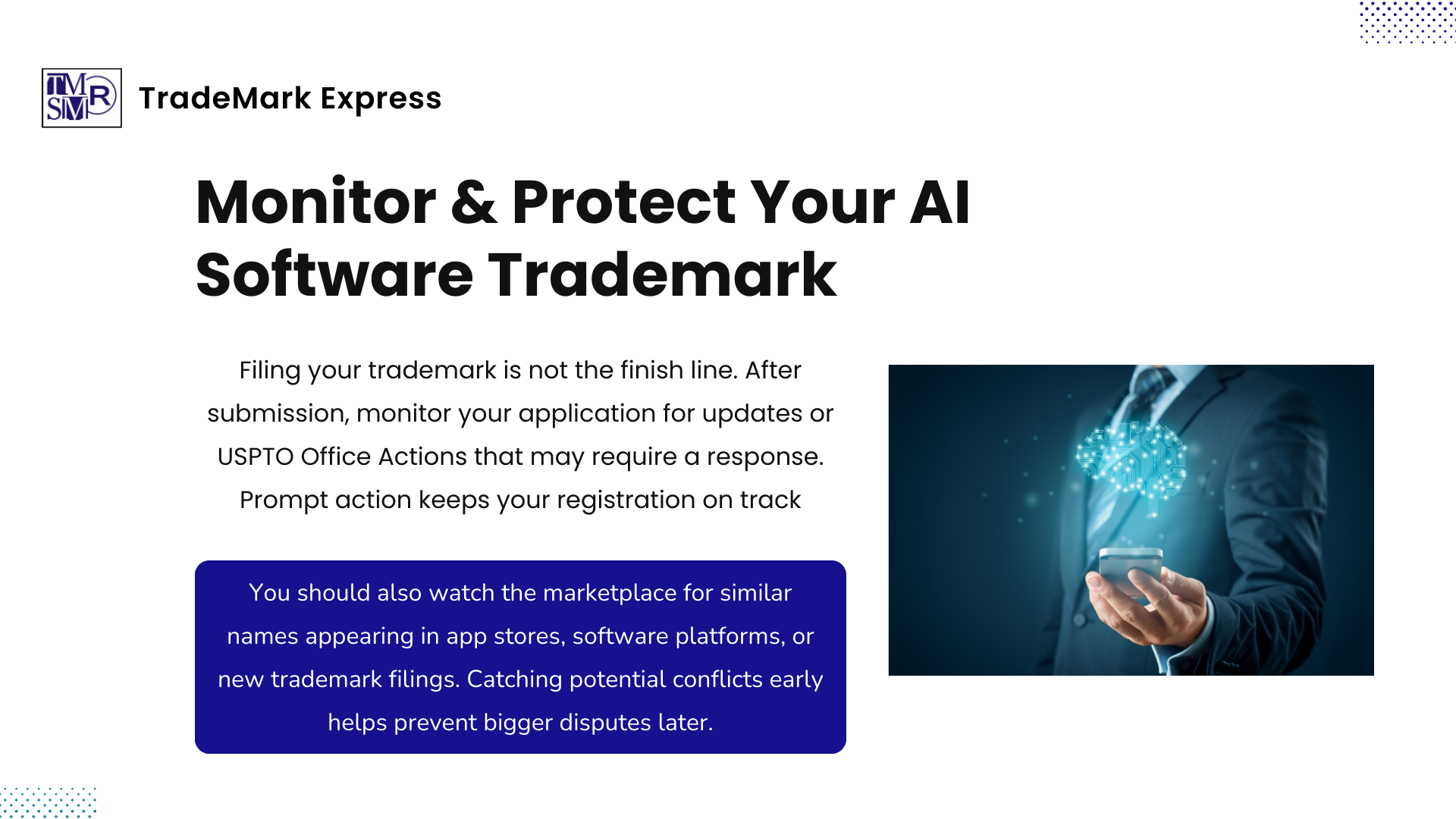
Once filed, keep an eye on your application. The USPTO may issue Office Actions requiring clarification or changes. Responding promptly keeps the process moving.
You should also monitor for potential infringers. Check new trademarks, software platforms, and marketplaces to ensure no one adopts a confusingly similar name. Early detection prevents conflicts from escalating.
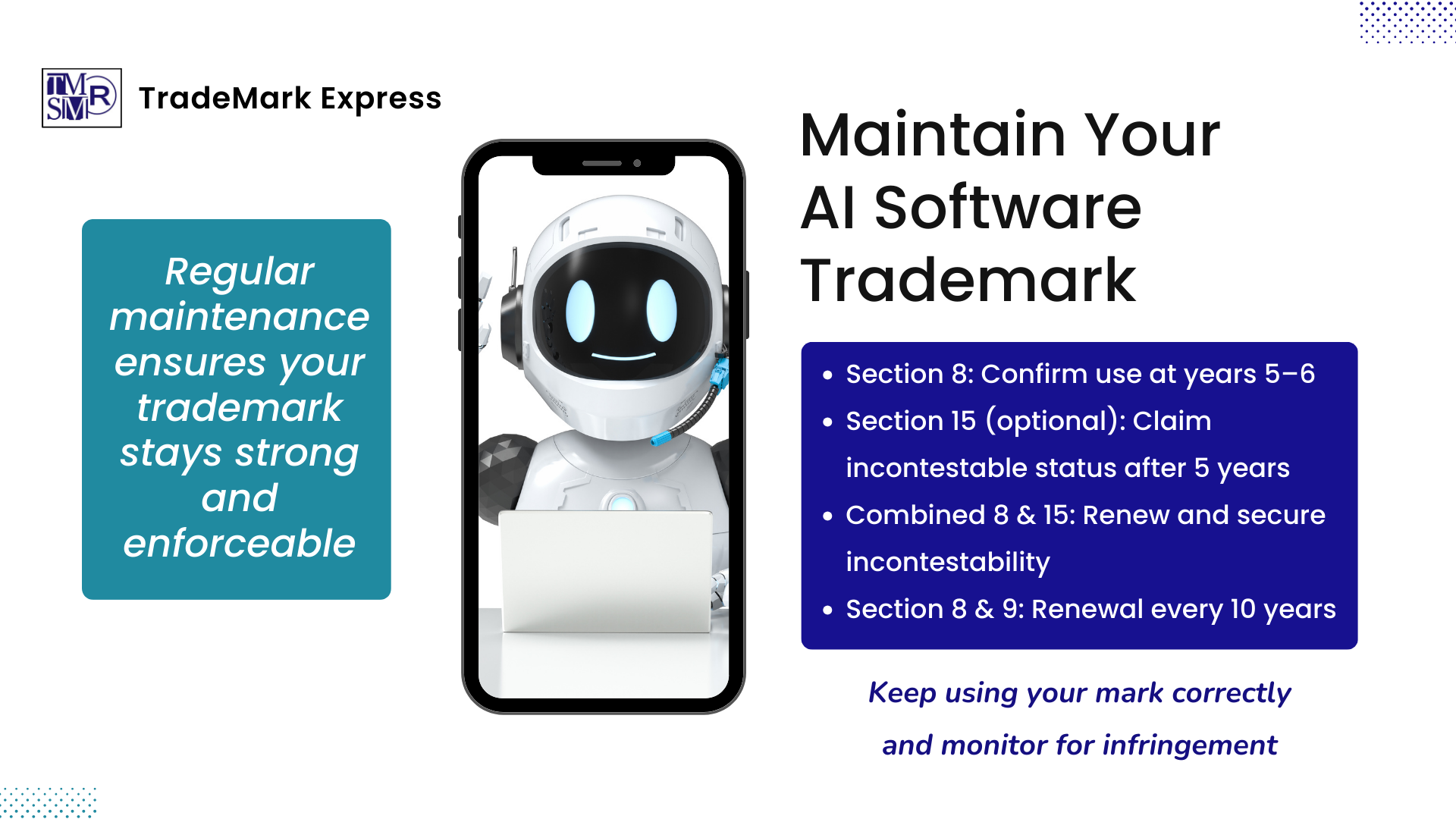
Step 5: Maintain Your Registered Trademark
A registration isn’t a one-time effort. Key maintenance milestones include:
- Section 8 Declaration: Between years 5–6, confirm continued use.
- Section 15 Declaration (optional): After 5 years, claim incontestable status for stronger protection.
- Combined Section 8 & 15: Simultaneously renew and secure incontestability.
- Section 8 & 9 Renewal: Every 10 years.
- Ongoing monitoring and proper use: Ensure consistent display of the mark and watch for infringement.
Following these steps protects your brand long-term and ensures your trademark remains enforceable.
Industry-Specific Trademark Considerations for AI Software Brands
Rapidly Evolving Technology
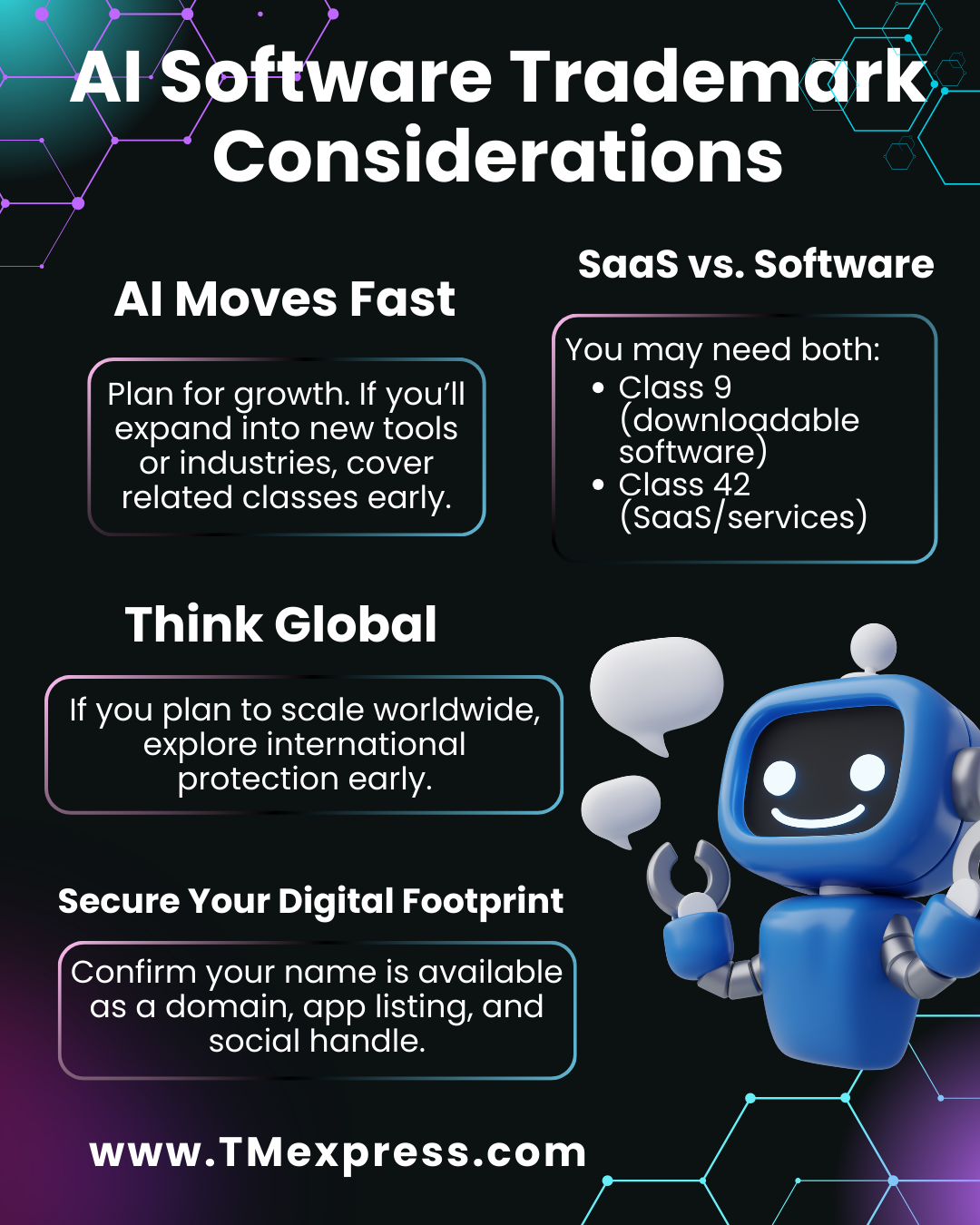
AI evolves quickly, so your trademark strategy must account for new features, updates, and product lines. File for multiple related classes if you plan to expand offerings, like AI tools for healthcare, finance, or education.
Software as a Service (SaaS) Nuances
International Expansion
AI software often scales globally. Consider international protection via WIPO or country-specific trademarks. Early planning avoids conflicts abroad and makes expansion smoother.
AI Brand Names and Domain Strategy
Domain names, app store listings, and social handles are part of your brand footprint. Ensure the trademarked name is also available digitally to prevent dilution or confusion. For example, “Synthara” should have a matching domain and app store listing.
By addressing these nuances early, AI companies can protect innovation, reduce disputes, and build credibility with users and investors.
Trademark Your AI Software Brand Today
Don’t leave your AI brand unprotected. At TradeMark Express, we provide comprehensive trademark research and application preparation for AI software brands. Our team ensures your name is clear to register, guides you through the USPTO process, and connects you with trusted trademark attorneys if needed.