Quick Guide to USPTO Trademark Description of Mark

Quick Guide to USPTO Trademark Description of Mark

When you apply for a trademark in the U.S., one of the key things the USPTO looks at is a section called “Description of Mark.” This section explains what your mark looks like, especially if it’s more than just plain text.

According to 37 C.F.R. §2.37, “a description of the mark must be included if the mark is not in standard characters.” That means if your mark has a logo, stylized text, color, or design, the USPTO requires a description so they know exactly what you’re claiming.

standard character definition: a trademark consisting of text only with no claim to any particular styling

Even if you’re not familiar with trademarks, understanding this requirement helps ensure your brand is recorded correctly—and can guide how you prepare for the application process.

Why the USPTO Requires a Description

The “Description of Mark” is important because it clearly defines what your trademark covers. Without it, the USPTO—or anyone searching trademarks later—might not know what is protected.

As the TMEP (§808.01) explains:

“A description of the mark must be included for any mark not in standard characters.”

Graphic showing that a trademark description explains what a mark looks like or includes, covering design, color, motion, or sound to ensure clarity

This is especially important for marks that include design elements, color, motion, sound, or other visual or non-visual features. In short, the description is a factual snapshot of your mark.

When You Must Include a Description

The USPTO requires a description when your mark includes any element beyond plain text. This includes:

  • Special font, color, or size
  • A logo, shape, or design
  • Non-Latin letters or numerals
  • Motion, sound, or scent
  • Characters from the standard character set that affect meaning
Graphic listing when a USPTO trademark description is required, including logos, colors, designs, and special characters

As the TMEP states:

“The examining attorney must require a description of the mark if the mark contains a design element; includes color; or includes motion, sound, or other non-visual mark.” (TMEP §808.01)

Even small design features can affect how your trademark is perceived, so an accurate description is essential.

What Makes a Good Trademark Description

A strong description is clear, accurate, and concise. The USPTO is looking for a factual account of what appears in the mark—not marketing language or interpretation.

The TMEP explains:

“The description should state clearly and accurately what the mark comprises… [t]he description should describe all significant aspects of the mark, including both literal elements and design elements.” (TMEP §808.02)

Illustration summarizing tips for writing a clear and concise USPTO trademark description.

Tips for writing an effective description:

  • Focus on what consumers actually see.
  • Describe all significant elements (both words and design).
  • Avoid stating how the mark is used or what it means.
  • Keep it concise—overly detailed descriptions can create confusion.

Example:

The mark consists of four squares arranged in a rectangular grid. The upper left square is red, the lower left square is blue, the upper right square is green and the lower right square is yellow. The squares are separated by blank space.

This description of Microsoft’s trademark clearly identifies color, stylization, and imagery without adding unnecessary information.

Why Comprehensive Trademark Research Matters

Before even thinking about the description, it’s important to check that your mark is actually unique. This is called comprehensive trademark research, and it helps you identify potential conflicts early.

A thorough search includes:

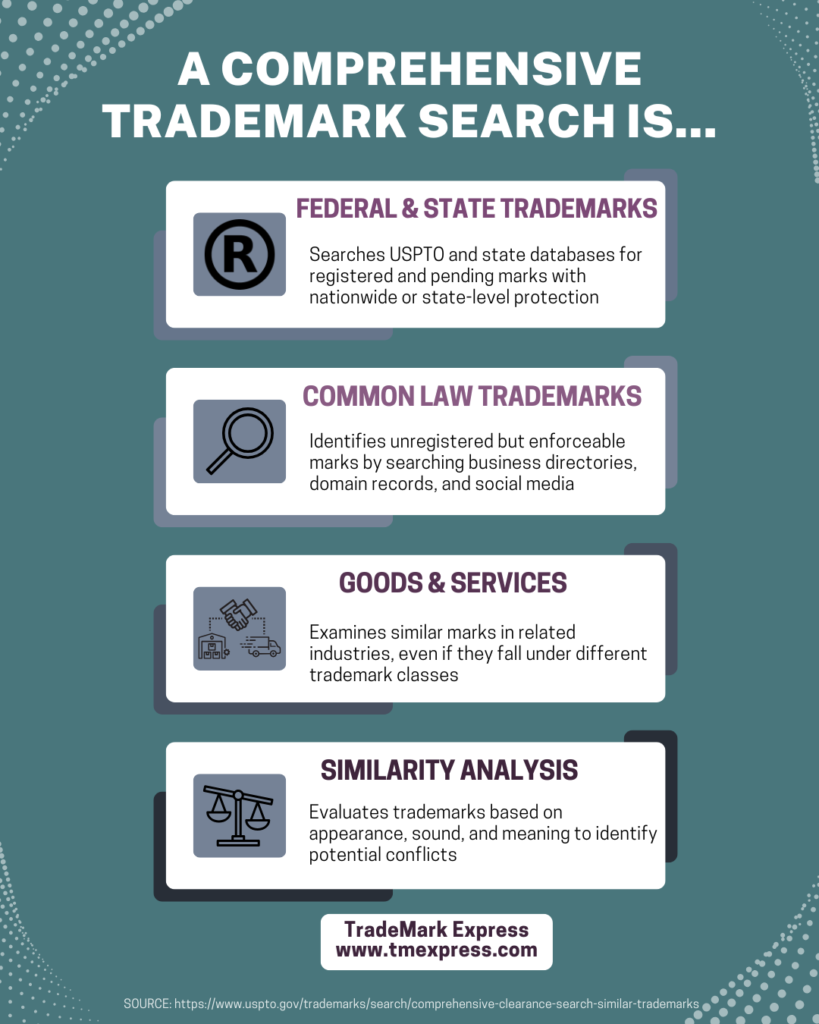
Graphic titled “A Comprehensive Trademark Search is…” showing the key elements of a trademark search: checking federal and state trademarks, identifying common law uses, reviewing same or related goods/services, and evaluating similarity in sound, appearance, or meaning.
  • Federal trademarks – searching the USPTO database
  • State trademarks – checking state-level registrations
  • Common law usage – looking at unregistered marks in business directories, websites, social media, and domain names
  • Similar marks in sound, appearance, or meaning – identifying potential confusion with existing marks
  • Similar or related goods/services – ensuring your mark isn’t likely to be confused with marks in related industries

Doing this research first helps you write an accurate description and ensures your mark is as defensible as possible.

Conclusion

For small business owners, startups, and branding professionals, understanding the USPTO’s “Description of Mark” requirement doesn’t have to be complicated. Remember these key points:

  1. Know when a description is required — usually when your mark includes design, color, or stylized elements.
  2. Keep your description clear, concise, and accurate.
  3. Conduct comprehensive trademark research first to make sure your mark is unique and defensible.

A well-crafted description, supported by thorough research, gives your brand the best chance of being protected.

TradeMark Express can help with comprehensive trademark research to ensure your brand is clear, distinctive, and ready for filing.

DISCLAIMER: References to particular trademarks, service marks, products, services, companies, or organizations appearing on this page are for illustrative and educational purposes only and do not constitute or imply endorsement.
The information provided on this site is for general informational purposes only. All information on the Site is provided in good faith; however, we make no representation or warranty of any kind, express or implied, regarding the accuracy, validity, or completeness of any information on the Site. The Site cannot and does not contain legal advice. The legal information is provided for general informational and educational purposes only, and is not a substitute for legal advice. Consult a licensed attorney for legal advice.

Leave a Comment

Your email address will not be published. Required fields are marked *