
Trademark Tips for Veteran Entrepreneurs
On this Veterans Day, we honor your service and dedication — and recognize the unique strengths you bring to entrepreneurship. Transitioning from military service to business ownership is a bold move — one you’re uniquely suited for. The same discipline, leadership and mission‑focus that served you in uniform can serve you in entrepreneurship. As you launch your business, protecting your brand via a trademark is one of the key steps to ‘mission success’ in the marketplace.
Because your background gives you grit and strategy, let’s use that to dive into the trademark world with a veteran‑forward lens: what you must know, how to do the research, how to avoid common pitfalls, and how to locate specialized resources for your journey.
Why Trademarks Matter for Veteran Entrepreneurs
Your business might be born of service‑inspired ideas or veteran‑owned values. A trademark helps ensure that the name, logo or slogan you build isn’t vulnerable to confusion or takeover — and gives you a foundation from which to grow and scale. Without it, someone else could begin using a similar brand, reducing your distinctiveness and undermining the brand equity you’re cultivating.

Think of a trademark as a form of strategic defense: just as in the field you planned for contingencies, in business you plan for brand protection. It’s not the only step, but it’s one of the foundational ones.
The Comprehensive Trademark Search: What Veteran Entrepreneurs Should Look For
Before filing a trademark application, a thorough search is essential. It helps identify potential conflicts, reduces risks, and ensures your brand is clear for use.
For veteran entrepreneurs, a quality comprehensive trademark search should cover all of the following elements:
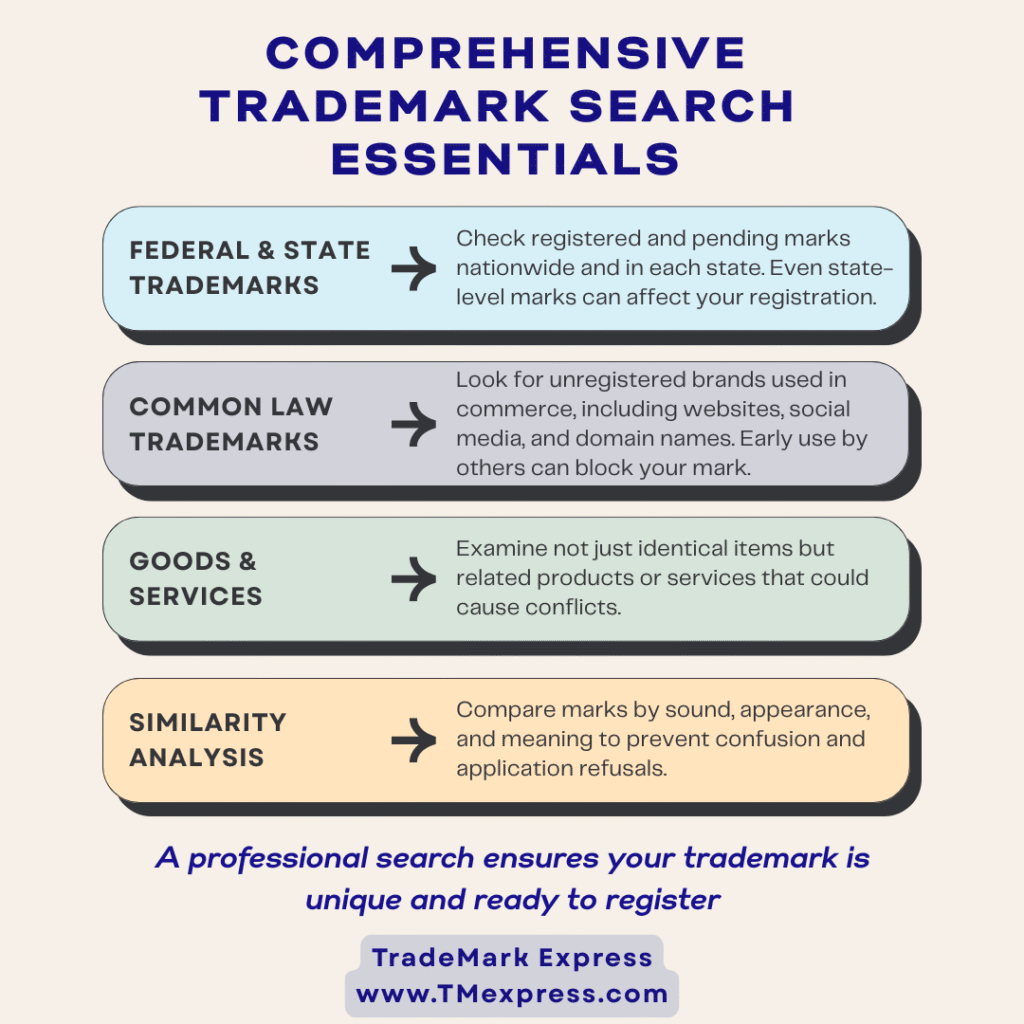
Federal Trademarks
A reliable search provider will check the USPTO federal database for identical or similar registered or pending marks. Federal registrations give stronger nationwide rights, so it’s critical to know if any marks already exist in your class of goods or services.
State Trademarks
Even if no conflicting federal marks exist, state-registered marks may still pose a risk. A thorough search includes checking the registries of states where you plan to operate to identify any potential conflicts.
Common Law Usage
Common law rights come from actual use in commerce, even if a mark isn’t registered. A complete search looks for businesses using similar names locally or online, including social media, websites, domain names, directories, and signage. This helps uncover potential conflicts that aren’t visible in official registries.
Similar Marks in Sound, Appearance, or Meaning
A quality search considers marks that might be confusingly similar in how they look, sound, or are interpreted.
Similar or Related Goods/Services
The search should evaluate not just names but also the similarity of goods or services. Marks in related fields may create confusion even if the names aren’t identical. For example, a veteran-owned fitness brand should know if a similar name exists for fitness training services targeting veterans.
Filing Your Trademark Application: Key Steps and Options
After a clear comprehensive search is completed, you’ll move toward application preparation and filing.
Here are the key steps in brief:
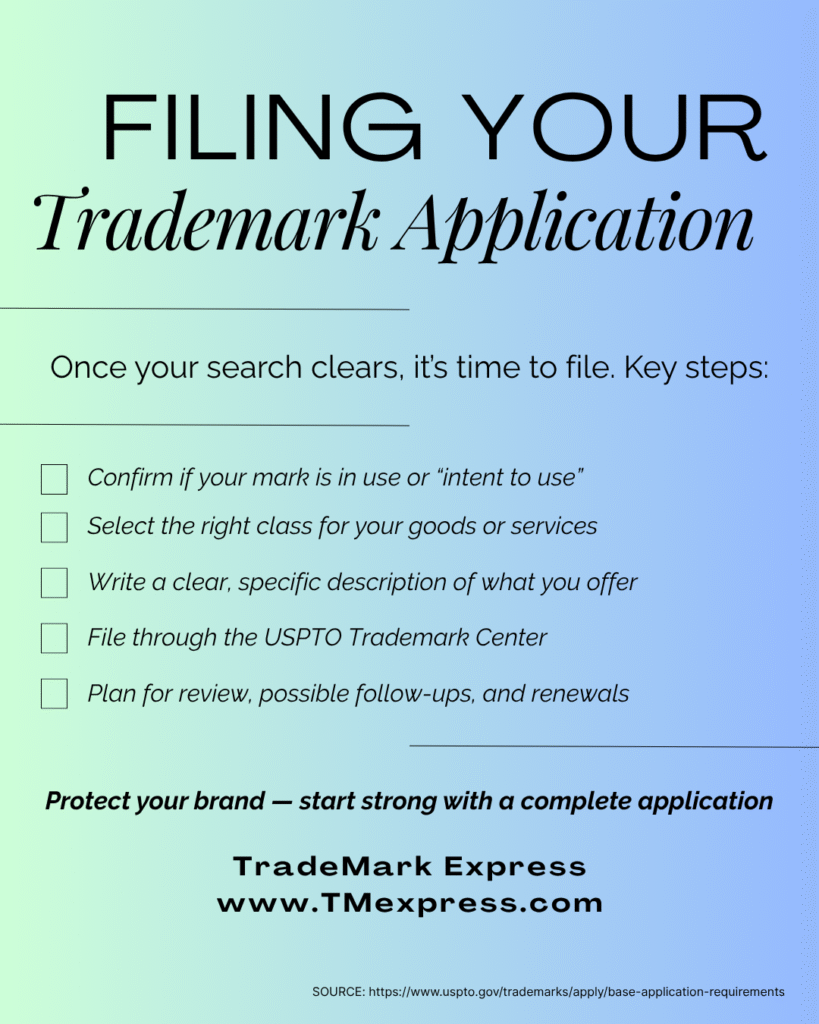
- Determine whether your trademark is already in use in commerce (you’re already selling or providing services) or if you plan to use it in the future (you’ll file under an “intent‑to‑use” basis).
- Choose the correct International Class (Nice Classification) that best describes your goods or services. The class affects which goods/services you’re protecting.
- Prepare a clear yet specific description of the goods/services — this avoids ambiguity and reduces the chance of refusal.
- Submit your application via the USPTO’s Trademark Center
- Budget time and resources for the review by a USPTO examining attorney, potential Office Actions, and ongoing monitoring/renewal maintenance of the registration.
Tip for veteran entrepreneurs: You can prepare your application yourself and file directly, obtain professional trademark preparation services that’ll guide you through filing, or you may choose to hire a trademark attorney to assist with preparation and filing. Getting professional guidance can help reduce errors, improve clarity in your application, and ensure your trademark strategy aligns with your business goals.
Common Pitfalls — And How You Can Avoid Them
Here are traps especially relevant to start‑ups, and how to sidestep them:
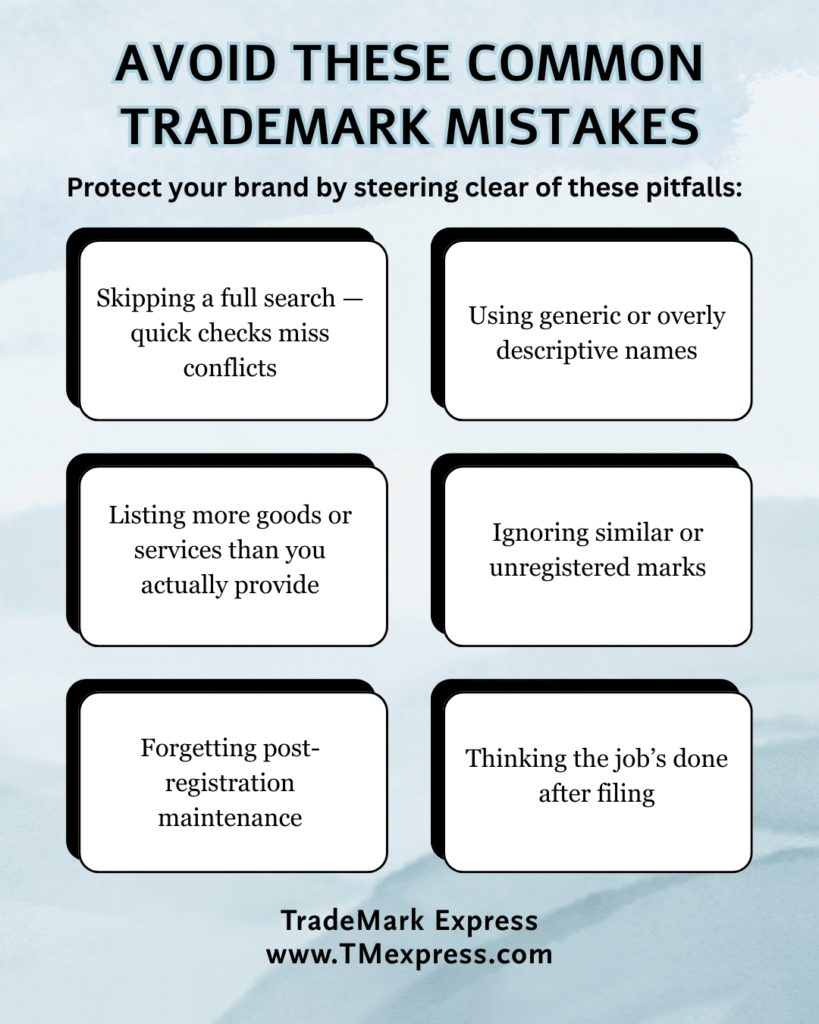
- Skipping the comprehensive search or doing only a quick name‑check. That can lead to a conflict, opposition, or lost time/money.
- Choosing an overly descriptive or generic name (e.g., “Veteran Healthcare Services”) which may be difficult to register because it lacks distinctiveness.
- Over‑broad classification (selecting more goods/services than you realistically offer) which increases cost and risk of refusal.
- Ignoring common law usage or similar marks — assuming only exact matches matter can be a costly oversight.
- Neglecting post‑registration actions, such as monitoring for infringers, filing your Section 8/Section 8&9 maintenance documents, or protecting your mark against dilution.
- Assuming you’re done after the application — registration is one milestone; building and enforcing your brand is ongoing.
Veteran Focused Resources Worth Checking
Some providers include lists of veteran-specific resources to help entrepreneurs navigate IP challenges, such as:
- Veterans Intellectual Property Support Center (veteransintellectualproperty.com) – A resource focused on veterans and active‑duty personnel navigating IP.
- USPTO’s “Entrepreneurship Essentials for the Military Community” series – Free webinars and events for veterans, military spouses and the military community. (USPTO)
- Institute for Veterans and Military Families (IVMF) – Offers entrepreneurship training and support for veterans. (Soldier for Life)
- Small Business Administration (SBA) Office of Veterans Business Development – Offers Boots to Business program and veteran‑focused business guidance. (Boots to Business)
- USPTO blog resources on IP & military community – The USPTO blog walks through veteran‑entrepreneur IP support. (USPTO blog post)
Note: These resources are for informational purposes only. We do not endorse or guarantee their content or services.
Final Thoughts for Veteran Entrepreneurs
A very sincere thank you for your service and dedication! Transitioning from military service to business ownership brings mission-focused discipline into your venture. Protecting your brand with a comprehensive trademark search and smart filing strategy sets you up for confidence, growth, and long-term success.
Think of your trademark strategy like a mission plan: reconnaissance (search), operations (filing and launching), and defense (monitoring and enforcing). With careful planning, you can serve your customers, grow your brand, and carry your veteran values forward.
Ready to protect your brand? Contact TradeMark Express to get started with a comprehensive trademark search today.