Can You Trademark a Hashtag?

Can You Trademark a Hashtag?

Hashtags are everywhere in social media marketing. They help businesses boost visibility, connect with audiences, and create recognizable campaigns. But can your favorite hashtag actually be protected as a trademark? The answer is yes — under the right circumstances. Understanding how to trademark a hashtag can help you protect your brand, prevent competitors from using your phrases, and strengthen your marketing efforts.

What Is a Hashtag Trademark?

A hashtag is more than just a clickable label on social media. It organizes content, signals trends, and encourages engagement. For example, hashtags like #ThrowbackThursday or #love help users find and share content, but these are general and used widely across platforms.

When a hashtag is tied to specific goods or services, it can function as a brand identifier. It signals to consumers that the hashtag represents your business, product, or campaign. For instance, a clothing brand using #WearTheFuture to promote a new line could potentially trademark that hashtag.

Trademarking a hashtag allows businesses to assert legal rights if competitors try to use the same or confusingly similar hashtags in connection with similar goods or services.

Eligibility Basics for Hashtag Trademarks

Not all hashtags can be trademarked. The key requirement is that the hashtag must be used in commerce — meaning it identifies and distinguishes your goods or services, not just decorates a post.

Purely decorative or generic hashtags usually cannot be registered. Examples include:

  • #Love
  • #Happy
  • #Foodie
  • #Motivation
  • #Inspiration

These are widely used phrases without any direct connection to a specific business. A hashtag that is unique to your brand and tied to your products or campaigns has a stronger chance of registration.

Graphic showing how hashtags can serve as brand identifiers, with examples of generic vs. distinctive hashtags that can or cannot be protected

Descriptive vs. Distinctive Hashtags

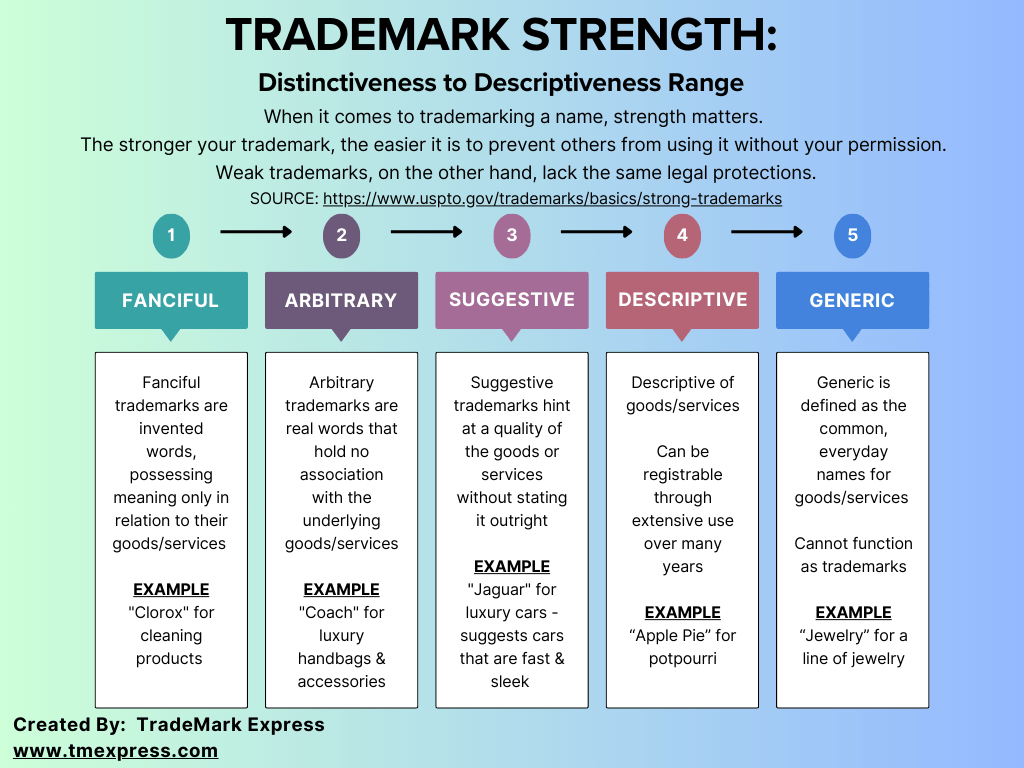
The USPTO classifies marks based on distinctiveness. Generic or descriptive hashtags are harder to register, while creative or unique hashtags are easier to protect.

Trademark Distinctiveness to Descriptiveness Continuum
  • Common hashtags like #SummerSale or #BestCoffee are descriptive and likely too broad.
  • Unique, brand-specific hashtags such as #SephoraSquad, #LiveLacroix, or #ToughMom have been successfully trademarked because they clearly identify the source of goods or services.

The distinction matters: a hashtag becomes stronger legally when it is used in connection with goods or services and has a clear branding function.

Comprehensive Trademark Research Is Essential

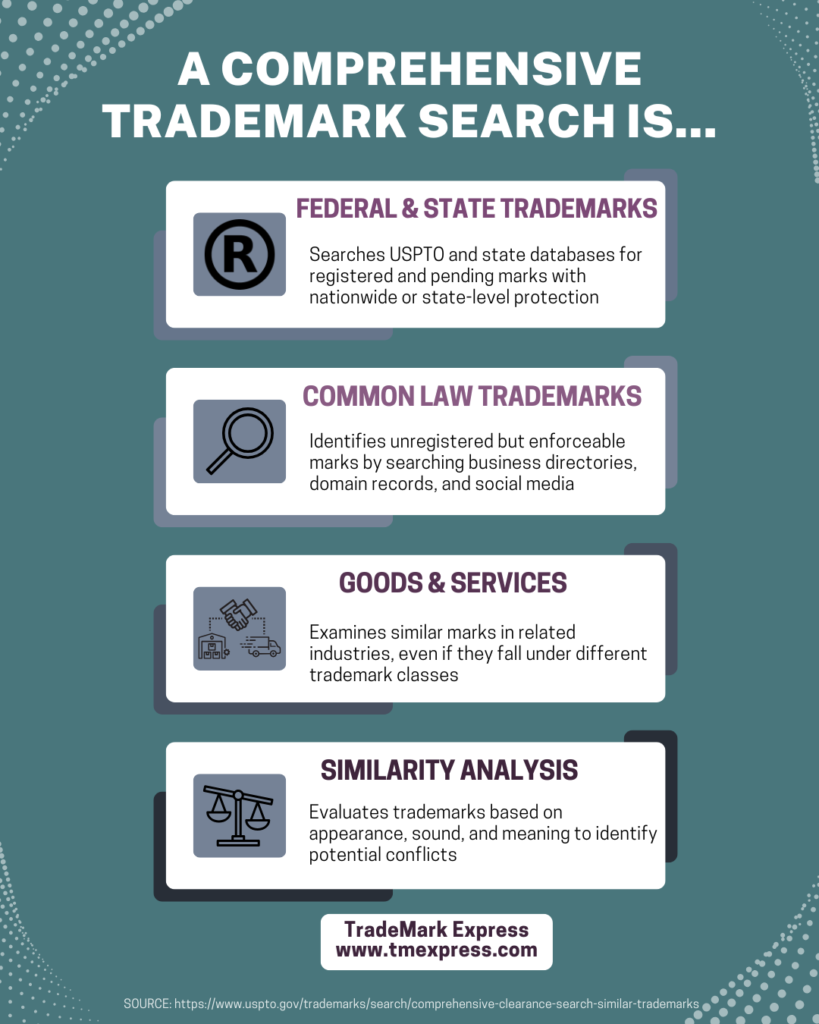
Before filing a hashtag trademark, thorough research is crucial. Comprehensive trademark research should include:

Graphic titled “A Comprehensive Trademark Search is…” showing the key elements of a trademark search: checking federal and state trademarks, identifying common law uses, reviewing same or related goods/services, and evaluating similarity in sound, appearance, or meaning.
  • Federal trademarks: Check the USPTO federal trademark database for identical or similar marks to avoid conflicts.
  • State trademarks: Some businesses register marks at the state level. Checking state trademark databases prevents surprises.
  • Common law usage: Look for businesses already using the hashtag without registration. Even unregistered usage can block registration.
  • Similar marks in sound, appearance, or meaning: Marks don’t need to be identical to cause confusion. Slight similarities could lead to refusals.
  • Similar or related goods/services: Conflicts can arise even if the other business is in a slightly different niche.

Proper research saves time, reduces costs, and prevents future legal disputes.

Filing Process Overview

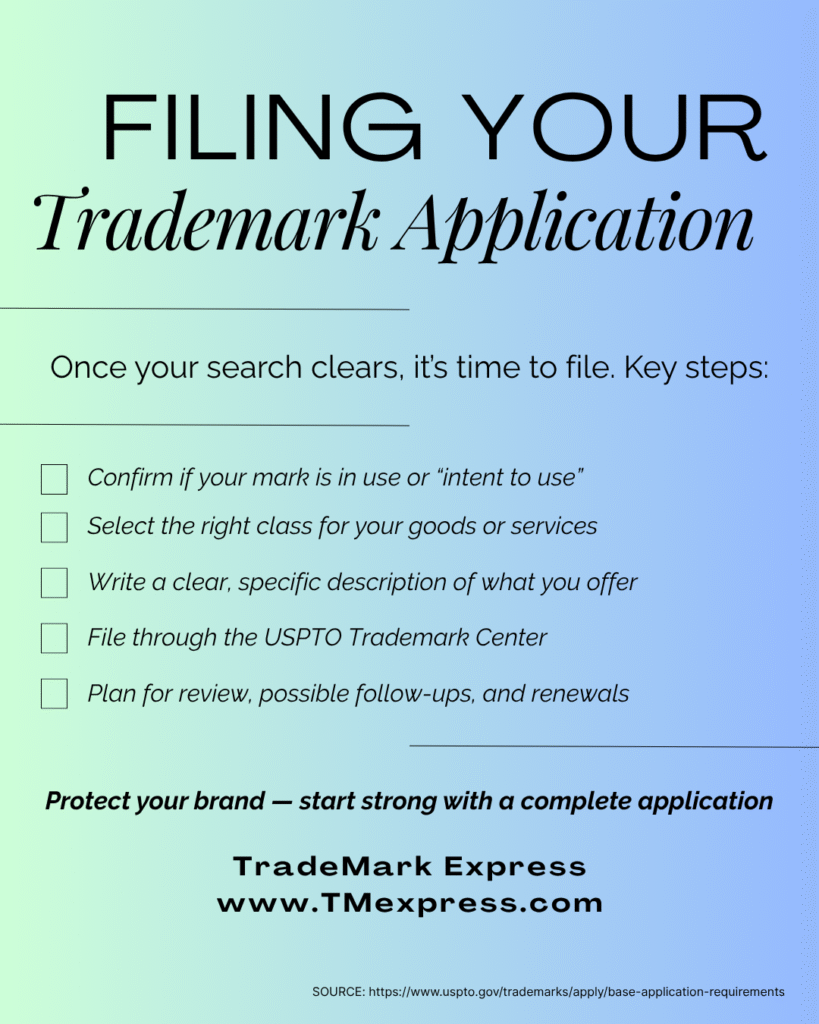
The process to trademark a hashtag (once the name has cleared research) includes several steps:

Graphic listing key steps to filing a trademark application — confirming use, choosing the right class, clear descriptions, USPTO filing, and planning for renewals
  1. Prepare the application: Identify the goods/services associated with the hashtag and classify them properly.
  2. Submit to the USPTO: File online using the Trademark Center system.
  3. Respond to Office Actions: The USPTO may require clarification or additional information via an Office Action. Timely, accurate responses are critical.
  4. Approval and registration: Once approved, the hashtag is federally protected.

This process can take several months to a year, depending on issues that may arise.

Social Media Considerations

Trademarking a hashtag does not automatically give you control over social media handles. However, it strengthens your legal position if another business uses the hashtag in a way that could confuse customers.

Graphic explaining that a registered trademark hashtag does not control social media handles but helps indicate brand connection

For example, if your registered hashtag is tied to a specific product line and a competitor uses the same hashtag to promote a similar product, your federal trademark could provide a basis for legal action.

Benefits of Trademark Registration

Registering a hashtag as a trademark provides multiple advantages:

Graphic illustrating six key benefits of federal trademark registration: public listing in the USPTO database, legal presumption of ownership, basis for international registration, right to sue in federal court, use of the ® symbol, and customs protection against infringing imports

Registering a hashtag with the U.S. Patent and Trademark Office can provide meaningful benefits for businesses that use hashtags as part of their branding strategy.

A federal trademark registration helps establish your legal rights nationwide and can deter competitors from using the same or confusingly similar hashtags in connection with related goods or services.

It also strengthens brand recognition by reinforcing the connection between the hashtag and your business in the minds of consumers.

In addition, a registered hashtag can be used more confidently in marketing campaigns, packaging, advertising, and promotions, supported by the added credibility and enforcement advantages that come with federal trademark protection.

Next Steps

If you’re thinking about trademarking a hashtag, the first step is thorough research. A comprehensive trademark search ensures you understand potential conflicts at the federal, state, and common law levels.

Consulting a trademark professional helps you:

  • Navigate the application process
  • Correctly classify goods or services
  • Respond to any Office Actions efficiently

At TradeMark Express, we specialize in in-depth trademark research and application preparation. Protect your hashtag and your brand — contact us today to get started.

The information provided on this site is for general informational purposes only. All information on the Site is provided in good faith; however, we make no representation or warranty of any kind, express or implied, regarding the accuracy, validity, or completeness of any information on the Site. The Site cannot and does not contain legal advice. The legal information is provided for general informational and educational purposes only, and is not a substitute for legal advice. Consult a licensed attorney for legal advice.

Leave a Comment

Your email address will not be published. Required fields are marked *