When Trademarks Become Generic: Examples & How to Prevent
Your trademark is more than a name — it’s the identity of your business. But what if, over time, your trademark becomes so popular that people start using it as the generic name for the product itself? While that may sound like a sign of success, it can actually strip you of your trademark rights. Let’s break down what happens when a trademark becomes generic and, more importantly, how to prevent it.
Trademark Genericide Explained
Trademark genericide happens when the public begins using a brand name to describe a general type of product or service — not just one company’s version of it. In other words, the trademark becomes the common name. Some classic examples of trademark genericide are words like “escalator” and “cellophane.” These were once protected trademarks, but they lost legal status because they became generic terms.
When a trademark becomes generic, it loses its distinctiveness — and with it, legal protection.
Why Genericide Is a Serious Risk
Losing your trademark to genericide isn’t just a technicality — it’s a major blow to your brand. Once a name becomes generic, you lose exclusive rights to it. That means competitors can legally use the same name, making it impossible to stand out or stop copycats. It also erodes the value you’ve built into your brand and may make legal enforcement impossible going forward.
Examples of Generic Trademarks
There are plenty of cautionary tales when it comes to examples of generic trademarks. “Aspirin” was once a trademark owned by Bayer. “Thermos” and “Zipper” also lost their protected status after widespread use turned them into household words. These brands didn’t necessarily do anything wrong — but they failed to stop the slide toward generic use.
Today, major companies like Google and Xerox work hard to stop their brand names from being used as verbs (e.g., “google it” or “xerox this”) to avoid falling into the same trap.
How to Prevent Your Trademark From Becoming Generic
So, how to prevent trademark from becoming generic? It starts with awareness and active brand management.
Here are some proven steps:
Use your trademark as an adjective, not a noun or verb. Say “Kleenex tissues,” not just “a Kleenex.”
Educate your employees, partners, and customers about proper usage. Brand guidelines are a great place to start.
Monitor media and public use of your trademark to spot misuse early.
Enforce trademark rights when necessary — this could mean sending cease and desist letters or correcting misuses in the marketplace.
Staying vigilant early on can prevent costly legal and branding issues later.
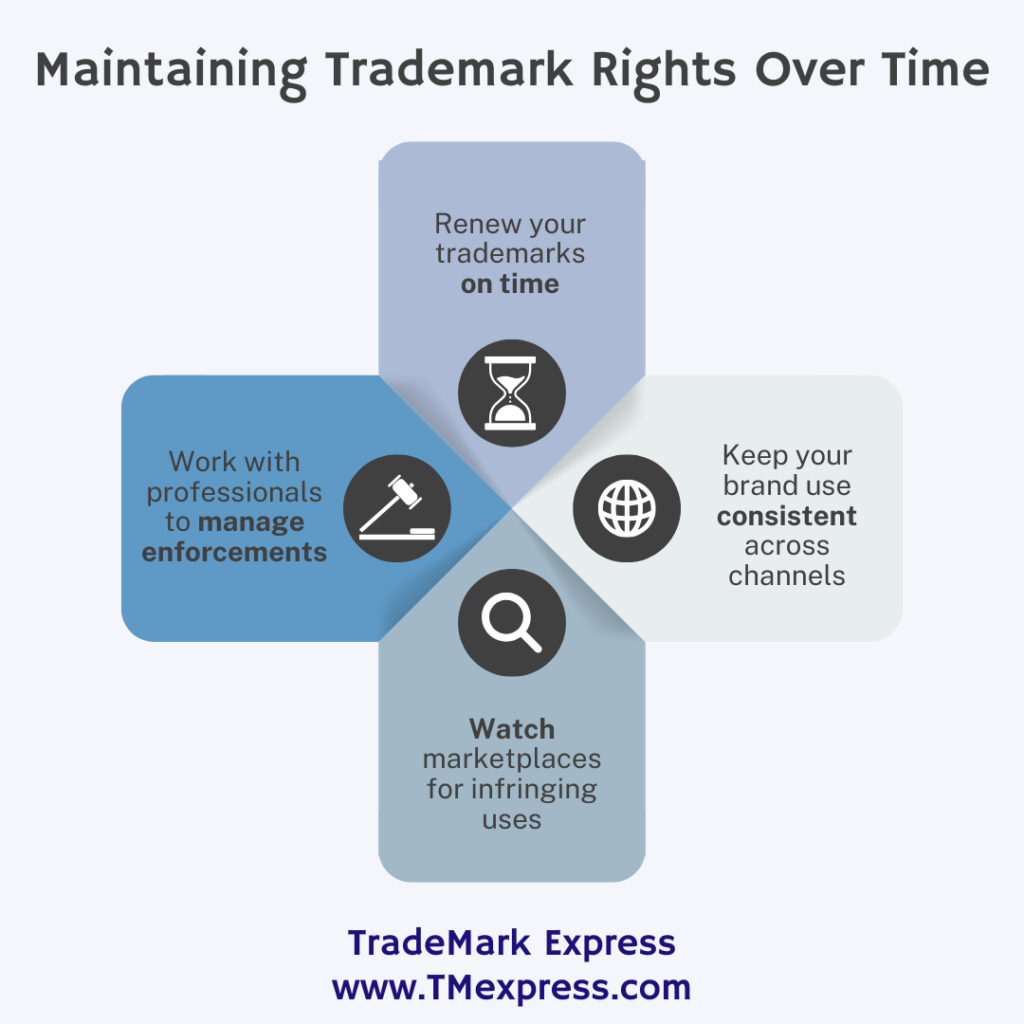
Maintaining Trademark Rights Over Time
Long-term brand protection means more than just registering your mark. It also involves maintaining trademark rights through consistent and strategic use.
Keeping your brand use consistent across channels.
Watching marketplaces (like Amazon or Etsy) for infringing uses.
Working with professionals to manage enforcement as needed.
For entrepreneurs, startups, and branding professionals, this isn’t just a legal concern — it’s a brand equity concern. A strong trademark should last the life of your business.
Final Thoughts and Next Steps
Your brand deserves long-term protection. Letting it become generic could undo years of hard work and investment. If you’re unsure where to start or how to keep your trademark strong, now is the time to get expert help.
TradeMark Express offers comprehensive trademark searches and thorough application preparation to help you protect your name for the long haul. Reach out today — we’ll make sure your brand stays yours.
DISCLAIMER: References to particular trademarks, service marks, products, services, companies, or organizations appearing on this page are for illustrative and educational purposes only and do not constitute or imply endorsement.
The information provided on this site is for general informational purposes only. All information on the Site is provided in good faith; however, we make no representation or warranty of any kind, express or implied, regarding the accuracy, validity, or completeness of any information on the Site. The Site cannot and does not contain legal advice. The legal information is provided for general informational and educational purposes only, and is not a substitute for legal advice. Consult a licensed attorney for legal advice.